
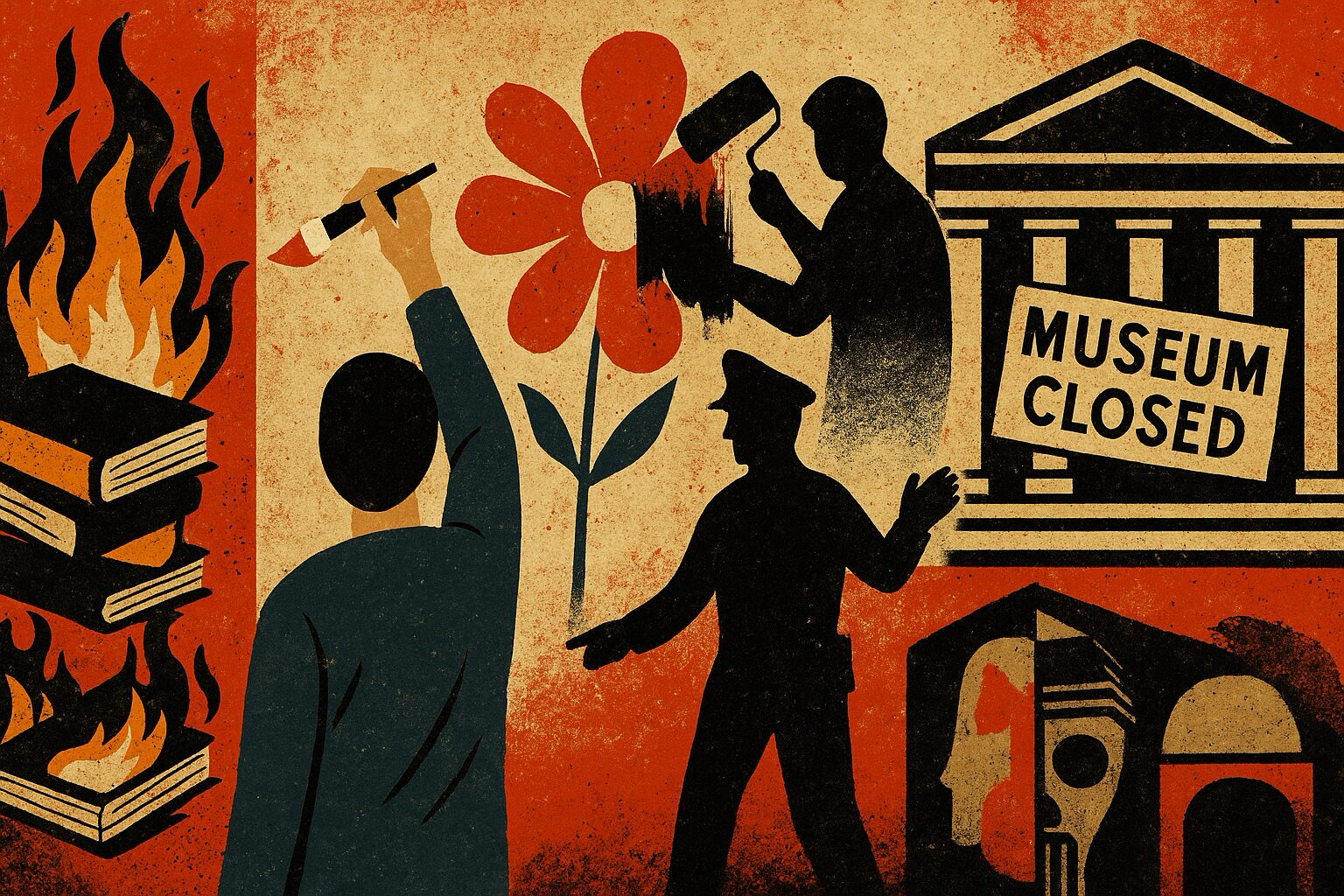

In every era marked by repression, artists have stepped quietly—but powerfully—into the role of dissident. They do not command armies, draft legislation, or stage coups. Yet through their brushes, bodies, lyrics, and lenses, they plant seeds of resistance, preserve truth, and stir memory.
Authoritarian regimes fear art not for its beauty, but for its ability to awaken.
🎨 Art That Speaks When Speech Is Dangerous
Graffiti, murals, and performance art erupt on public walls and streets as acts of defiance. In Iran, Belarus, and Myanmar, anonymous artists craft symbolic imagery—a lone bird, a blood-red flower, a finger raised in silence—that speaks louder than state media ever could.
Ai Weiwei’s installations, from a middle finger raised toward Tiananmen Square to a pile of refugees’ life jackets outside Berlin’s Konzerthaus, turn personal suffering into global witness.
These artists aren’t just creating. They’re unmasking.
🎭 Theater, Music, and Digital Expression
Underground theater troupes dramatize repression with raw honesty. Protest musicians in Hong Kong and Turkey risk prison to perform songs that echo the dreams of millions. Memes, comics, and zines challenge propaganda with humor that censors can’t suppress.
Literature, especially written in indigenous or banned languages, becomes a vessel for cultural survival. These voices persist not through permission—but through defiance.
🌍 Resistance Without Borders
Exiled artists often amplify domestic struggles abroad, transforming personal displacement into global solidarity. Organizations like Artists at Risk provide lifelines to those fleeing persecution, allowing the art—and the truth—to continue.
Diaspora creators keep storytelling alive, turning memory into movement.
🪑 And What of the Artisan?
Even in silence, objects speak. A hand-carved table that refuses plastic conformity. A cabinet that echoes ancestral forms. A chair that cradles legacy over mass production.
Craft itself becomes resistance when authenticity triumphs over consumption, when material tells a story of place, and when the maker refuses disposability. A furniture designer—like Anderson—can shape legacy as protest, proving that soulful design survives where soulless systems crumble.
In authoritarian regimes, censorship may limit voices—but it cannot extinguish vision. Art preserves what cannot be spoken, dreams what cannot yet be built, and dares to imagine freedom where others fear it.
Discover more from Anderson woodworks custom furniture & cabinets
Subscribe to get the latest posts sent to your email.
