In a world obsessed with speed, symmetry, and polish, the Japanese philosophy of wabi-sabi offers a radical whisper: slow down, look closer, and find beauty in the broken edges. It is not a trend, nor a style—it is a way of seeing, a way of being. Rooted in Zen Buddhism and shaped by centuries of artistic and spiritual practice, wabi-sabi invites us to embrace imperfection, impermanence, and the quiet dignity of things that age.
🪵 Origins: From Monastic Silence to Everyday Reverence
Wabi-sabi emerged during Japan’s Muromachi period (14th–16th century), when Zen monks began to reject the ornate excesses of aristocratic life A. Influenced by Taoist ideas of natural harmony and Buddhist teachings on impermanence (無常, mujō), suffering (苦, ku), and emptiness (空, kū), they cultivated a worldview that honored simplicity, solitude, and the passage of time B.
- Wabi (侘) originally referred to the loneliness of living in nature, but evolved into a celebration of rustic simplicity and spiritual richness.
- Sabi (寂) described the patina of age—the quiet grace of things weathered and worn.
Together, wabi-sabi became a lens through which to see the world not as it should be, but as it is: incomplete, impermanent, and deeply beautiful A.
🍵 The Tea Bowl and the Philosophy of Enough
Perhaps nowhere is wabi-sabi more vividly embodied than in the Japanese tea ceremony. A cracked tea bowl, glazed unevenly and shaped by hand, becomes a vessel of reverence. Its flaws are not hidden—they are highlighted. The ceremony itself is slow, deliberate, and intimate. It is not about performance, but presence.
Wabi-sabi teaches us that:
- Nothing lasts.
- Nothing is finished.
- Nothing is perfect.
As Richard Powell writes, “Wabi-sabi nurtures all that is authentic by acknowledging three simple realities” B. In this way, it is not just an aesthetic—it is a spiritual practice.
🌾 Aesthetic Principles: The Beauty of Less
Wabi-sabi is not minimalist in the Western sense of sleek reduction. It is earthy, asymmetrical, and textured. Its principles include:
- Asymmetry: A balance that feels natural, not forced.
- Simplicity: Not sterile, but soulful.
- Austerity: A quiet richness, not opulence.
- Intimacy: Spaces that invite closeness and contemplation.
- Naturalness: Materials that age, weather, and change.
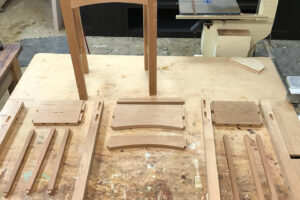
In design, this might look like a hand-planed wooden bench with visible joinery, or a ceramic vase with a thumbprint embedded in its glaze. In life, it might mean letting go of perfectionism and embracing the slow unfolding of your own story.
🧘♂️ Wabi-Sabi as Resistance
In a culture of constant upgrades and curated perfection, wabi-sabi is a form of resistance. It asks us to honor the scars, the wear, the quiet moments between achievements. It reminds us that beauty is not always bright—it is often shadowed, subtle, and slow.
For creators, it is a call to authenticity. For brands, it is a reminder that storytelling is not about polish—it’s about presence. For all of us, it is an invitation to live more gently, more attentively, and more truthfully.
🌙 Living the Philosophy
To live wabi-sabi is to:
- Accept what is, without needing to fix it.
- Find joy in the mundane and the overlooked.
- Let go of control and allow things to unfold.
- See aging not as decay, but as deepening.
It’s the way a wooden table holds the memory of every meal. The way a faded photograph carries the weight of a thousand emotions. The way your own life, imperfect and unfinished, is already enough.
Ready to bring intention and artistry into your space?
If you’re envisioning a handcrafted piece that speaks to your home, your story, and your values—let’s talk. I’d love to hear what you’re dreaming up and explore how we can shape it together.
Give me a call to set up a time to connect. Your vision deserves to be built with care. Visit my Contact me page.
Discover more from Anderson woodworks custom furniture & cabinets
Subscribe to get the latest posts sent to your email.