Choosing the Wood That Will Tell Your Story
I am currently making this a page on my website but for now it will be her for you and my clients to see.
The wood you select today will transform over the decades your piece lives in your home. Cherry will deepen from pale pink to rich amber. Walnut will anchor your space with immediate presence. Maple will glow with quiet brightness. Oak will stand as it has for centuries—timeless and enduring.
This isn’t a decision about materials. It’s about choosing which living element becomes part of your family’s story. Each species ages differently, feels different under your hand, and carries its own character into your home.
I’ve been working with these four hardwoods since 2006, hand-selecting boards from Edensaw, studying grain patterns, and watching pieces evolve in clients’ homes over years. What I’ve learned is that the right wood chooses you as much as you choose it—something will resonate when you see it, touch it, imagine it.
This guide will help you understand what makes each species unique, how they’ll age in your home, and what kind of investment you’re making in a piece that will outlive us both.
CHERRY
The Warm Heirloom
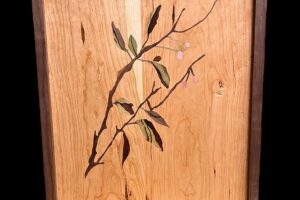
Visual Character: Cherry starts life with a pale pinkish-tan color and transforms into a rich, warm reddish-brown over time. This is one of the most dramatic aging processes in domestic hardwoods. Within the first six months of exposure to light, you’ll notice deepening color. Over years and decades, cherry develops a lustrous patina that becomes richer and more complex.
Grain & Texture: Fine, straight grain with occasional waves and curls. Smooth, satiny texture that feels refined under the hand. Small pin knots and mineral streaks are natural characteristics that add authenticity without compromising structural integrity.
Best Suited For:
- Dining tables and chairs where warmth and elegance matter
- Bedroom furniture that creates a restful, sophisticated atmosphere
- Accent pieces that will be cherished and watched as they transform over time
Durability & Maintenance: Medium hardness (Janka rating ~995). Resists warping and checks well. With oil & wax finish, cherry requires seasonal conditioning but rewards care with deepening beauty. Perfect for clients who want to participate in their furniture’s aging journey.
The Anderson Woodworks Difference: When I hand-select cherry from Edensaw, I’m looking for boards with consistent color and grain that will age uniformly. Traditional joinery means your cherry piece will remain stable through decades of color transformation.
WALNUT
The Sophisticated Statement
Visual Character: Rich chocolate brown heartwood with creamy sapwood creates natural contrast and visual drama. Walnut is prized for its immediate visual impact—it doesn’t need decades to develop character; it arrives with gravitas. Color remains relatively stable over time, darkening only slightly while maintaining its distinctive presence.
Grain & Texture: Usually straight-grained, but can feature beautiful waves, curls, and swirls. Medium to coarse texture with excellent workability that allows for crisp joinery details and clean lines—perfect for the clean-lined accent tables clients prefer.
Best Suited For:
- Modern and contemporary pieces where bold contrast is desired
- Executive desks and office furniture that conveys authority
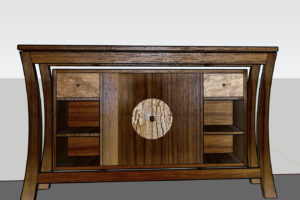
- Entertainment cabinets where the wood itself becomes a focal point
- Accent tables in lighter-colored rooms where walnut provides grounding
Durability & Maintenance: Medium hardness (Janka rating ~1,010), similar to cherry. Excellent shock resistance makes it ideal for furniture that will be used daily. Walnut’s natural oils make it particularly responsive to hand-rubbed finishes like oil & wax.
The Anderson Woodworks Difference: Walnut showcases hand-tool work beautifully. The contrast between heartwood and sapwood means I can design pieces that highlight natural color variation, or select boards for consistency—your choice during our consultation process.
MAPLE
The Bright & Enduring
Visual Character: Creamy white to light tan, maple is the brightest of the four species. It offers a clean, fresh aesthetic that works in virtually any design style from traditional to ultra-modern. Maple ages gracefully to a soft honey tone, maintaining its light character while gaining warmth over decades.
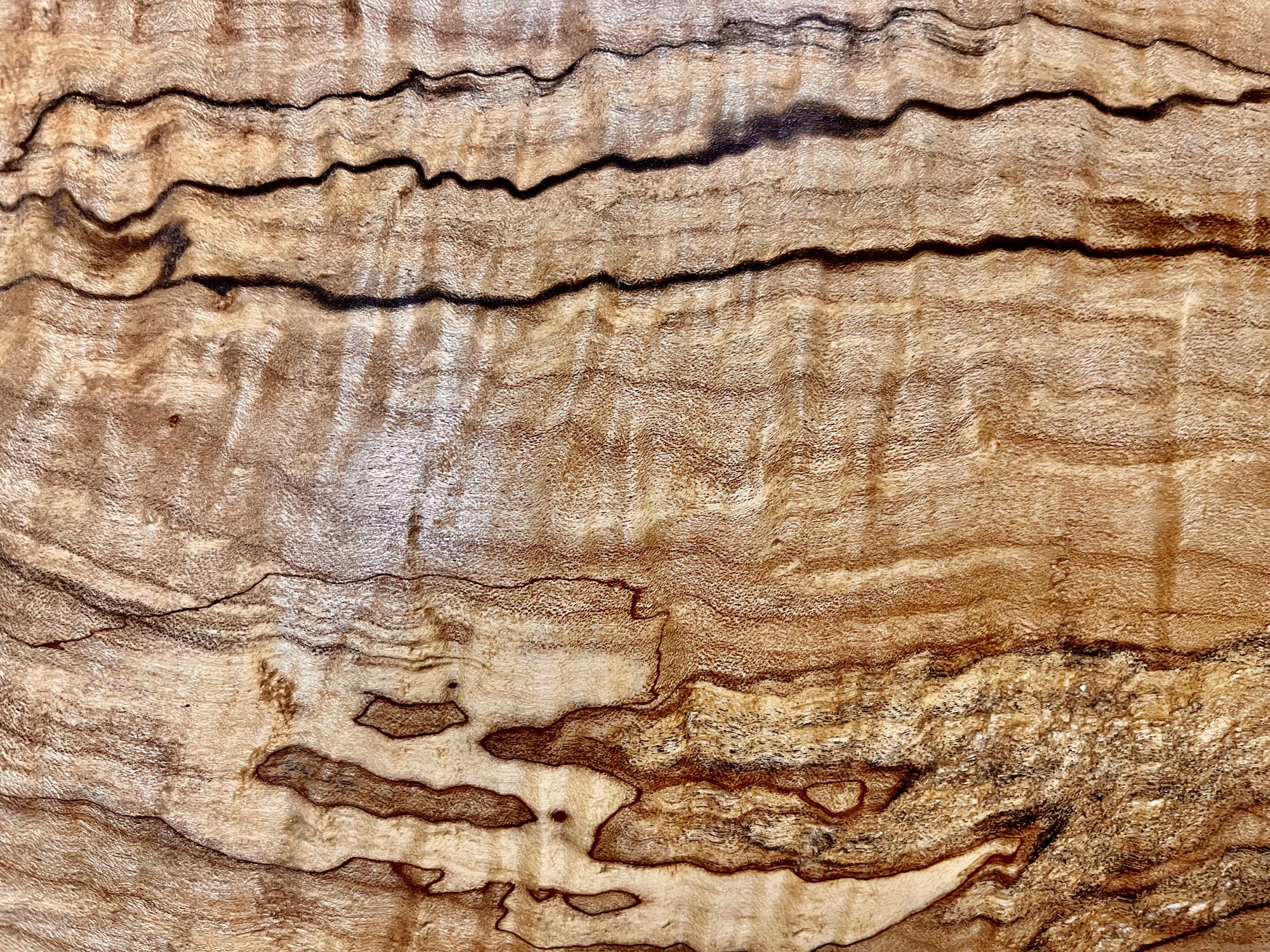
Grain & Texture: Generally straight and fine-grained, but can feature spectacular figured patterns (curly maple, bird’s eye maple) that add visual interest without color contrast. Smooth, even texture that feels refined and polished.
Best Suited For:
- Kitchen and dining furniture where a clean, hygienic appearance is valued
- Children’s furniture and family pieces that need to withstand heavy use
- Scandinavian or minimalist designs where the form takes precedence over wood drama
- Pieces that will live in bright, sun-filled spaces
Durability & Maintenance: Hard maple is one of the hardest domestic woods (Janka rating ~1,450). Exceptional wear resistance makes it ideal for tabletops, chair seats, and high-traffic surfaces. Requires the same seasonal care as other species but forgives more in daily use.
The Anderson Woodworks Difference: Maple’s hardness means it holds crisp details in mortise & tenon and dovetail joinery. The light color beautifully showcases the hand-fit precision of traditional joinery—you’ll actually see the craftsmanship in the joints.
OAK
The Time-Tested Classic
Visual Character: White oak: Light tan to medium brown with subtle gray undertones. Red oak: Pinkish to reddish-brown tones. Both feature prominent ray fleck patterns (especially in quarter-sawn cuts) that create distinctive visual texture. Oak has been the furniture standard for centuries because it telegraphs permanence and tradition.
Grain & Texture: Open, prominent grain with strong figure. Oak’s grain is a defining characteristic—bold, honest, and unmistakable. Coarser texture than cherry or maple, with a tactile presence that feels substantial.
Best Suited For:
- Mission, craftsman, and traditional furniture styles where oak’s heritage matters
- Built-in cabinetry and entertainment centers that need to feel architectural
- Pieces intended to anchor a room and establish visual weight
- Clients who value historical continuity and time-tested materials
Durability & Maintenance: White oak is exceptionally hard (Janka rating ~1,360) and naturally rot-resistant due to closed cellular structure. Red oak is slightly softer (~1,290) but still highly durable. Both species are workhorses that will outlast generations with basic care.
The Anderson Woodworks Difference: Oak’s strength allows me to create pieces with more delicate proportions without sacrificing durability. The prominent grain means I pay special attention to grain direction and matching during hand-planing to ensure visual harmony across the entire piece.
Understanding Wood Investment
The lumber for your custom piece represents both immediate material cost and long-term value. Here’s how wood selection impacts your investment:
Material costs (per board foot):
- Cherry: $10–11/board foot
- Walnut: $10–12/board foot
- Maple: $8–10/board foot
- Oak: $9–11/board foot
What does this mean for your project?
A typical accent table requires 15–25 board feet of lumber. An entertainment cabinet (4’x8′) may require 80–120 board feet. These are raw material costs before the handcrafted transformation begins.
The full investment in an Anderson Woodworks piece includes:
- Premium hardwood lumber (with 20% extra for grain matching and traditional joinery)
- 1 week of wood acclimation in my Yelm workshop to ensure stability
- Hand-tool craftsmanship at $97/hour (traditional mortise & tenon, dovetail, hand-fit joinery)
- Non-toxic oil & wax or French polish finish
- Printed care instructions and seasonal maintenance guidance
- Personal delivery within 100 miles or white-glove shipping nationwide
Average project investment: $8,000
Typical timeline: 4–8 weeks from lumber selection to delivery
Why this matters: A handcrafted piece isn’t competing with factory furniture; it’s an alternative to replacing mass-produced items every 5–10 years. Your Anderson Woodworks piece will appreciate in both monetary and sentimental value, becoming more beautiful and more meaningful as decades pass.
Why Your Piece Will Become More Beautiful Over Time
One of the most misunderstood aspects of fine furniture is that it improves with age—the opposite of everything else we buy.
The Science of Patina:
Wood is a living material even after it’s harvested and crafted. Exposure to light, air, and handling creates chemical changes that deepen color, enhance grain, and create a surface glow that cannot be replicated artificially.
Cherry’s Transformation: UV light exposure causes cherry to produce more extractives, darkening from pale pink to deep reddish-brown. This process is most dramatic in the first year but continues for decades.
Walnut’s Mellowing: Walnut actually lightens slightly over time as UV exposure bleaches surface tannins, creating a softer, warmer brown while maintaining its rich character.
Maple’s Honeying: Maple develops warm honey tones through oxidation, shifting from stark white to creamy warmth without losing its brightness.
Oak’s Deepening: Oak’s tannins darken gradually, and the prominent grain becomes more pronounced as the wood develops natural depth.
Your Role in the Aging Process:
The oil & wax finish I use is designed to enhance this natural aging. Unlike polyurethane or lacquer that seal wood away from air and light, oil finishes allow the wood to breathe and evolve. Your seasonal conditioning (detailed in the care instructions I provide) feeds the wood and accelerates the development of that coveted patina.
This means: The piece I deliver is beautiful, but the piece your grandchildren inherit will be extraordinary. You’re not just buying furniture; you’re beginning a decades-long relationship with a living material.
Ready to Begin?
Now that you understand the characteristics of each wood species, let’s start the conversation about your custom piece.
[Contact Button/Link]Questions about wood selection? Feel free to reach out—I’m happy to discuss which species might work best for your vision, your space, and your lifestyle.
Discover more from Anderson woodworks custom furniture & cabinets
Subscribe to get the latest posts sent to your email.