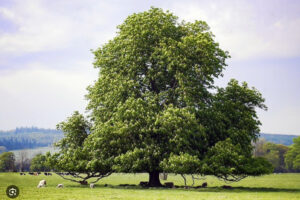
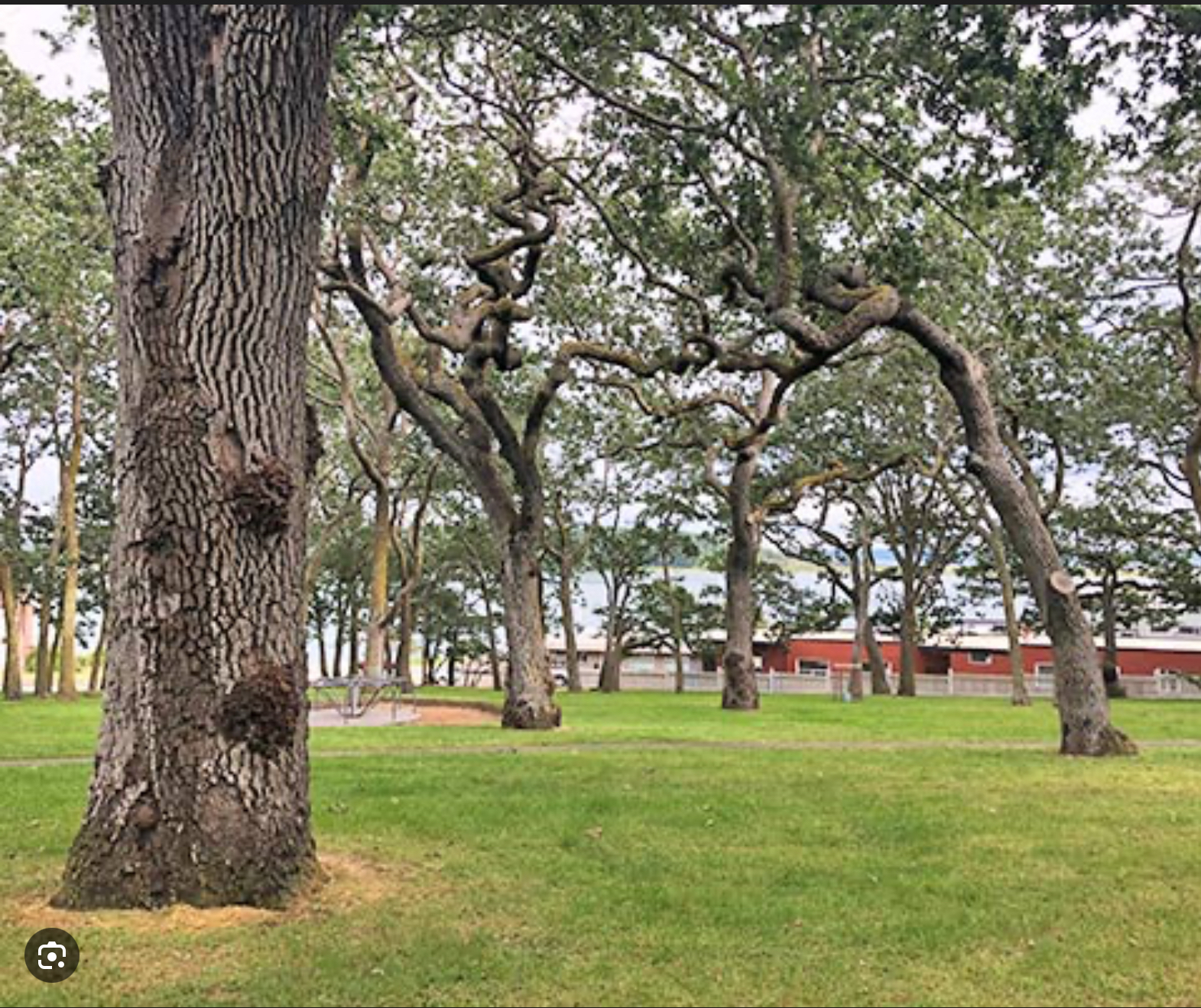

Before conifers cloaked the Pacific Northwest, Quercus garryana—the Garry oak—stood as sentinel of open prairies and sunlit slopes. Named for Nicholas Garry of the Hudson’s Bay Company, this oak is the only native species west of the Cascades, stretching from southern California to British Columbia A.
But its history isn’t just botanical—it’s cultural.
Indigenous peoples shaped Garry oak ecosystems through fire and care. Frequent burns cleared underbrush, encouraged camas and other edible bulbs, and allowed oaks to thrive in deep soils where firs might otherwise dominate B. These landscapes weren’t wild—they were cultivated, storied, and sacred. Families tended camas plots, hunted deer among the oaks, and passed down ecological knowledge rooted in reciprocity.
After the last ice age, Garry oaks recolonized the region, peaking 6,000–8,000 years ago during a warmer, drier climate C. Today, their patchy distribution reflects both climate shifts and colonial disruption. Yet they persist—on rocky slopes, in dry meadows, and in the memory of place names like Camosun, meaning “place to gather camas.”
European settlers admired the oak’s aesthetic, but often misunderstood its ecological role. Fire suppression and development have since threatened these ecosystems. Regeneration lags. Seedlings are browsed by deer, shaded out by conifers, or lost to pavement.
Still, some Garry oaks live 500 years. They host galls, mistletoe, and stories. They hold the memory of Indigenous stewardship and the promise of ecological renewal.
Washington is actively restoring Garry oak ecosystems through tribal partnerships, urban forestry grants, and citizen-led mapping projects—including efforts that touch Yelm and the broader Puget Sound region. These trees are rare, resilient, and deeply rooted in both ecological and cultural history.
🌳 Garry Oaks in Washington: Restoration, Resistance, and Yelm’s Quiet Guardians
Washington’s only native oak, Quercus garryana, is critically imperiled in many regions. Once widespread across prairies and savannahs, Garry oak ecosystems now occupy less than 3% of their original range A. Yet the state is fighting to preserve them—through science, community, and Indigenous collaboration.
🔥 Restoration in Action
- San Juan Islands Conservation District is thinning overstocked forests, replanting native species, and producing biochar to restore Garry oak habitats. Their work includes partnerships with Coast Salish tribes and local workforce training B.
- Sound Water Stewards on Whidbey Island are growing Garry oak seedlings, planting native rhododendrons, and restoring endangered prairie ecosystems C.
- Clover Park Technical College in Lakewood maintains a 30-acre Garry oak savannah with over 700 mature trees. Supported by a $19,000 grant from the Department of Natural Resources, students and volunteers clear invasives, plant wildflowers, and catalog biodiversity A.
🗺️ Mapping the Puget Sound’s Oaks
The Sound Oaks Initiative is using GIS technology to map Garry oaks across the Puget Sound—including areas near Yelm. This citizen science project helps identify remnant stands, guide conservation, and connect communities to their ecological heritage D.
🌾 Yelm’s Quiet Grove
While Yelm isn’t widely known for Garry oak savannahs, it sits within the historical range of these trees. Scattered individuals and small groves may still persist on dry slopes, old pastures, or near camas-rich prairies once tended by Nisqually and Coast Salish peoples E. These oaks are drought-tolerant, culturally significant, and ecologically vital—hosting wildflowers, birds, and pollinators.
Want to help? You can:
- Join local restoration events or wildflower plantings.
- Support mapping efforts through Sound Oaks.
- Advocate for prairie preservation in Thurston County.
- Plant Garry oak seedlings and protect them from browsing deer.
Discover more from Anderson woodworks custom furniture & cabinets
Subscribe to get the latest posts sent to your email.