
For a long time, minimalism has been the loudest voice in interior design. Clean rooms, empty walls, and perfectly styled spaces that look great in photos—but don’t always feel like home. As someone who works with wood, furniture, and real living spaces every day, I’ve found myself drawn in the opposite direction.
Maximalist décor gets a bad reputation. People hear the word and think clutter or hoarding. But that’s never what it’s been about for me. Maximalism, when done well, is about curating your collections—your story—not collecting things just to fill space.
Hoarding Is Accidental. Curating Is Intentional.
The difference matters.
Hoarding happens when objects pile up without purpose. Curating means every piece earns its place. Whether it’s a piece of art, a stack of books, or a handmade table that carries marks from the process, there’s intention behind it.
When I build furniture or design a room, I’m not thinking about how empty I can make it. I’m thinking about how the space can support the life happening inside it—what needs a home, what deserves to be seen, and what tells the client’s story.
Why Maximalism Feels More Honest
Minimalism often asks people to hide parts of themselves. Maximalism invites you to show them.
Collections are personal:
Art you’ve gathered over time Books that changed how you think Objects from travel, family, or craft Furniture made to last, not just to match
These things aren’t clutter. They’re evidence of a life lived. When I walk into a home filled with meaningful objects, I immediately know who lives there. That’s something no blank wall can tell you.
Furniture Is the Anchor
This is where my work really comes into play.
Maximalist spaces don’t work without a strong foundation. Furniture and cabinetry aren’t background pieces—they’re the structure that keeps everything from feeling chaotic.
A well-built bookcase, sideboard, or custom cabinet creates order without stripping away personality. Solid wood, thoughtful proportions, and intentional layout give collections a place to live. When furniture is designed properly, it allows a room to hold more—without feeling messy.
I design and build pieces with this in mind. They’re meant to support layers: books, objects, art, and negative space all working together.
Layering Takes Discipline
Maximalism isn’t throwing everything into a room and hoping it works. It takes just as much discipline as minimalism—maybe more.
I pay attention to:
Repeating wood tones Echoing materials and textures Mixing old pieces with new work Letting handmade elements stand next to refined ones
When the layers speak to each other, the room feels rich, not loud. Warm, not overwhelming.
Editing Is Part of the Process
One thing people don’t expect: maximalism still requires editing.
Curating means revisiting your space and asking hard questions:
Does this still belong here? Does it still represent me? Is it adding to the room—or distracting from it?
I tell clients this all the time. You don’t need more stuff. You need the right stuff—and furniture that gives it a proper home.
Why I Design for Maximalist Living
The homes I enjoy building for most are the ones that feel lived in, layered, and personal. Spaces where furniture isn’t precious, but respected. Where cabinets hold stories, not just storage.
Maximalist décor isn’t about excess. It’s about intentional abundance. It’s about surrounding yourself with things you love, built and arranged in a way that makes sense for how you actually live.
That philosophy shows up in my work every day—whether I’m building a table, designing cabinetry, or helping someone rethink how their space functions.
A Home Should Feel Complete, Not Empty
At the end of the day, I don’t believe a home needs to be stripped down to be beautiful. I believe it should feel complete.
Maximalism, done right, isn’t cluttered.
It’s curated.
It’s grounded.
And it’s deeply personal.
If your space feels like it’s missing something, the answer may not be less—it may be better furniture, better structure, and more intention.

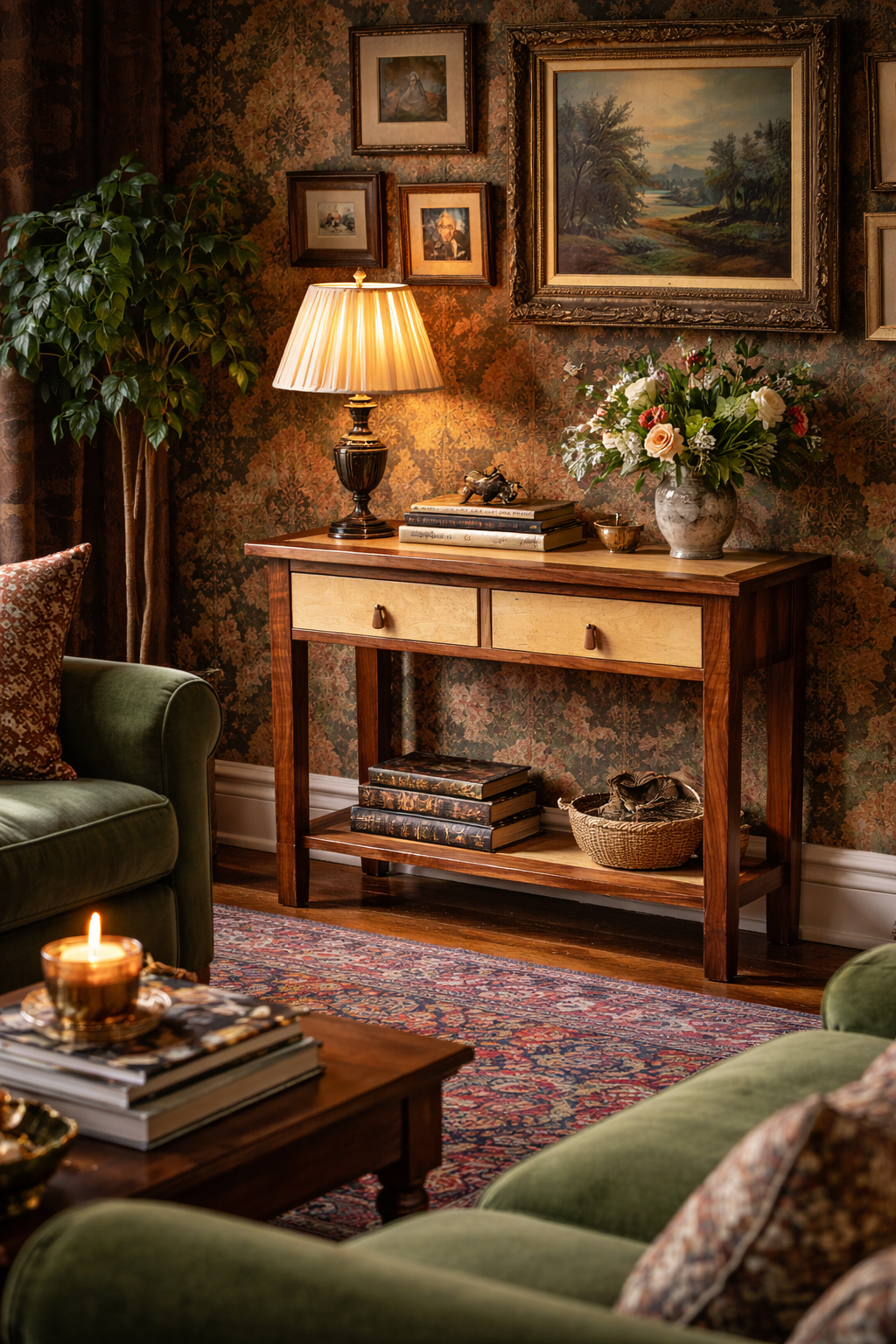
To order hand crafted furniture like my Columbia hall table visit my commission page. Please share this blog and subscribe if you like to see more.
Discover more from Anderson woodworks custom furniture & cabinets
Subscribe to get the latest posts sent to your email.