Most living rooms do too much with too little discipline. They hold media, books, games, art, lighting, family storage, and often a few awkward leftovers from other rooms. That is exactly why custom built in cabinets for living room spaces matter. When they are designed properly, they do not just add storage. They establish order, define the architecture, and give the room a clearer purpose.
This is not about filling a wall with boxes. It is about using cabinetry to solve the room as a whole. Good built-ins determine what stays visible, what disappears, how the eye moves through the space, and how the room supports daily life without looking busy or improvised.
Why custom built in cabinets for living room spaces work
A living room usually suffers from one of two problems. Either it lacks enough storage and every object ends up on display, or it has too many unrelated furniture pieces competing for space. Custom cabinetry corrects both issues because it is made for the dimensions, traffic patterns, ceiling height, and function of the room you actually have.
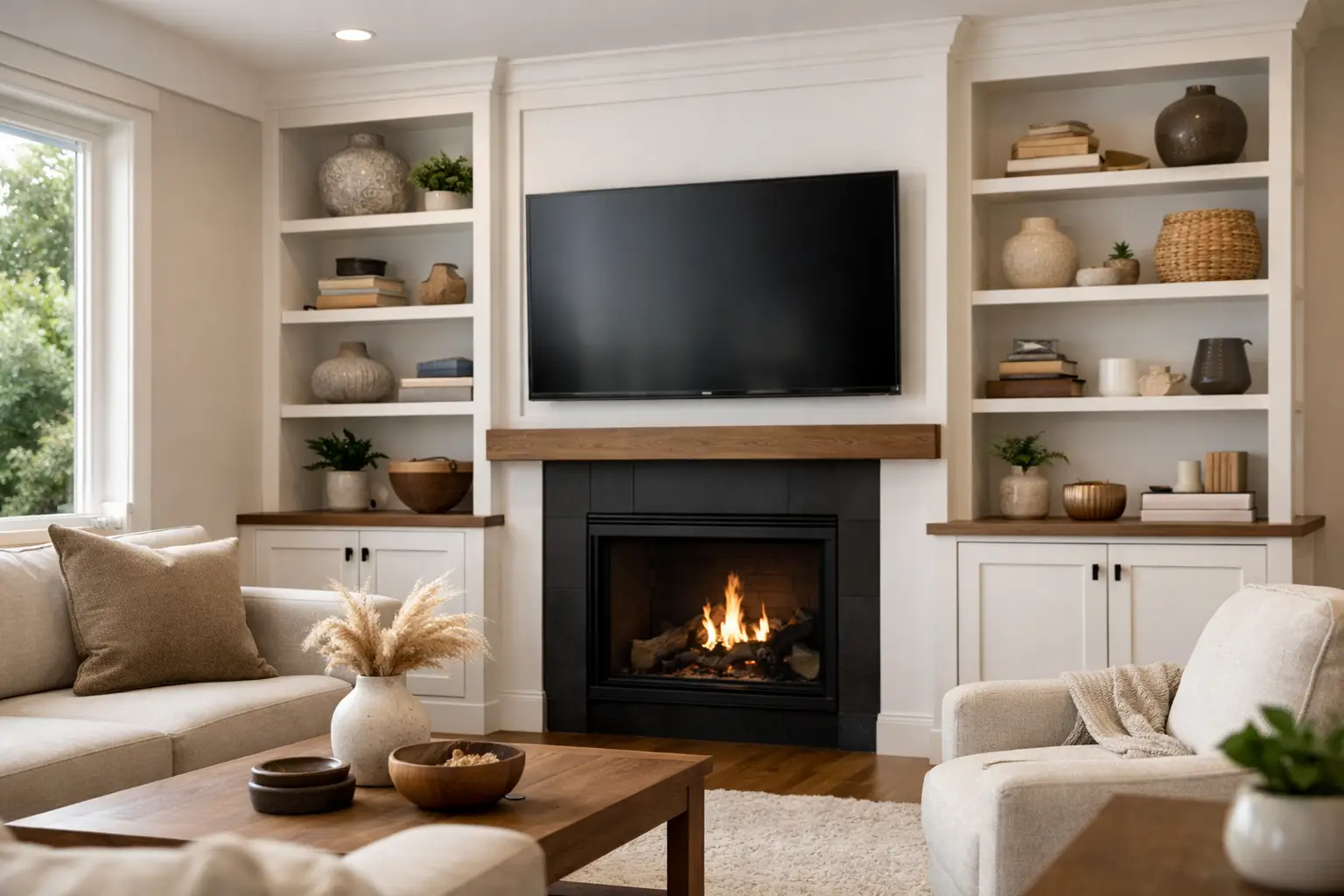
That matters more than most homeowners expect. A freestanding console may technically store media equipment, but it does nothing to address wall scale, visual balance, or the dead space above and beside it. Built-ins can frame a fireplace, anchor a television wall, turn an alcove into something useful, or create a full library effect in a room that previously felt unresolved.
The best results come from restraint. A living room does not need cabinetry on every wall. It needs cabinetry where the room asks for structure. Sometimes that means a full-width composition with lower cabinets and open shelving above. Sometimes it means a quieter solution with paneled storage below windows and a single focal section for books or display.
Start with function, not style
Homeowners often begin by collecting images. That is understandable, but it is rarely the right first move. Cabinetry should come from use. If you start with appearance alone, you risk building an expensive feature that looks polished but never quite works.
Begin with the room’s actual demands. Do you need concealed storage for games, throw blankets, and electronics? Do you want a dedicated library wall? Does the television need to disappear visually rather than dominate the room? Are there children in the house, which changes durability and access? Do you host often, meaning the room needs to feel calm and generous rather than crowded with objects?
Those answers determine the layout. They also shape the details that make cabinetry feel considered instead of generic. Shelf depth, cabinet height, door style, lighting, hardware, ventilation, cord management, and even the ratio of open to closed storage all come from function first.
The design decisions that separate good built-ins from expensive mistakes
Proportion is the first test. Cabinets that are too heavy make a living room feel compressed. Cabinets that are too shallow or too fragmented can feel decorative rather than architectural. The right proportions depend on ceiling height, wall width, adjacent windows, fireplace massing, and what other furniture needs to live in the room.
Material choice is just as important. Painted cabinetry can be appropriate, but the finish needs enough depth and durability to age well. Natural wood brings warmth and gravity, though species and grain selection matter. This is where a lot of mass-market work falls apart. It treats wood as surface decoration rather than structure and character. Better work considers how material, joinery, finish, and room light interact over time.
Then there is visibility. Open shelves sound appealing until every object becomes part of the room’s visual workload. Closed storage is often the stronger choice in a hard-working living room because it allows the architecture to carry the design instead of forcing everyday clutter to perform as styling.
That does not mean open shelving is wrong. It means it should be used with intent. A few shelves for books, art, or collected objects can create rhythm and personality. Too much open shelving can leave the room looking permanently unfinished unless someone is willing to maintain it constantly.
Where custom built in cabinets for living room layouts make the most sense
The most common location is the main focal wall, especially around a fireplace or media area. This approach can unify the room and give scale to features that otherwise feel disconnected. If done well, it also reduces the visual impact of a television by integrating it into a broader composition.
Alcoves are another smart opportunity. Many homes have shallow recesses or underused side walls that are too specific for standard furniture. Custom cabinetry turns those awkward areas into useful square footage without forcing a compromise on fit.
Window walls can also benefit from lower built-ins, especially when there is enough height beneath the sill. This approach preserves light while adding storage and creating a more settled perimeter. In some rooms, a long built-in bench with concealed cabinetry below does more for comfort and function than another sofa or pair of accent chairs.
The trade-off is that built-ins are permanent. That permanence is part of their value, but only if the layout is thought through. If a homeowner expects to rearrange the room often, the design should allow for that reality. Not every wall needs a floor-to-ceiling installation. In some cases, lower cabinets with art or paneling above leave more flexibility.
How the room should guide the cabinet design
Living room cabinetry should never look as if it was borrowed from a kitchen. The language is different. Kitchen cabinets are task-driven and repetitive. Living room built-ins need more composure. They carry visible weight in a social space, so the detailing has to be quieter and more architectural.
That may mean inset doors, better face-frame proportions, fewer exposed seams, integrated lighting, or a more disciplined approach to hardware. It may also mean reducing ornament. Fine work does not need to announce itself loudly. Often the strongest cabinetry feels inevitable, as if the room should always have looked that way.
This is where furniture thinking matters. The best custom shops do not treat built-ins as construction alone. They approach them with the same concern for proportion, silhouette, and tactile quality that they bring to fine furniture. That difference shows up in the finished room. It feels intentional rather than installed.
What homeowners should expect from the process
Strong built-in work starts long before fabrication. First comes measuring, planning, and understanding how the room functions. Then the design needs to resolve details that many clients do not initially see, including outlet locations, trim relationships, lighting, door swings, venting for electronics, and how the cabinetry meets the floor, wall, and ceiling.
After that, material and finish selections should support the architecture of the home, not fight it. A newer house may benefit from cleaner lines and restrained profiles. An older home may need cabinetry that acknowledges existing trim language and scale. Matching a house exactly is not always the goal, but continuity matters.
Fabrication is where precision becomes visible. Poorly made built-ins telegraph themselves through uneven reveals, weak joinery, thin materials, and finish work that looks tired too soon. Better work takes longer because it is built for alignment, durability, and repeated use.
For homeowners in the Pacific Northwest, climate and light can also influence decisions. Wood tone, finish sheen, and color depth read differently in gray winter light than they do in bright summer conditions. That is not a reason to play it safe. It is a reason to choose materials with enough substance to hold up in changing light.
Cost, value, and the question that actually matters
Custom cabinetry is an investment, and it should be treated like one. The right question is not whether built-ins cost more than buying separate furniture. They do. The real question is whether the room needs a permanent solution to function and feel the way it should.
If the answer is yes, custom work can be the more disciplined decision. It removes the cycle of buying pieces that almost fit, storing more than they should, and trying to correct architectural problems with accessories. It also adds a kind of value that is difficult to measure only in resale terms. Daily ease matters. Visual quiet matters. A room that finally works matters.
Anderson Woodworks approaches this work from that position. Not as decorating, and not as trend-chasing cabinetry, but as a room-scale design decision grounded in use, proportion, and craftsmanship.
If you are considering custom built in cabinets for living room spaces, resist the urge to ask what style is popular right now. Ask what your room needs to hold, what should disappear, and what kind of permanence you want to live with for the next ten or twenty years. That is where the right design begins.
Discover more from Anderson woodworks custom furniture & cabinets
Subscribe to get the latest posts sent to your email.