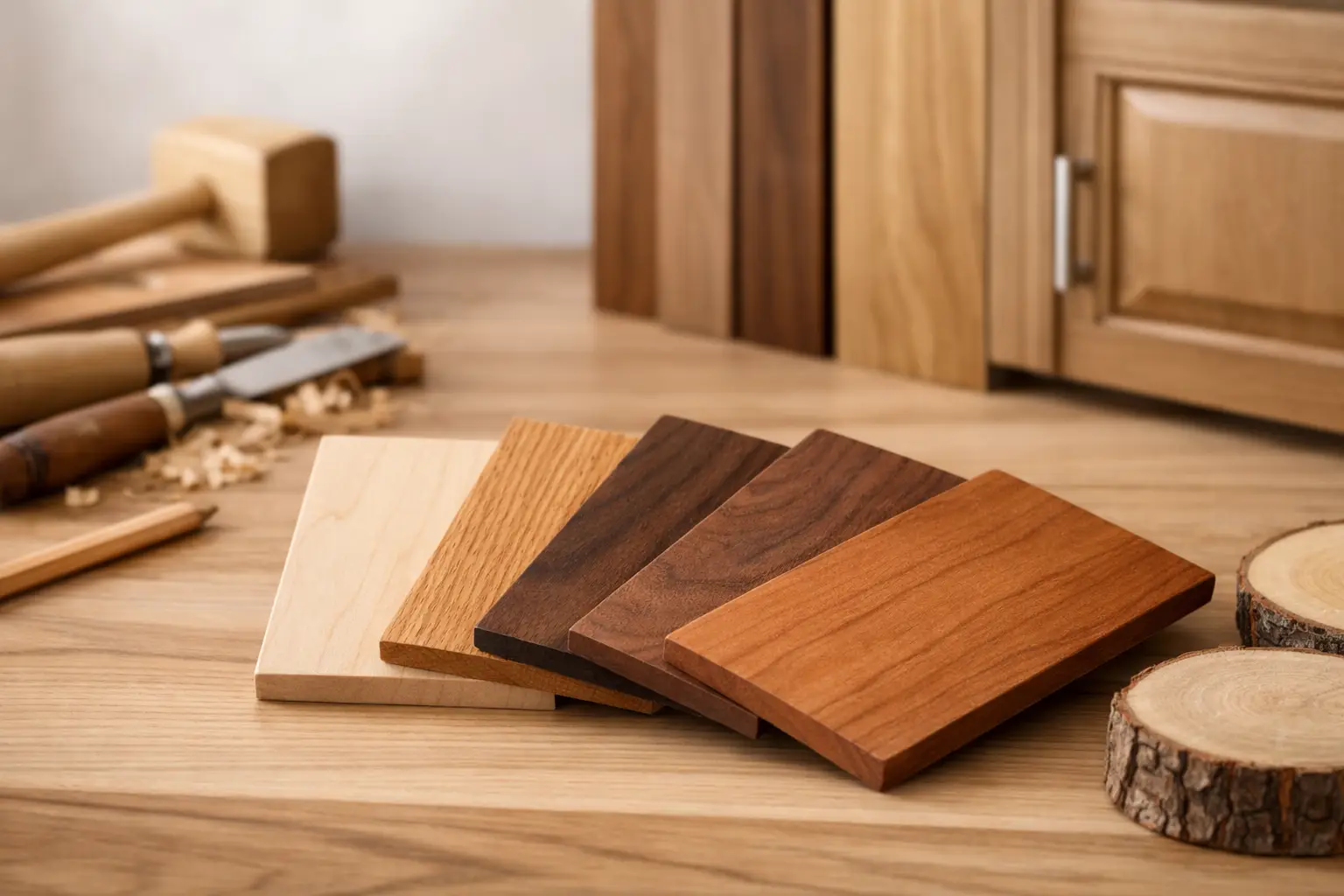
Cabinet wood is not a cosmetic decision. It affects how a room feels, how cabinetry ages, how doors move through the seasons, and whether the finished work still looks right ten years from now. When clients ask about the best woods for cabinetry, they are usually asking a larger question: what material will hold up, suit the room, and justify the investment?
That answer depends on use, finish, budget, and the level of visual character you want in the space. A painted mudroom built-in does not need the same wood strategy as a walnut study or a white oak kitchen designed to carry the room for the next twenty years. Good cabinetry starts with proportion and construction, but species choice matters. A great design executed in the wrong wood is still the wrong decision.
What makes the best woods for cabinetry?
The best cabinetry woods do four things well. They stay stable enough for doors and panels, they machine cleanly, they take finish in a predictable way, and they fit the architectural intent of the room.
Durability is part of the equation, but it is not the only one. A very hard wood is not automatically better if it fights the finish, moves unpredictably, or pushes the project well beyond its proper budget. Likewise, a lower-cost species can be the right call when the cabinetry will be painted and the design relies more on joinery and layout than on dramatic grain.
This is where trend-driven advice often fails. People get told that one wood is “premium” and another is not, as if the label alone settles the matter. It does not. Material selection should follow the function of the room and the visual weight you want the cabinetry to carry.
The best woods for cabinetry and when to use them
White oak
White oak is one of the strongest choices in custom cabinetry. It is hard, durable, and visually grounded without feeling heavy. The grain has movement and presence, which gives cabinet fronts and larger built-ins real architectural value. In a well-designed room, white oak can do more than fill a wall – it can define the room.
It also finishes well, from clear matte treatments to deeper smoked or fumed tones. For clients who want warmth without the orange cast associated with older oak cabinetry, white oak offers a cleaner, more refined direction.
The trade-off is cost and visual assertiveness. White oak is not subtle. If the room already has a lot of grain, pattern, or competing materials, it can become too busy. It also demands disciplined design. Poor proportions and generic door profiles do not hide behind a strong species.
Walnut
Walnut remains one of the most compelling woods for cabinetry when the goal is depth, richness, and a more tailored, furniture-led feel. It works especially well in studies, bars, libraries, and other spaces where cabinetry should feel substantial and intimate.
The color variation in walnut is part of its appeal. Browns shift from warm chocolate to gray undertones, and the grain can read either calm or dramatic depending on the cut. Finished properly, walnut has a seriousness that painted cabinetry rarely achieves.
It is, however, a premium material. That means it needs to be used with intention. Walnut across an entire large kitchen may be exactly right, or it may be far more wood than the room needs. In many homes, walnut is most effective when used where visual concentration matters most rather than spread indiscriminately across every surface.
Maple
Maple is a practical and often underrated cabinetry wood. It is hard, smooth-grained, and reliable for painted finishes as well as certain clear finishes. If you want a clean, controlled appearance without pronounced grain, maple does the job well.
For painted cabinetry, maple is often a stronger choice than oak because the grain is less open and less likely to telegraph through the finish. It also machines consistently, which matters when door construction and crisp detailing are non-negotiable.
The caution with maple is that it can blotch under some stains. If the goal is a dark stained look, it may not be the best species unless the finishing process is handled carefully. Maple is best when you want restraint, precision, and a quieter visual surface.
Cherry
Cherry has long been respected in fine furniture and high-quality millwork for good reason. It works beautifully, ages gracefully, and develops a richer color over time. In cabinetry, cherry brings warmth and formality without the colder edge some darker woods can carry.
It is particularly strong in traditional homes, transitional interiors, and rooms where the cabinetry is meant to feel settled rather than stark. A well-made cherry built-in can feel original to the house even when it is newly built.
What gives some clients pause is its color shift. Cherry darkens with age and exposure to light. For those who want a perfectly static appearance, that can be a drawback. For those who value patina, it is one of the species’ strongest qualities.
Alder
Alder is often chosen for its workability and lower cost relative to some premium hardwoods. It can be a sensible option for certain cabinetry projects, especially when a softer, more rustic character is appropriate.
It stains easily and can mimic more expensive woods to a point, which is part of why it shows up in many mid-range cabinet lines. But this is also where clarity matters. Alder is softer than maple, oak, or walnut, and it dents more easily. In a heavily used kitchen, that softness may become visible quickly.
That does not make alder a bad wood. It makes it a wood that should be used honestly. If the room calls for a more relaxed character and the budget needs discipline, alder can work. If you want cabinetry that resists wear and keeps sharp definition over time, there are stronger choices.
Hickory
Hickory is exceptionally hard and durable, which makes it attractive for high-use spaces. It has a bold grain and strong color variation, giving cabinetry a lot of visual energy.
For the right home, that can be an asset. In the wrong setting, it can dominate the room. Hickory is not a quiet background material. It tends to be most successful in interiors where a more rugged or natural expression is intentional.
Because of that pronounced variation, hickory requires confidence. If you want a controlled, calm cabinet surface, look elsewhere. If you want movement and toughness, it earns consideration.
Painted cabinetry changes the conversation
If cabinetry will be painted, the face wood matters differently than it does with a natural finish. In that case, the best choice is often the species that offers the greatest stability and the cleanest painted surface, not the most dramatic grain.
Maple is a common answer here, and poplar is also frequently used in painted applications. Poplar is cost-effective and machines well, though it is softer than maple. For painted built-ins, office cabinetry, and certain utility spaces, that may be entirely appropriate.
The key point is this: paying for an expensive showpiece wood only to bury it under paint is usually poor material logic. Better to invest in construction quality, door fit, hardware, and layout.
Solid wood vs veneer in cabinet construction
This is where many homeowners need better information. The best cabinetry is not automatically made from solid wood in every part. In fact, using solid wood indiscriminately can create movement problems.
Well-made cabinetry often combines solid wood doors and face frames with veneered plywood panels or cabinet boxes. That is not a shortcut. It is smart construction. Veneered panels provide stability, while solid wood is used where its structural and visual qualities matter most.
What matters is the quality of the substrate, the thickness of the veneer, the joinery, and the overall build method. A cabinet built with discipline will outperform one marketed with simplistic “all solid wood” language but poor construction logic.
How to choose the right wood for your room
Start with the room itself. Kitchens demand durability and visual balance because they carry daily wear and a lot of square footage. Offices, libraries, and bars can support richer species and more concentrated visual weight. Entry built-ins need toughness, but they also need to relate to the architecture around them.
Then consider finish. If you want paint, choose for surface quality and stability. If you want a natural finish, choose for grain, tone, and how the species will age. Finally, be honest about maintenance and use. A house designed for actual living should show judgment, not fantasy.
At Anderson Woodworks, material selection is part of the design work, not an afterthought. That is the difference between cabinetry that merely fills a wall and cabinetry that gives the room its structure.
The best wood is rarely the one with the loudest reputation. It is the one that fits the room, the function, and the standard you want to live with for a very long time.
Discover more from Anderson woodworks custom furniture & cabinets
Subscribe to get the latest posts sent to your email.