🪵 Part IV: The Craftsman’s Compass — Ethics in Design and Production
Ethics in furniture design isn’t just about where you source your wood or how you treat your scraps—it’s about intention, legacy, and the kind of world we want our work to inhabit.
In mass manufacturing, efficiency is king. Materials are chosen for cost-effectiveness, not character. Labor is outsourced, often stripped of fair compensation or safe conditions. The result? Furniture that fills a space but doesn’t serve the soul.
Craftsmanship turns that model inside out. Every decision matters—from the provenance of the wood to the finish that brings out its grain. I don’t just ask, “What will this look like?”—I ask, “What story will this tell?” Choosing sustainably harvested materials, avoiding chemical-heavy finishes, and designing for durability rather than disposability—that’s the ethical foundation beneath every piece I make.
Living and working in the Pacific Northwest, I’m awestruck daily by the landscape—towering trees, mist-draped hills, and rivers that carve through centuries. That beauty isn’t just a backdrop; it’s a reminder. It shapes how I design, how I source, and how I build. To protect what inspires me, I have to consider my impact. Every plank of wood, every finish, is chosen with that reverence in mind. I make furniture not just for homes, but for the home we all share.
But the compass doesn’t stop at materials. It points toward relationships—with clients, the environment, and future generations. It’s about transparency: explaining why a custom cabinet costs more than a factory-made one, and what that investment buys beyond dimensions. It’s about respecting the craft by refusing to compromise for trendiness or speed.
The ethical path isn’t always easy or lucrative—but it is enduring. Because when values guide the hand, the work speaks louder. It becomes part of something bigger than the piece itself—a quiet rebellion against waste, and a celebration of care.
If this series resonated with you, I’d be honored if you shared it with someone who values meaningful design.
📌 Like and share to help spread the word 📬 Subscribe for more reflections and behind-the-scenes looks at the craft 🌐 Visit my website to explore bespoke furniture rooted in story and sustainability
Your support doesn’t just help my work—it helps defend a way of creating that values quality, character, and care.
In fifty days, imported furniture may become more expensive. But the real cost isn’t in dollars—it’s in meaning.
For years, the market has been flooded with pieces that arrive fast, fade faster, and leave behind little more than landfill. They’re priced for convenience, not for memory. And as tariffs loom, many will scramble to justify the rising cost of what was never built to last.
But I don’t build for the moment. I build for the decades.
Each piece that leaves my shop carries intention. It’s shaped by hand, guided by philosophy, and designed to belong—not just to a space, but to a story. My work isn’t tariff-proof because it’s domestic. It’s tariff-proof because it’s rooted. In legacy. In care. In the quiet rebellion of making something that matters.
This shift in the market is more than economic—it’s cultural. It’s a chance to ask: What do we want to live with? What do we want to pass on? What do we want to remember?
If you’re a designer, collector, or homeowner reconsidering your sourcing, I invite you to explore what’s possible when furniture is made with soul. Not just American-made. Soul-made.
Because in the end, value isn’t what you pay. It’s what stays.
Ready to choose what stays? If you’re rethinking your sourcing, your values, or the kind of legacy you want to live with—let’s talk. I’m opening a limited commission window ahead of the tariff shift, designed for those who believe furniture should carry memory, not just price tags
→ [Schedule a design consult] email me a.woodworks@hotmail.com
Because in a world of rising costs and vanishing meaning, what you choose to keep says everything.
In an age increasingly defined by speed and disposability, the act of making—slowly, deliberately, with reverence—feels almost subversive. To shape wood with intention is not merely to produce an object, but to participate in a lineage of care, of memory, of meaning.
I do not consider myself a manufacturer. Nor even, strictly speaking, a designer. I am a custodian of form and feeling—a translator between material and memory. Each piece I create is a kind of invocation: a desk that invites reflection, a cabinet that safeguards silence, a chair that bears witness to the unfolding of a life.
Wood, in its quiet dignity, resists haste. It demands attention. It remembers. And when joined with human intention—through joinery, proportion, and poetic framing—it becomes more than functional. It becomes mnemonic. Sacred.
My practice is rooted in the belief that furniture can be a vessel for story. That a well-made object holds not only utility but presence. It anchors us. It speaks, softly but insistently, of the values we choose to live by: patience, beauty, permanence.
To commission a piece is to articulate a desire for continuity—for something that will outlast trends, outlive its maker, and carry forward the imprint of its owner. It is, in essence, an act of legacy.
This is the work. Not mass production. Not aesthetic mimicry. But the crafting of heirlooms that resist erasure. That say: I was made with intention. I will endure. I will remember you.
If you seek more than furniture—if you seek a companion to your own unfolding—then I invite you into the dialogue. Let us shape something worthy of memory.
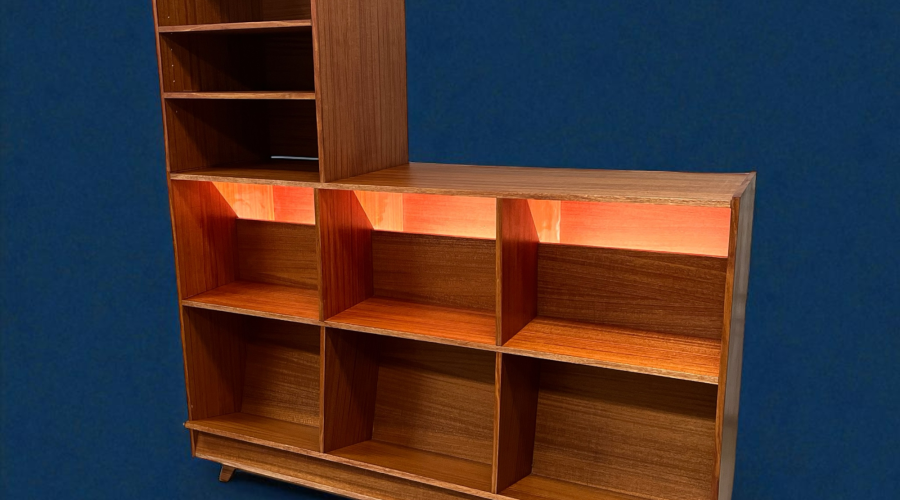
My client—an avid collector and listener—reached out with a vision: a midcentury-style cabinet that could house not just his records, but the ritual of listening itself. Honestly, I get it. There’s something timeless about dropping the needle on a record, hearing the crackle before the music begins. I’m from these days too, but that analog warmth? It never gets old.
He had a clear idea for the bottom shelf: it needed to tilt at a 15-degree angle, a subtle but intentional design choice to make browsing records feel intuitive and tactile. We talked materials, and mahogany quickly rose to the top of the list. Rich, warm, classic. After a quick budget chat, we opted for a mahogany veneer—keeping the aesthetic intact while staying within reach.
With that, I dove into the design. A few sketches later, we had our concept. Then came the build.
As the piece began to take shape in the shop, he stopped by to check in. There’s something special about those visits—when the client sees the work in progress, the raw wood, the joinery, the soul of the piece still unfolding. I showed him how I planned to add a pair of brass pins to the top section to keep it secure and steady. It was a small detail, but one that added elegance and function.
Then, as we stood together looking at the nearly finished cabinet, inspiration struck. The top shelf of the lower section had a hidden cavity behind it—an unused space with potential. We tossed around ideas: drawers, small cabinets. But with records in the way, those options felt impractical. That’s when I suggested backlighting.
He lit up. “Perfect,” he said.
And it was. A soft glow behind the records, like a quiet homage to the music itself.
This piece was more than a commission—it was a collaboration. A dialogue between craftsman and client, between form and function, nostalgia and innovation. That’s what makes the work meaningful. Not just the final product, but the shared journey to get there.
🔊 Ready to Build Your Own Soundtrack?
If music is part of your soul, why not give it a home that reflects your story? Whether you’re dreaming of a vinyl cabinet, a writing desk, or a piece that holds memory and meaning, let’s design something together. I don’t just build furniture—I craft legacy.
📩 Reach out to start your own collaborative journey.Contact me 🎼 Let’s make space for the things that move you.
Mastering Joinery for Furniture: 17 Expert Techniques for Strong, Beautiful Designs
Master the art of joinery for furniture with 17 proven techniques, from traditional mortise and tenon to modern pocket holes. Learn expert tips to build durable, stunning furniture pieces.
Introduction to Furniture Joinery
When you admire a well-crafted piece of furniture, you’re not just seeing wood and finish — you’re looking at the invisible engineering that holds it together: the joinery. Joinery is where craftsmanship meets structural integrity. It’s the hidden (and sometimes visible) backbone that decides whether a table lasts five years or five generations.
In furniture making, joinery is far more than just attaching two pieces of wood. The right joint ensures strength, allows for natural wood movement, and adds aesthetic appeal. From the precision of dovetails in a jewelry box to the rugged mortise and tenon of a farmhouse table, joinery tells a story of skill and attention to detail.
Essential Principles of Furniture Joinery
Understanding Wood Grain and Movement
Wood is a living material — even after being cut, it expands and contracts with changes in humidity. Joinery must account for this natural movement. For example, a table top fixed rigidly across its width will crack over time, but a floating tenon or breadboard end can accommodate seasonal shifts.
Choosing the Right Joint for the Job
Not all joints are created equal. The joint you choose depends on the load it will bear, whether it will be visible, and the tools you have. A chair leg joint needs strength against twisting, while a drawer corner might prioritize beauty.
Traditional Joinery Techniques
Mortise and Tenon Joints
Often called the “king” of woodworking joints, the mortise and tenon is centuries old. It’s ideal for frames, doors, and chair construction because of its immense strength. Variations include through, blind, and wedged tenons.
Dovetail Joints
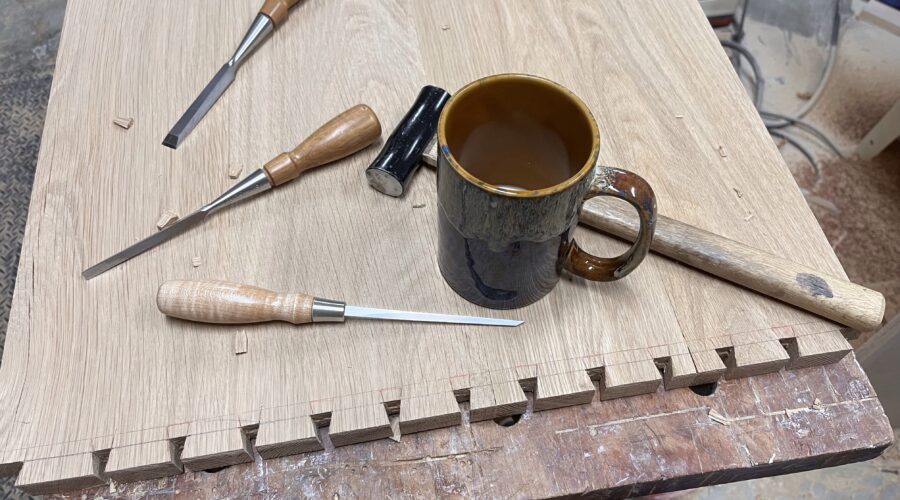
Famous for their beauty and mechanical strength, dovetails are commonly used in drawer construction. The angled “tails” lock into “pins,” preventing the joint from pulling apart.
Finger (Box) Joints
Finger joints are a simpler, more modern cousin to dovetails. They’re strong, easy to cut with a jig, and provide plenty of glue surface.
Lap Joints
One board overlaps another, providing simplicity and good strength for frames, shelves, and tabletops.
Doweling
Dowels act as mini tenons. While faster to make than mortise and tenon, dowels can be equally strong if done precisely.
Modern Joinery Methods
Biscuit Joinery
Uses oval-shaped compressed wood biscuits inserted into slots. The biscuit swells when glued, creating alignment and moderate strength — perfect for tabletops.
Pocket Hole Joinery
Quick and efficient, pocket holes are drilled at an angle to join pieces with screws. Great for hidden joints in cabinetry.
Domino Connectors
Festool’s Domino system combines the ease of biscuits with the strength of floating tenons.
Knock-Down (Flat-Pack) Fittings
Used in furniture that must be disassembled for transport. Common in modular and IKEA-style designs.
Joinery for Different Furniture Types
Tables and Desks
Mortise and tenon or domino joints work well for table aprons and legs.
Chairs and Seating
Require strong, flexible joints — often reinforced mortise and tenon.
Cabinets and Storage Units
Dovetails and dado joints excel here, balancing strength with elegance.
Beds and Large Frames
Bolt-together mortise and tenon joints allow for easy disassembly.
Every woodworker has a preference — some swear by the quiet, meditative pace of hand tools, while others prefer the efficiency of power tools.
Hand Tools like chisels, dovetail saws, and hand planes allow unmatched control and precision. They’re ideal for fine furniture and intricate joinery.
Power Tools such as routers, table saws, and biscuit joiners speed up production and improve consistency, especially when making multiple identical joints.
A true craftsman often blends both, using machines for rough work and hand tools for final fitting.
Essential Clamping Techniques
Clamps are the silent heroes of joinery. Without proper clamping, even a perfectly cut joint can fail.
Bar Clamps are great for long stretches like tabletops.
C-Clamps work well for smaller assemblies.
Parallel Clamps maintain alignment while applying even pressure.
Always use cauls (scrap wood between clamp and workpiece) to prevent clamp marks.
Avoiding Common Joinery Mistakes
Weak Joints Due to Poor Fit
A joint should fit snugly — too loose and the glue won’t hold; too tight and the wood might split. Always test-fit before gluing.
Ignoring Wood Expansion and Contraction
This is a beginner’s trap. When wood swells or shrinks, rigid joints can crack. Design joints that allow for seasonal movement — like floating panels in cabinet doors.
Finishing and Protecting Your Joints
Sanding and Flush Trimming
After assembly, joints often need sanding to create a seamless surface. Use a block plane or flush-cut saw to remove protrusions before sanding.
Applying Glue Correctly
More glue isn’t always better. Apply an even, thin layer to both surfaces. Too much glue leads to messy squeeze-out and weak bonding.
Protective Finishes for Longevity
Finish your piece with oil, shellac, lacquer, or polyurethane. A good finish protects against moisture, enhances grain, and prolongs joint life.
Advanced Joinery Styles for Artistic Furniture
Japanese Kumiko Patterns
Kumiko is an intricate latticework technique, often seen in shoji screens. While decorative, it still requires precise joinery.
Decorative Inlays in Joints
Adding contrasting wood or metal inlays to joints can turn them into design features rather than hidden elements.
Sustainability in Joinery
Using Eco-Friendly Adhesives
Modern adhesives can be plant-based or low-VOC, reducing harmful emissions.
Joinery That Allows for Disassembly and Repair
Designing with reversible joints means furniture can be repaired instead of discarded, aligning with sustainable craftsmanship principles.
FAQs About Furniture Joinery
Q1: What’s the strongest type of wood joint?
A: The mortise and tenon joint is generally considered the strongest due to its mechanical interlock and large glue surface.
Q2: Can I make good joinery without expensive tools?
A: Absolutely. With patience and skill, hand tools can produce professional results.
Q3: How do I choose the right joint for my project?
A: Consider the joint’s strength requirements, visibility, and the tools you have available.
Q4: Is glue alone enough for furniture joinery?
A: For load-bearing furniture, glue alone isn’t enough — mechanical interlocks or fasteners are essential.
Q5: What’s the best wood for practicing joinery?
A: Softwoods like pine are easier to cut, but hardwoods like maple give cleaner, crisper results.
Q6: Do I need clamps for all joints?
A: Most glued joints require clamping to ensure even pressure and proper curing.
Conclusion: Building Furniture That Lasts Generations
Joinery is both an art and a science. It demands patience, precision, and a deep understanding of wood’s behavior. Whether you lean toward traditional dovetails or modern pocket holes, the right joint can transform your furniture from functional to heirloom quality.
A well-made joint is invisible to most eyes — but to a woodworker, it’s the signature of craftsmanship. Master these techniques, and your furniture won’t just stand; it will stand the test of time.
In a world where mass production dominates, the legacy of handcraftedfurniture stands as a testament to patience, skill, and enduring beauty. For the traditional furniture maker, legacy isn’t just about making chairs and tables — it’s about preserving a philosophy of craftsmanship where every cut, joint, and curve has meaning.
The Timeless Appeal of Handcrafted Furnitureu
Handmade furniture carries a warmth and individuality that no machine can replicate. Each piece is a living artifact, telling a story through its grain, joinery, and imperfections — marks of the human hand.
Power tools may speed up production, but hand tools connect the maker directly to the wood. They demand presence, patience, and skill — qualities that are woven into the legacy of each finished piece.
A Furniture Maker’s Journey: From Apprentice to Master
Learning the Old Ways
Every master craftsman begins as a student, learning to read wood, sharpen chisels, and cut precise dovetails. The early years are about discipline, learning not just the “how” but the “why” of each step.
Developing a Signature Style
With time, the craftsman’s work becomes recognizable — the way edges are chamfered, the proportions of a leg, the feel of a drawer sliding into place. This unique signature is part of the maker’s enduring legacy.
Why Preserving Craftsmanship Matters Today
Legacy as More Than Just a Finished Piece
A handmade table might last 200 years, but its true value lies in the skills, traditions, and mindset it carries forward.
Passing Down Skills Across Generations
Just as tools are handed down from master to apprentice, so too are the techniques, stories, and philosophies that keep the craft alive.
10 Ways a Furniture Maker Builds Legacy with Hand Tools
Choosing Quality Wood — Selecting timber that will age gracefully ensures the piece will endure for generations. Honoring Traditional Joinery — Mortise and tenon, dovetails, and dowel joints hold without nails, reflecting centuries of wisdom. Maintaining Tools for Longevity — Well-cared-for hand tools last decades, sometimes centuries. Infusing Each Piece with a Story — Every commission carries meaning — a dining table for family gatherings, a cradle for a first child. Teaching Apprentices — Passing on the craft keeps the legacy alive. Restoring Antique Furniture — Giving old pieces new life honors the work of past craftsmen. Creating Heirloom-Quality Designs — Building pieces intended to be passed down, not thrown away. Using Sustainable Practices — Responsible sourcing ensures the environment remains healthy for future makers. Blending Old Techniques with Modern Needs — Adapting traditional joinery for today’s lifestyles. Documenting the Craft Process — Recording techniques and stories ensures the knowledge isn’t lost.
Myths About Traditional Furniture Making
Myth 1: Hand Tools Can’t Compete with Power Tools
While machines are faster, hand tools offer unmatched precision, control, and artistry.
Though it can be more costly upfront, handmade furniture lasts generations, often making it more economical over time.
FAQs About Legacy in Furniture Making
Q1: Why use hand tools instead of machines?
Hand tools give the maker direct control and a deeper connection to the wood.
Q2: How long can handcrafted furniture last?
With proper care, it can endure for centuries.
Q3: Can traditional techniques work with modern designs?
Yes — many craftsmen blend old methods with contemporary aesthetics.
Q4: Is handcrafted furniture eco-friendly?
Often, yes — especially when using local, sustainably harvested wood.
Q5: How can a beginner start learning traditional woodworking?
Begin with a few quality tools, take a class, and start small with projects like stools or boxes.
Q6: What makes an heirloom piece?
Durability, timeless design, and personal meaning.
Conclusion: Shaping Tomorrow with the Tools of Yesterday
For the traditional furniture maker, legacy is not an abstract idea — it’s a tangible reality, built into every mortise, curve, and finish. These pieces are more than furniture; they are bridges between past and future, carrying the stories of those who made them and those who will cherish them. In every handmade creation, the future inherits the wisdom of the past.
Bring the Past Into Your Home — Commission Your Heirloom Today
At Anderson Woodworks, every piece we create is more than furniture — it’s a chapter in your family’s story. Using time-honored hand tools and sustainable practices, we craft tables, chairs, cabinets, and heirlooms built to last for generations. Whether you dream of a farmhouse table for Sunday dinners or a handcrafted desk that inspires your work, we’ll bring your vision to life with skill, patience, and passion.
📞 Start your legacy today. Contact Anderson Woodworks to commission a piece that blends the craftsmanship of the past with the beauty of your future.
📌 Like and share to help spread the word 📬 Subscribe for more reflections and behind-the-scenes looks at the craft. Your support is vital.
Processing…
Success! You're on the list.
Whoops! There was an error and we couldn't process your subscription. Please reload the page and try again.
A reflection on space, soul, and the furniture that holds us
There’s a quiet kind of power in the spaces we inhabit. Not just in the walls or the light, but in the objects we choose to live with—the textures we reach for, the corners we retreat to, the furniture that remembers us.
Your home isn’t just a place. It’s a mirror. A refuge. A living archive of who you are and who you’re becoming.
What Makes a Space Feel Sacred?
For some, it’s the scent of cedar in the morning light. For others, it’s a handmade desk that holds both chaos and clarity. It might be a cabinet that stores heirlooms, or a bench that invites stillness.
Designing for sanctuary means asking:
What do I want to feel when I walk into this room?
What memories do I want to preserve?
What rituals do I want to protect?
Furniture as Emotional Architecture
I believe furniture can be more than functional—it can be emotional architecture. A well-crafted piece doesn’t just fill a space; it shapes how we move, how we rest, how we remember.
When I design, I think about:
The rhythm of the grain and how it echoes nature
The proportions that invite presence, not just utility
The story the piece will tell over time
Let’s Make This a Conversation
What’s one object in your home that makes you feel safe, seen, or grounded? Share your story in the comments—or tag me in a photo and tell me why it matters.
Or, if you’re dreaming of a piece that could hold your sanctuary, let’s talk. I design with intention, and I’d be honored to help you shape a space that feels like home.
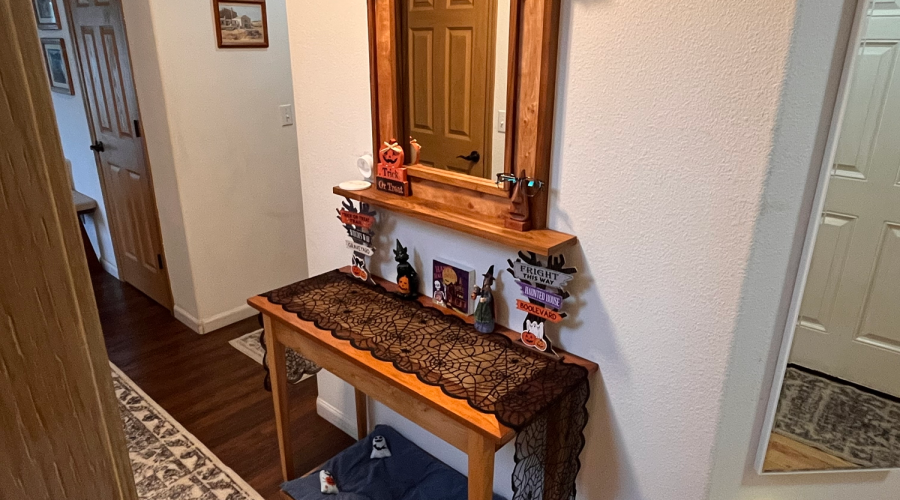
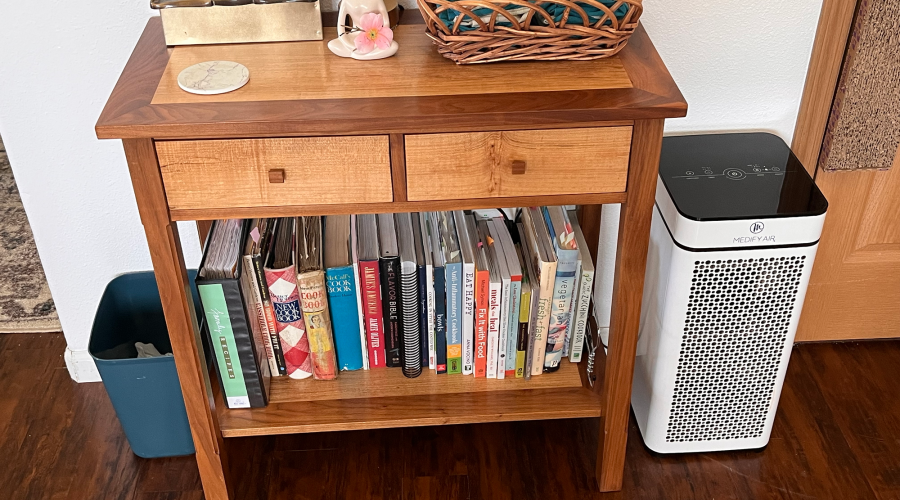
In 2015, I built the first Olympia hall table . It wasn’t meant to be a legacy piece at the time—just something I planned to sell. But as with many things crafted with intention, it took on a life of its own.
A year later, a client commissioned a longer version of the design, along with two end tables to match. That original table, however, never left our home. It stayed with us, quietly anchoring our space. Since then, it’s been reinterpreted at least three times in different variations, but the first one remains ours—a piece that has lived with us, aged with us, and become part of our daily rhythm.
My wife and I still love it. It sits among the collection of my first-built pieces, each one holding a kind of quiet presence. There’s something unmistakable about furniture that’s truly alive. I feel it every time I walk into a furniture store—yes, I do that from time to time—and notice the absence of energy in the pieces on display. That spark, that soul, is what I want in my home.
This table has proven itself over the years. It’s lived through four boys, one lab, five cats, and countless art festivals. And yet, it’s never needed refinishing or repair. That kind of resilience matters. It’s not just about beauty—it’s about longevity, about creating something that lasts in a real home, through real life.
So when I say my work is an investment, I mean it. You’re not just saving money—you’re gaining a legacy. These pieces are built to be passed down, to carry stories, to become part of your family’s history.
Explore more custom pieces” or “Commission your own legacy table”
🧬 Part VI: From Commodity to Heirloom — Why Legacy Matters
In a world driven by upgrades and disposability, the idea of “forever” is rare. We replace instead of repair. We discard instead of cherish. But legacy is built on endurance—and handcraftedfurniture is one of its most tangible expressions.
A well-made piece becomes more than something you own; it becomes something you pass down. It witnesses birthdays, quiet evenings, hard conversations, and spontaneous laughter. It absorbs life. And like a tree that grows more rings with time, it deepens in value as the years unfold.
Mass-produced items aren’t meant to last. Their expiration is designed. But handcrafted furniture? It’s an investment in continuity. The cabinet your parents had becomes yours. The table where your child draws today may one day host their own family dinners. These objects become emotional relics—anchoring generations in shared memory.
I design furniture with this in mind. With each joint and finish, I’m thinking not just about today’s aesthetic, but tomorrow’s meaning. Will this piece still speak in 30 years? Will its story grow richer as it moves through time?
In defending craftsmanship against the conveyor belt of consumerism, I’m defending the idea that beauty can be lasting. That things made with care carry the fingerprints of legacy. And that maybe, in a world of temporary things, we all deserve something permanent.
If this series resonated with you, I’d be honored if you shared it with someone who values meaningful design.
📌 Like and share to help spread the word 📬 Subscribe for more reflections and behind-the-scenes looks at the craft 🌐 Visit my website to explore bespoke furniture rooted in story and sustainability
Your support doesn’t just help my work—it helps defend a way of creating that values quality, character, and care.
In a world of mass production and fleeting trends, there’s something quietly defiant about choosing custom. It’s not just a cabinet—it’s a declaration. A mirror isn’t just reflective—it’s a portal into your values. And furniture? It’s the architecture of your daily rituals, the silent witness to your life’s unfolding.
🌿 Why Commissioning Matters
When you commission a piece, you’re not buying furniture. You’re investing in intention.
Tailored to You: Every curve, every grain, every proportion is designed to reflect your space, your rhythm, your story.
Built to Last: My work isn’t rushed. It’s crafted with heirloom quality, meant to outlive trends and even generations.
Emotionally Resonant: Walnut that warms with age. Joinery that speaks of tradition. Design that evokes memory and meaning.
🛠️ The Process: Collaborative, Thoughtful, Human
Commissioning with me is a conversation. We begin with your needs, your dreams, your quirks. I sketch, I listen, I refine. Together, we shape something that couldn’t exist without you.
Whether it’s a record cabinet that honors your vinyl collection, a kitchen island that anchors your family’s gatherings, or a bookcase that elevates your pursuit of knowledge—each piece is a reflection of your values, translated through my hands.
🔥 Why Now?
Because your home deserves more than “good enough.” Because beauty is a form of resistance. Because the spaces we inhabit shape the lives we lead.
If you’ve ever felt that your home should feel more like you, this is your invitation.
✨ Let’s Create Something That Lasts
I invite you to commission a piece that speaks—quietly, powerfully, and personally. Reach out. Let’s begin the conversation.