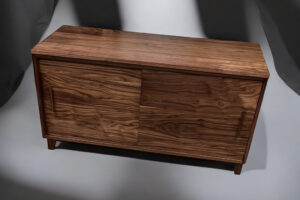
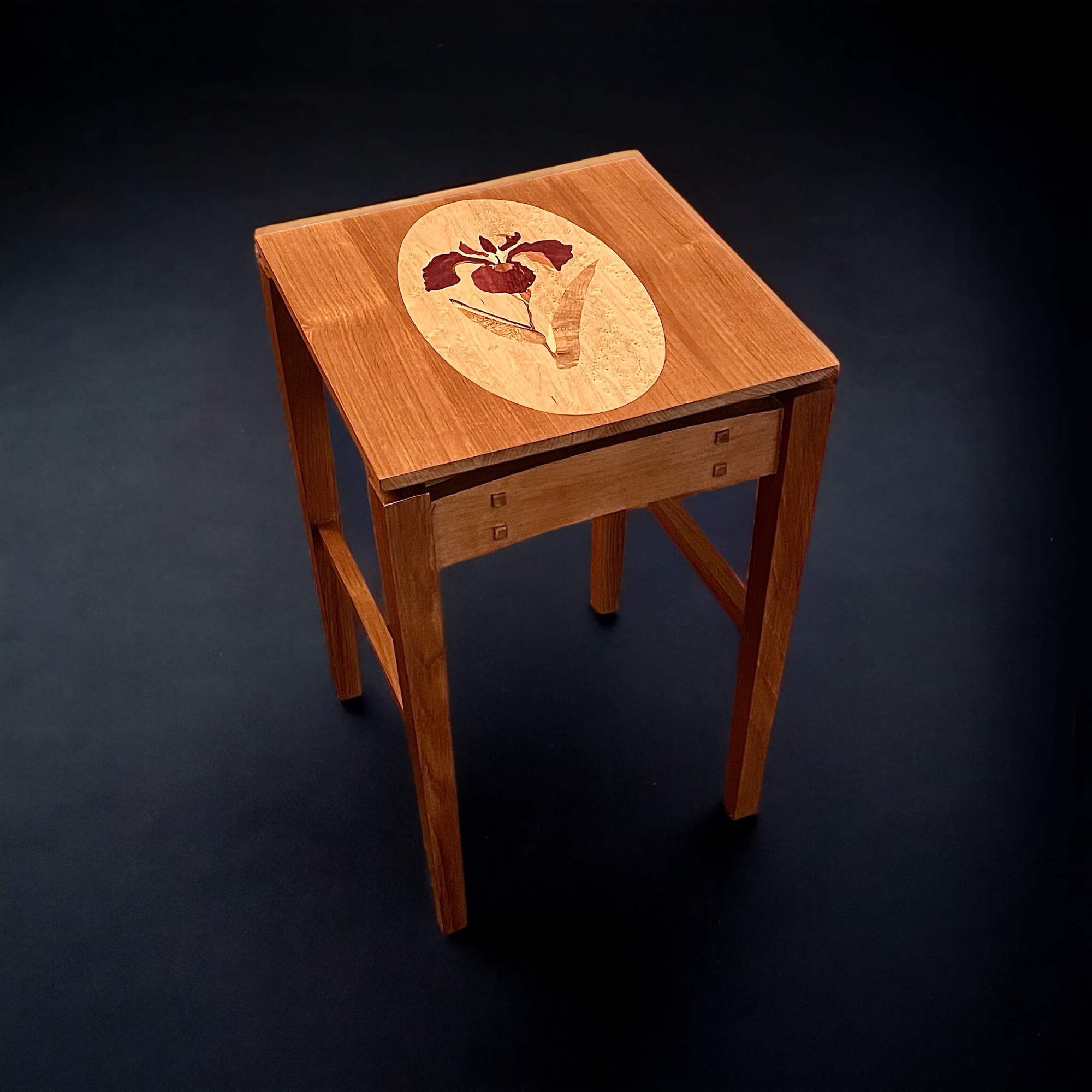
On timber trafficking, disposable furniture, and what it means to know where the wood came from.
By Anderson | April 29, 2026 | Yelm, Washington | 9 min read

The shop floor — where every piece begins.
The Story Underneath the Furniture
On April 27, 2026, the Boise Cascade Company — a name most people know from lumber yards and home improvement stores — pled guilty to a felony violation of the Lacey Act. The charge: purchasing more than $30 million worth of hardwood plywood that had been illegally imported from China, transshipped through Malaysia with falsified paperwork to dodge U.S. import duties. The fine was $6.38 million — twice the gross profits the company made from the illegal wood.
That’s not a story about a rogue operator in a back alley. Boise Cascade is publicly traded on the New York Stock Exchange. They have compliance departments. They have lawyers. And according to federal prosecutors, they either knew the plywood they were buying from a Florida supplier called Horizon Plywood was illegal — or they were “willfully blind” to it. The scheme moved between $25 million and $65 million in plywood products before investigators shut it down. And here’s the detail that sits with me: Boise Cascade kept placing orders even after the FBI executed a search warrant on Horizon’s warehouse in January 2021.
I’m not telling you this to demonize one company. I’m telling you because this is the water the furniture industry swims in. Most people who buy a dining table or a bookshelf never think about where the wood inside it actually came from — what country, what forest, what hands touched it, what laws may have been bent or broken to get it onto a container ship. And honestly, the industry has been built so that you don’t have to think about it. That distance between maker and material, between buyer and origin — it’s not a bug. It’s the business model.
I build furniture for a living. One piece at a time, from solid wood I can name and trace. And cases like Boise Cascade are part of the reason why.
• • •
An Industry in Reset
The Boise Cascade case didn’t land in a vacuum. The furniture industry is in the middle of a reckoning — economic, ethical, and structural — and the cracks have been visible for a while now.
Consumers are pulling back on big-ticket furniture purchases. Inflation, housing uncertainty, and a general tightening of discretionary spending have made people hesitate before dropping two thousand dollars on a sofa. And yet, the major mass-market brands — Pottery Barn, West Elm, Crate & Barrel, Ashley — have responded not by lowering prices, but by raising them. The logic is volume compression: if fewer people are buying, each sale needs to carry more margin. It makes sense on a spreadsheet. But for the person standing in a showroom, it feels like paying more for less.
High Point Market in the spring of 2026 had what the trade press called “cautious optimism.” Translated from industry-speak, that means: nobody is panicking, but nobody’s celebrating either. Consolidation continues. Smaller brands get absorbed. Supply chains get leaner — which is a polite word for more fragile. The whole system is optimized for throughput: get the product from the factory to the warehouse to the showroom to the living room as fast and cheaply as possible.
The volume-driven furniture model doesn’t just cut corners. It depends on you not asking where the corners went.

Here’s the thing about optimization: it always sacrifices something. When the goal is volume and speed, what gets sacrificed is knowledge. Knowledge of the material. Knowledge of the maker. Knowledge of the process. And eventually, knowledge of whether the whole thing was even legal.
That’s not a theoretical concern. That’s what the Boise Cascade case proved. A publicly traded company, with every resource in the world to verify its supply chain, chose not to look too closely. Because looking closely costs time, and time costs money, and money is the only metric that matters when you’re shipping containers of plywood across the Pacific.
Black walnut lumber — every board has a story written in its grain.

What Disappears When Furniture Becomes a Commodity
I want to talk about what gets lost. Not in an abstract way — in a specific, sensory, hands-on-the-wood way.
When you cut into a piece of fresh walnut, there’s a smell. It’s warm, almost sweet, with a faint bitterness underneath — like dark chocolate and earth. That smell tells you something. It tells you the wood is alive in a way that matters. It hasn’t been kiln-dried into anonymity or laminated into something unrecognizable. It’s still carrying information — about where the tree grew, how fast, how much light it got, what the soil was like.
The grain tells you things, too. Tight, straight grain means the tree grew slowly, in competition with other trees, reaching for light. Wide, sweeping grain means open field, lots of sun, fast growth. Burls and figure — the curly, quilted, spalted patterns that people pay a premium for — those are the tree’s response to stress. Injury, infection, unusual growing conditions. The most beautiful wood is almost always wood that survived something.
The most beautiful wood is almost always wood that survived something.
When I select a board for a project, I’m reading all of that. I’m turning it over, looking at the end grain, feeling the weight, checking for twist. I’m thinking about how this particular piece of walnut or cherry or white oak will behave when I joint it, plane it, cut the joinery. I’m thinking about whether the grain direction will work with the design or fight it. I’m already having a relationship with the material — and the piece of furniture doesn’t even exist yet.
That relationship is the first thing that disappears when furniture becomes a commodity. In a volume operation, wood isn’t selected. It’s sourced. It arrives in bundles, graded by a standard, cut to specification. Nobody is standing there smelling it. Nobody is reading the grain. The material is an input — like thread count in a textile factory. It’s measured, priced, and consumed.
A mortise-and-tenon joint — joinery that has held furniture together for millennia.

And then there’s the joinery. A mortise-and-tenon joint — the kind that’s been holding furniture together for thousands of years — is a simple concept. A hole in one piece, a tongue on another, fitted together so tightly that the wood itself creates the bond. Done right, it’s stronger than the wood around it. Done right, it will outlast the person who built it.
But it takes time. You have to measure, mark, cut, test-fit, adjust. There’s no shortcut that doesn’t show. A sloppy tenon rattles. A blown-out mortise never holds. The joint either fits or it doesn’t, and the only way to make it fit is to care enough to do the work.
Compare that to a cam lock and a dowel pin — the hardware inside most flat-pack furniture. It’s engineered for assembly speed, not longevity. It works fine the first time. Maybe the second. But particleboard doesn’t forgive being taken apart and reassembled. The fibers tear. The holes wallow out. The furniture ages the way disposable things age: not gracefully, but toward the landfill.
What commodity furniture optimizes away
The smell of the wood. The knowledge of where it grew. The relationship between maker and material. The weight of a joint done right. The expectation that this piece will be in someone’s family longer than it will be in a catalog. These aren’t luxuries. They’re the whole point.
• • •
What I Choose Instead
My shop is in Yelm, Washington. It’s not large. There’s a workbench my grandfather would recognize, a table saw, a bandsaw, a planer, a set of hand tools I’ve been collecting for years. On any given day there might be one project in progress — maybe two. That’s by design.
I build custom furniture one piece at a time. The wood I use is solid — walnut, cherry, white oak, maple — and I select it personally. I know the species, the source, the mill. I can tell you about the board you’re sitting on, and I’m not guessing. That’s not a marketing claim. It’s just what happens when one person builds one piece of furniture from start to finish.

The joinery I use doesn’t rely on shortcuts. Mortise-and-tenon. Dovetails. Breadboard ends pinned with elongated slots so the wood can move with the seasons without cracking. These are old techniques — not because I’m nostalgic, but because they work. They’ve been working for centuries. I see no reason to replace something that works with something that’s merely faster.
And there’s something else that comes with building this way: a direct relationship with the person who will live with the piece. When someone commissions a table from me, we talk. About how they eat, how they gather, how many people sit down on a Tuesday night versus Thanksgiving. About the room — its light, its proportions, whether there are kids who will do homework at that table or dogs who will sleep under it. The piece I build is shaped by that conversation. It doesn’t come from a catalog. It comes from a relationship.
This isn’t luxury. It’s accountability. It’s the opposite of plausible deniability.
I don’t say this to judge anyone who’s bought a sofa from a big-box store. We all make choices inside our budgets, and not everyone is looking for handmade furniture. I get that. But I want to be clear about what I’m offering, because it’s not just a product. It’s a promise that I know where the wood came from. That nobody cut a corner I can’t see. That the piece was built to be repaired, not replaced. That when it’s in your home, there are no hidden stories — no falsified paperwork, no container ships full of questions, no willful blindness.
That’s what artisan woodworking means to me. Not a brand identity. Not a price point. A way of working that is accountable all the way down to the grain.
• • •
The Invitation
The current in this industry runs in one direction: toward volume, speed, compressed margins, and plausible deniability. Toward supply chains so long and so opaque that a company can buy $30 million in illegal plywood and claim they didn’t know. Toward furniture that looks good in a photo, performs fine for a season, and ends up on the curb when the cam locks give out.
I build against that current. Not because I think I’m going to change the industry — one PNW woodworker in a small shop isn’t going to topple the global supply chain. But because the alternative is to participate in a system I can’t defend. And because I believe there are people out there — maybe you — who want something different.
Not different for the sake of being different. Different because it’s better. Because solid wood furniture, built by hand with ethical materials and honest joinery, is simply a better way to put something in your home. Because the story of how your table got to your dining room should be one you’re proud to tell.
A question worth asking
Look at the furniture around you. Do you know where the wood came from? Do you know who built it? Do you know what’s inside the joints? If the answers are no — that’s not your fault. The system was designed so you wouldn’t ask. But now you know enough to start.
If any of this resonates, I’d like to hear from you. Not for a sales pitch — just a conversation. About what you need, what you value, what you want in your home. I build sustainable craft furniture for people who care about the answers to those questions. And I’m here in Yelm, surrounded by good wood and strong coffee, whenever you’re ready to talk.
The current is strong. But the things built against it last longer.
Anderson is a custom furniture maker and artisan woodworker based in Yelm, Washington. He builds handmade solid wood furniture — one piece at a time — from ethically sourced Pacific Northwest hardwoods. To learn more or start a conversation about a custom piece, reach out through the contact page.
Discover more from Anderson woodworks custom furniture & cabinets
Subscribe to get the latest posts sent to your email.