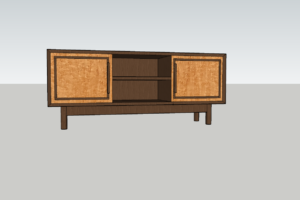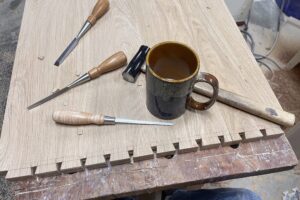
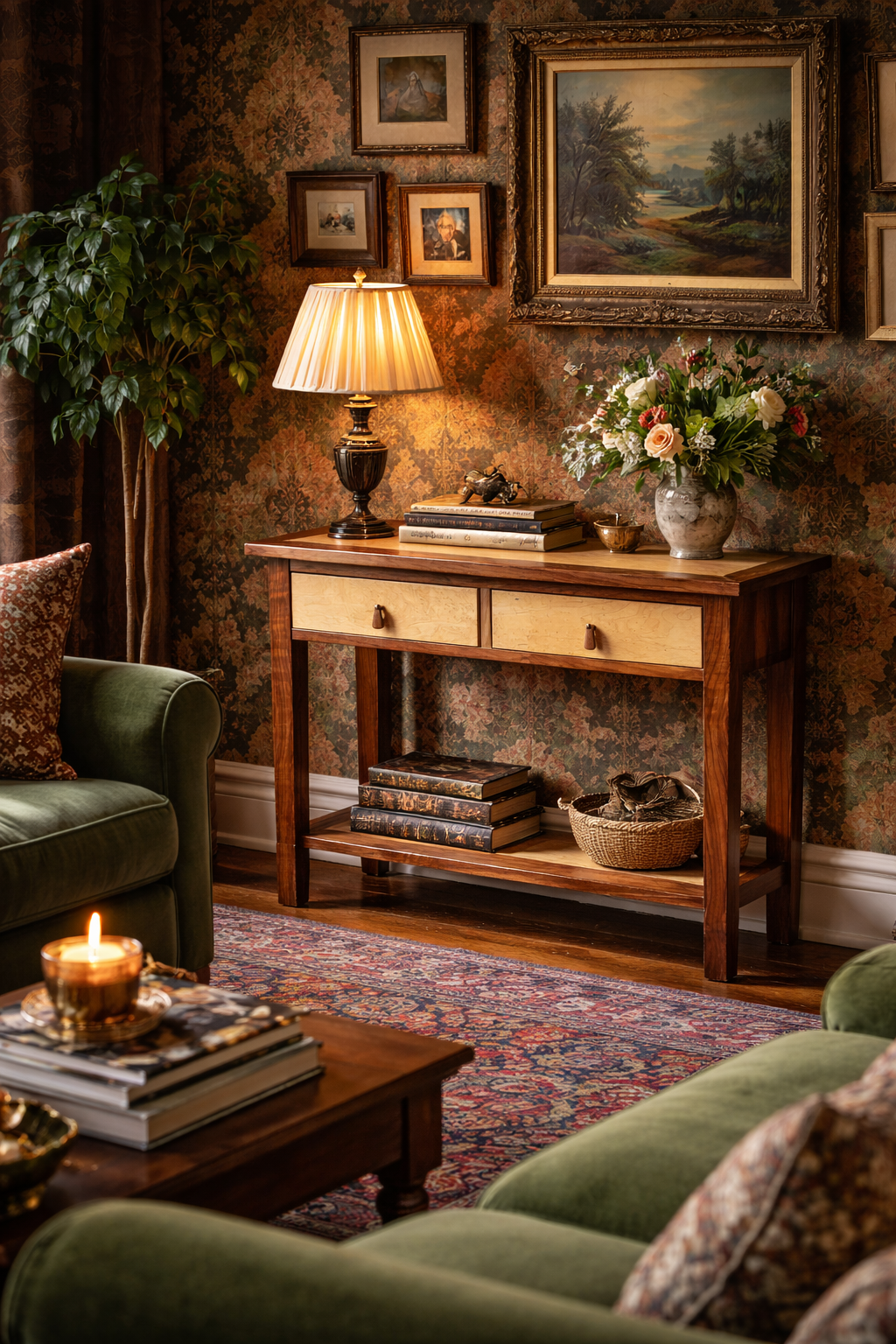
A room usually tells you what is wrong before it tells you what is missing. The traffic pattern is awkward. Storage never lands where you need it. The scale of the pieces fights the architecture. This is where fine handcrafted furniture matters. Not as decoration layered on at the end, but as the element that sets proportion, use, and character from the beginning.
Too much residential design still starts with surfaces and trends. A paint color is chosen, a few inspiration images are saved, and furniture is treated as something to shop for later. That approach almost always creates compromise. When the furniture is generic, the room has to bend around it. When the furniture is purpose-built, the room begins to make sense.
Fine handcrafted furniture is not just a luxury purchase
The phrase gets used loosely, which is part of the problem. Fine handcrafted furniture is not simply furniture made by hand, and it is not valuable only because it is expensive or visually impressive. It earns its place through discipline. That means sound joinery, well-resolved proportions, appropriate material selection, and a clear understanding of how the piece will be used every day.
A well-made dining table, for example, is not successful because it has figured wood or a fashionable silhouette. It is successful because the overhang is correct, the leg placement supports both structure and seating, the top thickness feels intentional, and the finish suits the realities of family use. The best pieces solve practical demands without looking overworked.
That distinction matters for homeowners who are tired of replacing furniture, adjusting layouts to fit ill-sized pieces, or living with rooms that never feel settled. Fine furniture should not create friction. It should remove it.
Why fine handcrafted furniture changes the entire room
Furniture is often treated as a movable object, separate from interior design. In a well-composed home, that separation does not hold. A desk determines where task lighting belongs, how circulation flows, and what kind of storage is actually needed. A built-in bench changes sightlines, seating patterns, and wall composition. A sideboard can anchor a dining room more decisively than any rug or light fixture.
This is not decorating. It is planning the room around its real center of gravity.
When furniture is designed with the room, rather than dropped into it afterward, several things improve at once. Scale becomes more coherent. Storage works harder. Materials relate to one another instead of competing. Even restraint becomes easier, because the room no longer needs excess styling to feel complete.
That is one reason custom work often feels calmer than mass-market interiors. It is not because custom is automatically better in every case. It is because the decisions are tied to the space, the architecture, and the people using it.
The question of permanence
Permanence does not mean rigidity. It means building around what is stable rather than what is temporary. How you enter the house, where you work, how you host dinner, what needs to be stored out of sight, what deserves to remain visible – these are long-term realities. Fine handcrafted furniture responds to those realities with clarity.
Trend-driven interiors usually fail here. They are designed to signal taste in the present moment, not to hold up over time. A room built around durable furniture and sound planning ages differently. It can evolve, but it does not need to be reinvented every few years.
What separates a strong piece from a merely expensive one
Price alone is a poor filter. There are costly pieces that are structurally ordinary, stylistically loud, or poorly scaled for the homes they inhabit. There are also simpler pieces, built with restraint and intelligence, that will outlast far more elaborate work.
The better question is whether the piece shows evidence of judgment.
Judgment appears in proportion first. A cabinet should feel balanced from across the room before you ever open a door. It appears in joinery, where the construction method supports longevity rather than hiding shortcuts. It appears in wood selection, where movement, grain, and wear are considered honestly instead of ignored. And it appears in the restraint to stop at the right point, without adding ornament or complexity that the piece does not need.
This is where artisan-made work has an advantage when it is done well. The maker is not trying to force a broad market solution onto a specific home. The work can respond to ceiling height, wall length, floor conditions, adjacent millwork, and how the client actually lives. Those factors are rarely visible in a showroom. They become obvious once you live with the piece.
Where custom makes the most sense
Not every room needs a fully commissioned statement piece. Sometimes a built-to-order approach is the right answer. Sometimes a one-of-a-kind piece is justified because the room requires it. The right level of custom depends on the problem being solved.
Home offices are a common example. Off-the-shelf desks and storage often miss the mark because they are designed for generic dimensions and generic work habits. But work at home is rarely generic. You may need concealed equipment storage, a surface depth that supports long hours, or shelving that carries visual weight without crowding the room. A custom approach can solve those specifics cleanly.
Dining rooms are another. A table that is six inches too wide or too narrow changes the experience of the entire space. The same is true for sideboards, banquettes, and display storage. In entry areas, the failure is usually functional before it is aesthetic. The room lacks a place for keys, shoes, bags, or seating, so clutter wins. Good furniture restores order by giving the room a job description.
Fine handcrafted furniture and cabinetry often belong together
Many homeowners separate furniture from cabinetry in their minds, but in practice the two should often be developed together. A study with a strong desk and weak wall storage will still feel unresolved. A dining room with beautiful casework and a poorly proportioned table will feel unbalanced.
When these elements are considered as one design language, the room gains integrity. Wood species, profiles, hardware decisions, finish character, and visual weight can be calibrated across the whole space. That does not mean everything must match. It means everything belongs.
The trade-offs homeowners should understand
There is no serious custom process without trade-offs. Fine handcrafted furniture takes time. It requires decisions. It asks for clarity before fabrication starts, because changing direction late is costly.
It also requires honesty about budget. Not every wish should be pursued, and not every room deserves the same level of investment. Sometimes the wiser choice is to concentrate resources on one foundational piece and let the rest of the room support it. Sometimes a full-room plan saves money over time because it prevents a series of disconnected purchases that never quite solve the problem.
There is also a trade-off between novelty and longevity. Highly original work can be extraordinary, but it still needs discipline. The best custom pieces do not chase uniqueness for its own sake. They become distinctive because they are so well resolved for a particular home and client.
How to approach the process well
If you are considering fine handcrafted furniture, start with the room, not the object. Ask what is not working now. Identify where the room breaks down functionally, where scale feels wrong, and what needs to happen daily in that space.
Then look at architecture. Window placement, trim, wall length, natural light, circulation, and adjacent rooms all matter. A strong furniture decision should improve the room as a whole, not just fill an empty spot.
From there, materials and style become more meaningful. Wood choice is not just about appearance. It affects weight, grain character, durability, and how the piece will age. Finish is not just color. It is a decision about maintenance, wear, sheen, and tolerance for daily use. Good guidance here prevents costly regret.
This is the value of a design-led maker. At Anderson Woodworks, that means the furniture is not treated as an isolated product. It is developed as part of a broader interior logic so the final piece does more than look good in photographs. It earns its place in the life of the home.
The strongest rooms are rarely the most decorated. They are the most considered. When the furniture is built with proportion, purpose, and conviction, the room stops asking for rescue and starts feeling complete.
Discover more from Anderson woodworks custom furniture & cabinets
Subscribe to get the latest posts sent to your email.