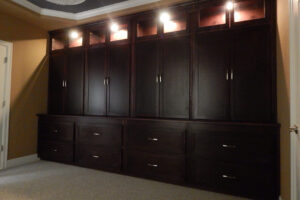
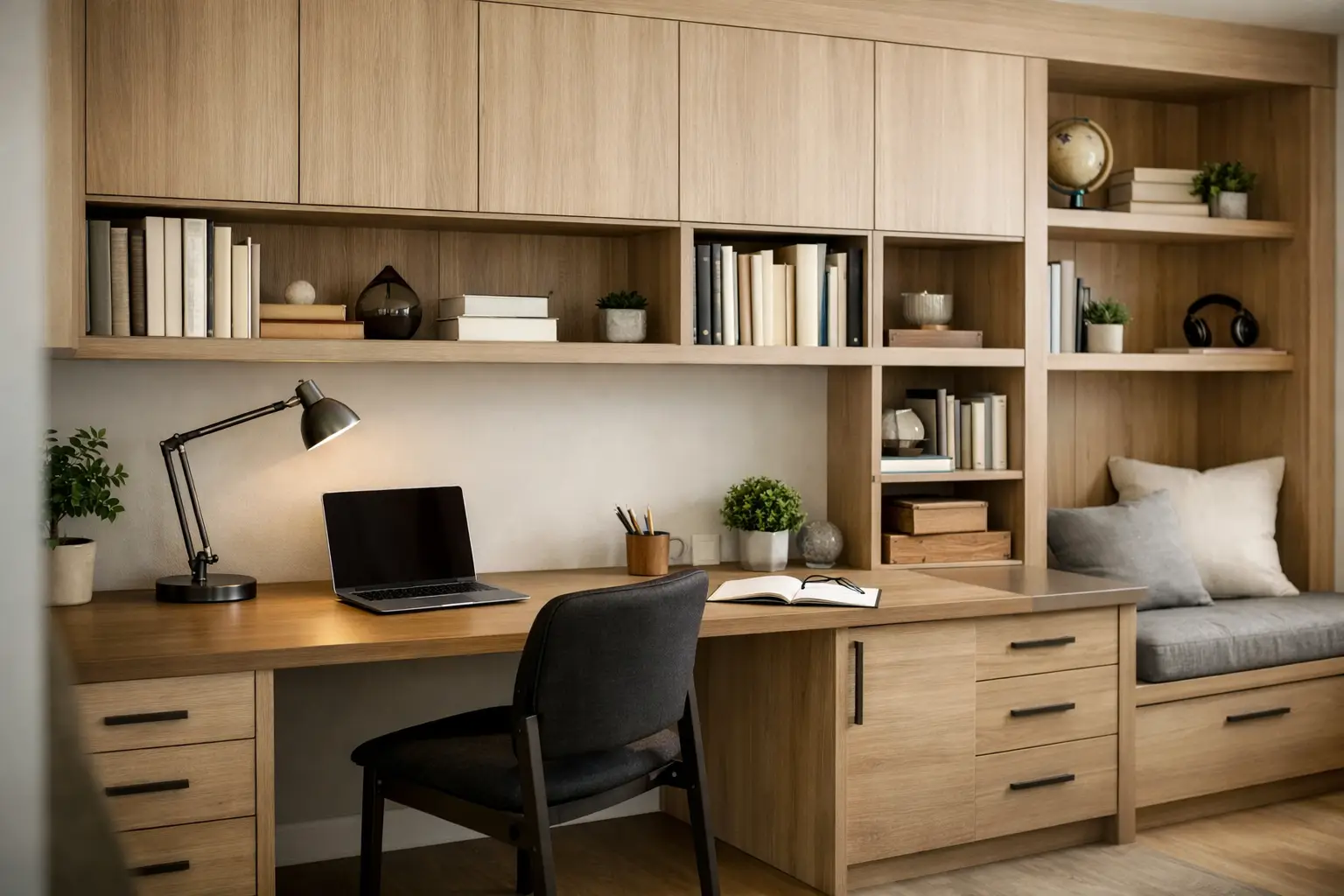
A study that never quite works usually fails in the same places. The desk is too shallow, the storage is in the wrong spot, the lighting is treated as an afterthought, and the room asks you to adapt to furniture that was never designed for the way you actually work. Custom study room furniture solves that problem at the source by treating the room as a functional system, not a collection of separate pieces.
This is not decorating. A well-designed study is built around use, proportion, reach, posture, light, and the kind of focus the room needs to support. If the space is meant for deep work, reading, writing, research, remote meetings, or household administration, the furniture should determine the plan from the beginning.
What custom study room furniture changes
Off-the-floor furniture tends to assume generic room sizes and generic habits. That is exactly why so many studies feel cramped, underused, or visually disconnected from the rest of the home. A desk may fit the wall, but not the work. A bookcase may offer storage, but waste vertical space. A cabinet may look acceptable, but interrupt circulation or create awkward dead zones.
Custom study room furniture allows the room to be designed around exact dimensions and real routines. That means desk height can suit the user instead of averaging everyone together. Shelving can be planned around the books, files, equipment, or objects that matter. Cabinet depths can be right-sized so storage is useful without making the room feel heavy. Even something as simple as where a printer lives or where a bag lands at the end of the day starts to matter when the goal is a room that performs consistently.
The result is usually quieter than people expect. Not flashy. Not trend-driven. Just resolved. When furniture is proportioned correctly and placed with intention, the whole room feels calmer because fewer things are fighting each other.
Start with the work, not the style
The first mistake many homeowners make is asking what the study should look like before asking what it needs to do. Those are related questions, but they are not the same. If the room will be used for legal work, design work, reading, homeschooling, writing, or managing a business from home, the furniture requirements shift immediately.
A study used primarily for laptop work may need less surface area but better concealed cable management and cleaner background conditions for video calls. A room centered on paper files, reference books, or archives needs different storage logic. A shared study for two people raises another layer of planning around zoning, acoustics, and personal reach.
Style still matters, but it should come from material choice, detailing, scale, and restraint. It should not lead the room. Good custom work begins with function and lets the visual character emerge from that discipline.
The desk is the anchor
In most studies, the desk establishes everything else. Its size affects movement. Its location affects light. Its storage affects whether the room stays orderly or becomes a staging area for unfinished tasks.
A custom desk can be built for the specific width of the wall, the exact technology you use, and the amount of open work surface you need. That may mean integrating drawers only where they are useful and omitting them where legroom matters more. It may mean designing a writing surface with room for books and notes rather than defaulting to a large executive footprint that overwhelms the room.
There is also a difference between a furniture-grade desk and a slab with storage attached. Joinery, edge profile, wood selection, finish, and proportion all affect how substantial the piece feels over time. In a room used daily, those details are not cosmetic. They are what make the room feel grounded and permanent.
Built-ins are not always the answer
Homeowners often assume a custom study automatically means wall-to-wall built-ins. Sometimes that is correct. Sometimes it is not.
Built-ins can make excellent use of awkward architecture, low ceilings, alcoves, or underused perimeter walls. They create a strong sense of integration and can eliminate visual clutter by giving every necessary item a place. In smaller rooms, they often outperform freestanding furniture because every inch is doing its job.
But there are trade-offs. Built-ins reduce flexibility, and not every room benefits from that level of permanence. If the study may become a guest room later, or if you prefer furniture that can be moved and reconfigured, a freestanding desk paired with a tailored cabinet or bookcase may be the better decision. Good design does not force a predetermined answer. It weighs permanence against adaptability and chooses accordingly.
Custom study room furniture and room proportion
One of the strongest arguments for custom study room furniture has nothing to do with luxury. It has to do with proportion.
Most studies are not large, and even when they are, their architecture is often inconvenient. Windows interrupt ideal furniture walls. Door swings eliminate storage zones. Sloped ceilings, trim conditions, and heating elements limit placement. Standard pieces rarely solve those conflicts cleanly.
Custom furniture can correct for those limitations. A desk can be notched around a casing rather than pulled awkwardly away from the wall. Shelves can run to the ceiling without leaving a useless gap that collects dust and weakens the line of the room. A cabinet can be designed shallow enough to preserve circulation while still providing meaningful storage.
This is where a study stops feeling pieced together and starts feeling designed. The room becomes legible. The eye understands why each element is where it is.
Materials matter more in a study than people think
A study is a touch-heavy room. Drawer pulls, writing surfaces, chair rails, cabinet doors, and shelf edges see daily contact. Cheap materials reveal themselves quickly in spaces like this. Laminates chip, veneers fail at stress points, drawers rack, and finishes wear unevenly.
Solid wood, quality plywood construction, proper joinery, and durable finishes matter because a study is not occasional-use furniture. It is repeat-use furniture. There is a difference between something that photographs well and something that grows better with use.
That does not mean every study needs the rarest species or the most elaborate detail. It does mean material choices should reflect longevity, repairability, and visual steadiness. A room designed to support concentration benefits from surfaces and textures that age with dignity rather than demanding replacement.
Storage should reduce friction
Most storage fails because it is either too generic or too decorative. In a study, storage needs to make work easier.
That might mean closed cabinetry below and open shelving above. It might mean file drawers integrated into the desk return rather than isolated in a separate cabinet. It might mean a printer garage, a concealed charging drawer, or shelving sized for folios and reference binders instead of paperback books. These are small decisions, but they shape whether the room feels disciplined or constantly interrupted.
A good custom plan also accounts for what should stay visible and what should disappear. Books can add richness. Loose cords, stacked mail, and backup office equipment usually do not. A study works better when visual information is edited as carefully as physical storage.
When custom is worth it
Not every room needs a fully bespoke approach. If your study is lightly used, your storage needs are minimal, and the room has simple dimensions, well-chosen standard furniture may be enough. There is no virtue in commissioning custom work just to say it is custom.
Custom becomes worth serious consideration when the room has architectural constraints, when the study is used daily, when standard dimensions keep compromising comfort, or when the room needs to serve multiple functions without feeling compromised. It also makes sense when the study should relate closely to the architecture and quality level of the rest of the home.
That is often the turning point for homeowners who are tired of buying pieces that are almost right. Almost right is expensive over time. So is replacing mediocre furniture every few years.
The best study feels inevitable
The strongest custom rooms do not announce themselves with excess. They feel clear, settled, and obvious in the best sense of the word. The desk belongs to the wall. The storage supports the work. The scale suits the architecture. Nothing feels borrowed from another room or another house.
That is the real value of custom study room furniture. It gives the room a point of view and a reason for being. If you are going to dedicate space in your home to concentration, thought, and serious use, the furniture should be held to the same standard.
Let’s set up a consultation for your new study just email me at a.woodworks@hotmail.com
Discover more from Anderson woodworks custom furniture & cabinets
Subscribe to get the latest posts sent to your email.