A built-in desk fails for predictable reasons. It is too shallow to work comfortably, too decorative to hold daily use, or so tightly designed around a trend that it feels dated before the paint dries. The best built in desk ideas solve those problems at the planning stage, not after installation.
This is not about filling a wall with cabinetry and calling it custom. A good built-in desk should fit the room, support the way you work, and feel like it belongs to the architecture of the home. That requires more than measurements. It requires decisions about proportion, storage, lighting, material, and the kind of visual weight the room can carry.
What makes the best built in desk ideas work
The strongest built-ins begin with use, not style. A desk for paying bills in a hallway alcove should not be designed like a full-time workstation. A study used for writing, reading, and focused work needs a different level of enclosure than a family command center in the kitchen.
That distinction matters because built-ins are permanent. Once they are installed, they influence circulation, sightlines, and how the rest of the room has to behave. If the desk is oversized, everything around it feels crowded. If it is underscaled, it looks apologetic. The right answer is usually found in balance – enough presence to anchor the room, enough restraint to let the room breathe.
Depth is one of the first places people get this wrong. A desktop that looks sleek on paper may not leave enough room for a monitor, task lighting, or a comfortable writing surface. Knee space matters just as much. If drawers or support panels reduce leg room too aggressively, the desk becomes something you perch at rather than use.
Material also changes the experience. Painted cabinetry can feel tailored and architectural. Natural wood introduces warmth and depth. Neither is automatically better. It depends on whether the room needs quiet continuity or the desk should read as a furniture piece within the larger composition.
Best built in desk ideas for different rooms
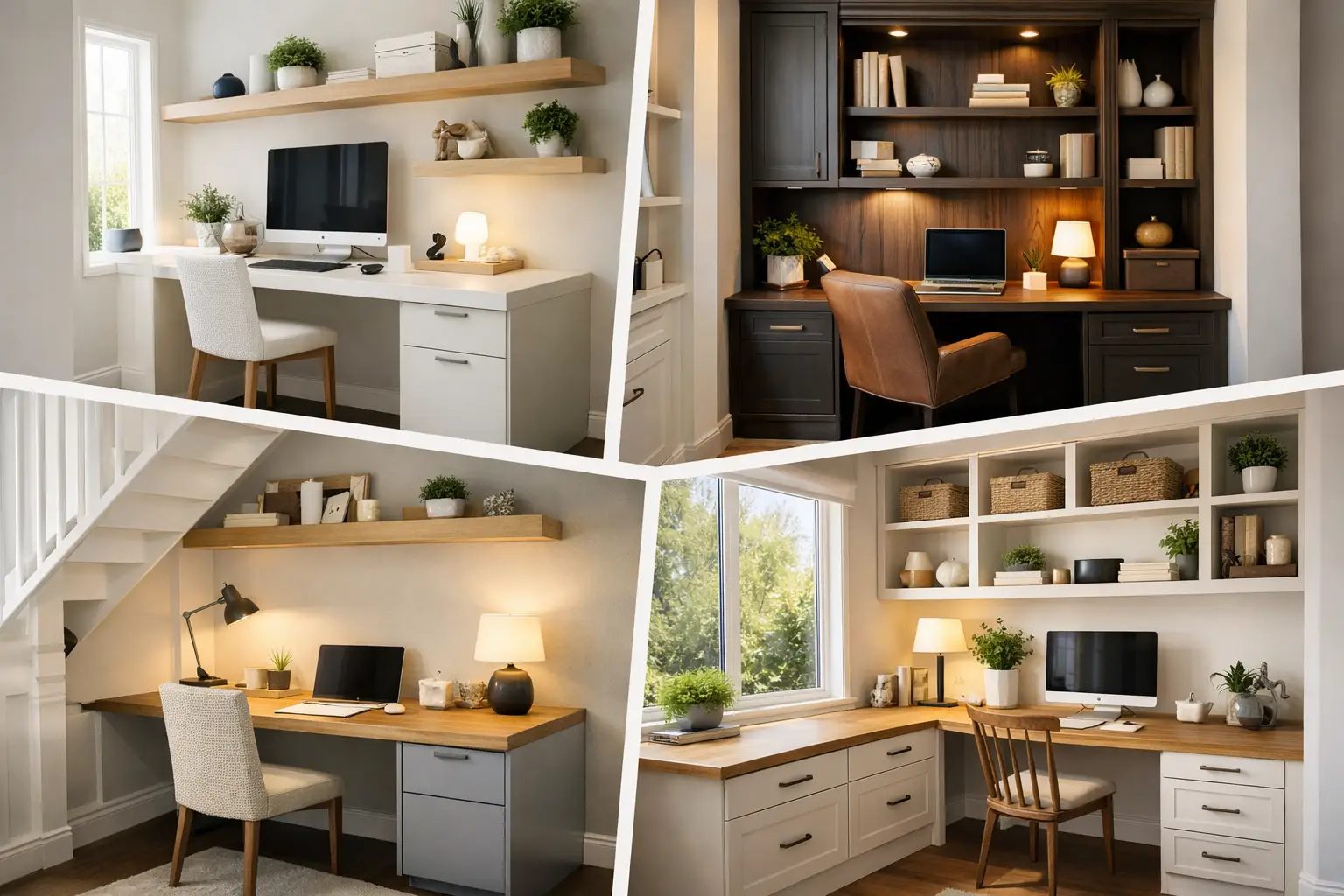
A wall-to-wall study desk
This is one of the most reliable solutions when the room is dedicated to work. A wall-to-wall built-in creates a strong sense of order and makes excellent use of available square footage. It works especially well in narrower rooms where freestanding furniture can leave awkward gaps.
The risk is heaviness. If the upper storage is too deep or too tall, the room starts to feel compressed. In those cases, a better move is often a generous desktop with carefully edited shelving rather than a full surround of cabinets. You want visual structure, not a fortress.
A built-in desk between bookcases
For studies, living rooms, and multi-use spaces, this is one of the best built in desk ideas because it combines function with architectural clarity. Bookcases give the desk context. They make it feel intentional rather than inserted.
The proportions have to be handled carefully. If the shelves dominate, the desk can feel secondary. If the desk is too bulky, it interrupts the rhythm of the shelving. The best versions treat the entire wall as a composition, with the desktop aligned to shelf breaks, cabinet lines, or window casing so everything feels resolved.
A window-centered built-in desk
Placing the desk under a window remains popular for good reason. Natural light improves the room and gives the work area a calm focal point. In homes where office space is limited, it can turn an underused wall into a practical workstation.
Still, windows are not automatically ideal. Glare can be a real issue for screen-based work, and heat gain or cold drafts can affect comfort. A window desk works best when light control, outlet access, and the desk height relative to the sill are considered from the start.
A compact desk in an alcove or niche
Some of the smartest built-ins come from awkward spaces. A recessed wall, the area beneath stairs, or an unused landing can become a highly efficient desk zone when designed with precision.
This approach depends on discipline. In a small footprint, every inch matters. Shallow storage, integrated lighting, and clean cable management usually outperform oversized drawers or decorative trim. A compact desk should feel deliberate and refined, not squeezed in.
A double workstation for shared use
A shared built-in desk can be excellent for couples, siblings, or homes that need flexible workstations. Done well, it creates symmetry and allows each person to have dedicated storage and surface area.
Done poorly, it creates constant friction. Shared desks need more than two chairs. They need thoughtful spacing, clear divisions of storage, and enough width that each person can work without feeling crowded. This is where custom design earns its keep. Standard dimensions rarely solve a shared workspace elegantly.
Storage decisions matter more than people think
Most built-in desks fail at storage because they try to hide too much or display too much. Open shelving can look appealing in a photograph, but in daily life it demands discipline. Closed cabinetry keeps the room cleaner visually, but too much of it can feel dense and overly formal.
The right mix depends on the room and on the client. If you use reference books, paper files, and tools daily, open access makes sense. If your work is largely digital and you want the room to stay calm, concealed storage is often the better choice. Neither answer is universal.
Drawers should also be planned by purpose, not habit. A shallow pencil drawer may be useful. Three stacked file drawers might not be. It is common to inherit old office conventions that no longer reflect how people actually work at home. Built-ins should respond to present use, not nostalgia for a corporate desk.
Materials and details that give a built-in desk staying power
If you want a desk to age well, avoid making every decision for immediate visual effect. This is where many custom projects lose integrity. They chase statement details instead of building lasting structure.
Solid wood desktops, durable painted finishes, quality drawer hardware, and properly scaled face frames or slab fronts will carry a room much farther than novelty features. Joinery matters. Edge profiles matter. So does the thickness of the top. A thin desktop can feel cheap even when the price was not.
Color should be handled with the same restraint. A built-in desk can absolutely introduce contrast, but the strongest projects do not depend on a fashionable shade to feel current. They rely on proportion, craftsmanship, and a finish that suits the architecture of the house.
Lighting is another detail that should never be an afterthought. Integrated picture lights, discreet under-shelf lighting, or properly placed sconces can make a built-in desk far more useful. Overhead room lighting alone is rarely enough for focused work.
When custom is worth it
The best built in desk ideas are not always the most elaborate. Sometimes the right answer is a simple, beautifully made desk wall with excellent proportions and almost no ornament. Sometimes it is a full room of millwork that organizes work, storage, and display with precision. The difference comes down to what the room needs.
Custom work is worth it when the room has constraints, when the desk must do more than one job, or when material and proportion need to be tuned to the rest of the home. It is also worth it when you care how the piece will age. A built-in is not temporary furniture. It changes the room for the long term.
That is why the planning stage matters so much. At Anderson Woodworks, the strongest results come from treating furniture and built-ins as the foundation of the room rather than decoration added at the end. Once the desk is right, the rest of the space tends to fall into place more honestly.
How to choose the right direction for your home
Start by being precise about use. Do you need daily office function, a quiet writing space, a place for household management, or a shared workstation for multiple people? Then look at the room itself – ceiling height, natural light, circulation, architectural features, and how much visual weight it can support.
From there, make fewer, better decisions. Choose storage that reflects what you actually need. Select materials that improve with age. Keep decorative gestures in proportion to the house. A built-in desk should not feel like a showroom feature. It should feel inevitable, as though the room was always waiting for it.
That is usually the dividing line between custom work that merely fills space and work that gives a room lasting purpose.looking for something unique visit my contact me page to start your design
Discover more from Anderson woodworks custom furniture & cabinets
Subscribe to get the latest posts sent to your email.