Here’s how this one started

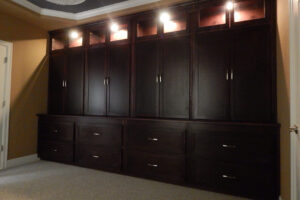
A contractor brought me on to build two vanities and a walk-in closet for his client. Straightforward work — good work — the kind of job that lets you put your head down and let the joinery speak. But somewhere between the boxes and the doors, the client started paying attention. She saw how the pieces came together. And when the cabinets were done, she came back with a question that means more to me than any ad ever could: would I design two pieces of furniture just for her?
That’s the best kind of referral there is. Nobody sold her anything. She watched the work happen and decided she wanted more of it in her home.
So now there are two new pieces on the board — a sideboard and a matching hutch. This post is about the first one.
The brief
She came to me already knowing the color story she wanted: black with walnut. That’s a gift, honestly. When a client knows their palette, my job shifts from guessing to executing — figuring out how to make those two materials sing together instead of just sitting next to each other.
The plan: black on the case and the face frame, with walnut carried across the top and into every recessed door and drawer panel. The black gives the piece its structure and weight. The walnut does the talking. Every panel becomes a little window of grain framed in shadow.
Where it lives right now
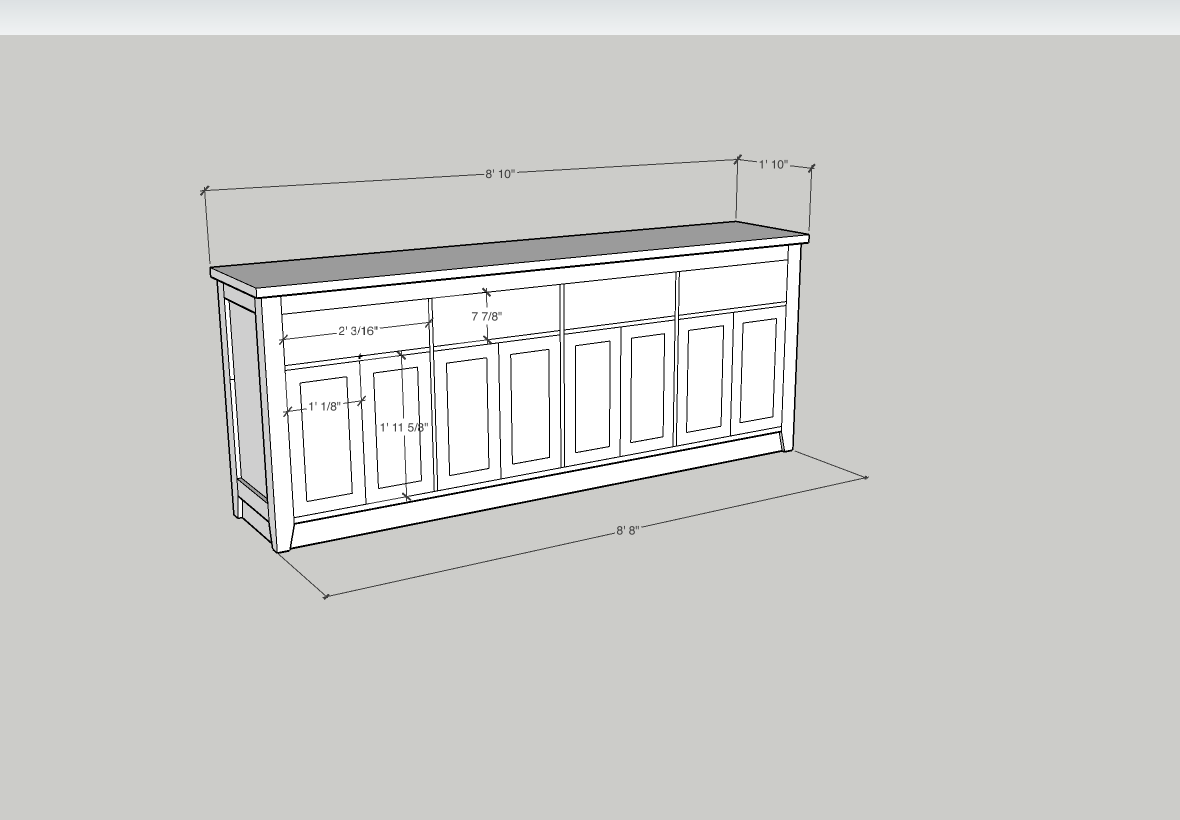
At this stage, the whole thing exists in SketchUp — a model I can spin around, measure, and second-guess before a single board gets milled.
This is my favorite part of the process, and the most important. Right now, changing a proportion costs me a few minutes. Changing how much walnut shows against the black is a click. Rethinking the panel layout is free. Once I’m at the bench cutting joinery, none of that is cheap anymore. So this is where I slow down and get it right — the balance, the spacing, the rhythm of eight doors across the front.
The numbers, for those who like them: 8 feet 8 inches wide, eight doors, and a run of drawers along the top. A big, honest piece of furniture meant to anchor a room.
What’s next
Once she signs off on this design, I start on the matching hutch — because these two need to read as a set, not as neighbors who happened to move in at the same time. Same language, same materials, same hand.
I’ll bring you along as this moves from the screen to the shop to a finished piece you could run your hand across. That’s the whole reason I do this: watching something travel from a conversation, to a drawing, to a thing that outlives all of us.
More soon.
Anderson Woodwork — custom, heirloom-quality furniture and cabinetry for the South Sound.
(360) 259-0232 · andersonwoodwork.net
Discover more from Anderson woodworks custom furniture & cabinets
Subscribe to get the latest posts sent to your email.