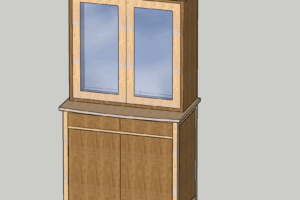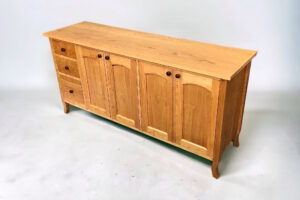
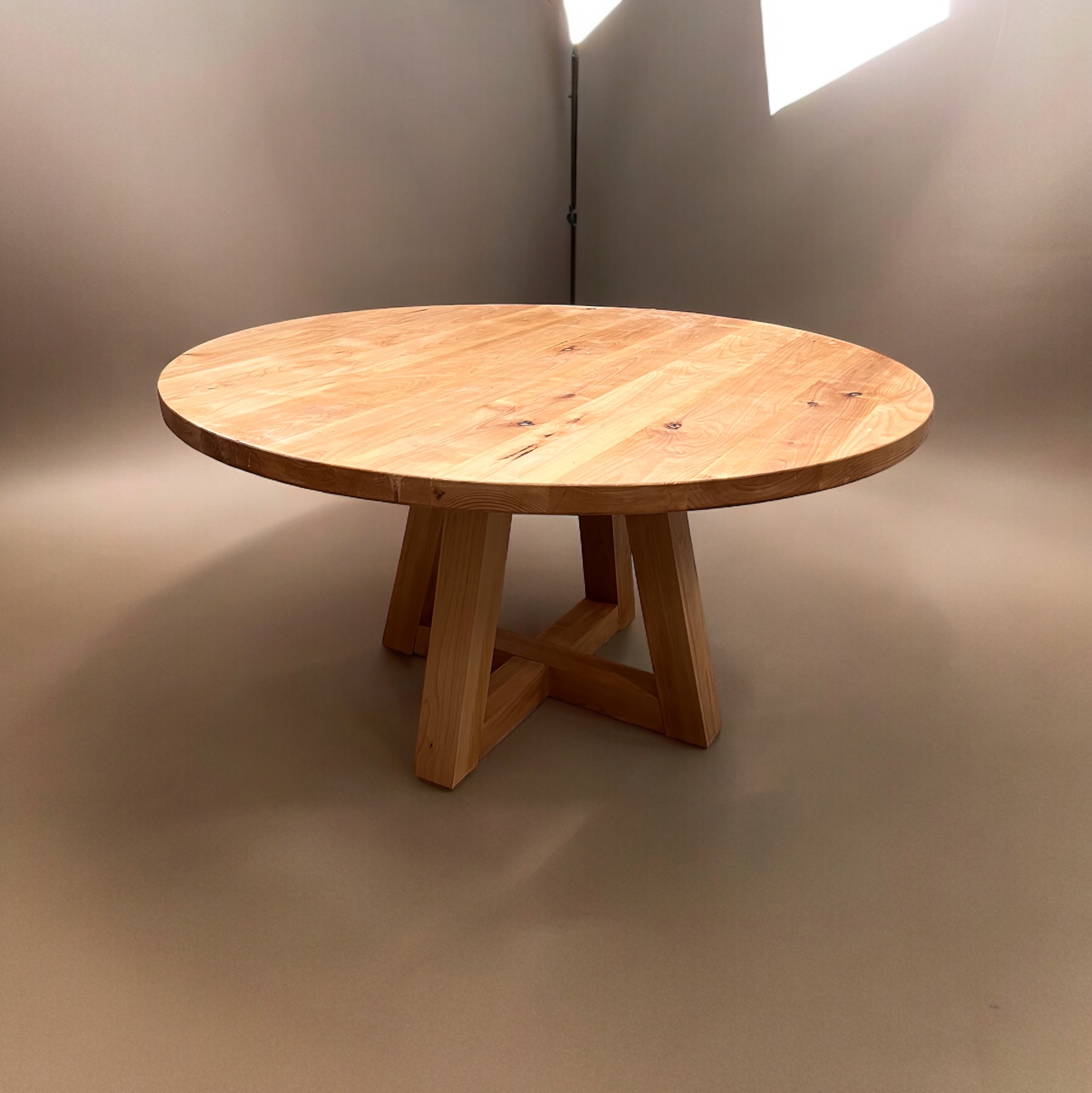
A dining table tells on itself within a year. If the proportions are wrong, the room feels strained every time you walk through it. If the wood selection was careless, the surface moves badly and the finish starts to fight daily use. If the construction was weak, joints loosen, edges bruise, and the piece becomes one more compromise in a house full of them. That is why artisan fine furniture matters. It is not a label for something expensive. It is a standard for how a piece is conceived, built, and expected to live over time.
Most people have been trained to read furniture through style first. They notice whether something feels modern, traditional, rustic, or minimal. Style has its place, but it is rarely the reason a piece succeeds. Furniture succeeds when proportion, use, materials, and construction are aligned. That alignment is where real craftsmanship begins, and it is also where mass-market furniture usually falls apart.
Artisan fine furniture is not just handmade
“Handmade” has become a loose term. A piece can be assembled by hand and still be poorly designed, mechanically weak, or visually clumsy. Artisan fine furniture is more exacting than that.
It begins with intention. The maker is not starting with a trend forecast or a catalog silhouette that needs a few cosmetic changes. The work starts with use, scale, and permanence. How should the piece function in the room? How should it relate to architecture, circulation, light, and the daily habits of the people living with it? What wood species is appropriate, not just attractive? Which joinery methods make sense for the stresses the piece will actually take?
This is not decorating. It is design resolved through craft.
That distinction matters because homeowners often spend heavily on rooms that still feel unsettled. They buy furniture after the fact, treating it as a finishing touch rather than a foundational decision. The result is familiar – a home office that looks polished in photos but does not support focused work, an entry that collects clutter because nothing was built for the way the household moves, or a dining room centered around a table that is either too small for the room or too large for comfortable use.
Fine furniture should correct a room, not simply occupy it.
What separates artisan fine furniture from luxury retail
Price alone does not place a piece in the fine furniture category. There is high-priced furniture that relies on veneer-thin design logic, weak joinery, and inflated branding. There is also modestly scaled custom work that is rigorous, well made, and deeply considered.
The difference usually shows up in a few places.
First, proportion. Skilled furniture makers understand visual weight, negative space, leg placement, top thickness, overhangs, drawer reveals, and how those decisions affect the room as a whole. A piece can be built from excellent walnut and still look unresolved if the proportions are off. Good makers do not rely on premium materials to hide poor judgment.
Second, construction. Joinery is not an old-world affectation. It is the structural language of the piece. How components meet determines strength, movement, repairability, and longevity. You may never see the joinery once the piece is complete, but you will live with its consequences.
Third, material honesty. Real wood has variation, movement, and character. It asks for respect. Artisan work accounts for this rather than trying to force timber into behaving like plastic. That means appropriate species selection, grain orientation, moisture awareness, and finish choices that suit actual use.
Fourth, relevance to the client. A well-made piece that ignores the home and the people in it is still incomplete. Fine furniture should answer real conditions. It should solve for storage where clutter accumulates, create a working height that fits the user, support traffic flow, and hold its own architecturally.
Why furniture should lead the room
In many residential projects, furniture is treated as the last decision. Walls are painted, lighting is installed, rugs are chosen, and then the furniture hunt begins. That sequence creates disconnected rooms because the element with the greatest physical and visual presence was never allowed to set the terms.
A stronger approach is to let the key furniture piece establish the room. In a study, that might be the desk and library storage. In a dining room, it is the table. In an entry, it may be a built-in bench, case piece, or wall system that controls how the space functions from the moment someone walks in.
When furniture leads, better decisions follow. Circulation becomes clearer. Material choices become more coherent. Lighting can be placed with purpose. The room stops feeling assembled from separate purchases and starts reading as a complete environment.
This is where custom work earns its value. Not every room requires a one-of-a-kind statement piece, and not every client needs the same level of design intervention. But when a room has specific demands, unusual dimensions, or a job to do beyond looking acceptable, standard furniture often becomes an obstacle. A custom piece can solve constraints cleanly because it was designed for that exact context.
The trade-offs are real
Artisan fine furniture is not the right answer for every purchase. That should be said plainly.
It requires time. Good work is not rushed without consequence. It also requires commitment, because the process asks the homeowner to make more deliberate decisions about use, dimensions, wood species, finish, and overall direction. If someone wants instant delivery and a low-stakes decision, custom furniture is probably the wrong lane.
There is also a budget trade-off. Fine furniture costs more upfront because skilled labor, quality materials, and thoughtful design are expensive in the honest sense of the word. But the comparison should be fair. The relevant question is not whether custom costs more than a disposable retail piece. It is whether paying once for a well-resolved, long-term piece is the stronger decision than replacing a compromised one every few years.
Sometimes the answer is yes immediately. Sometimes the answer is not yet, and that is fine too. The point is clarity.
How to judge artisan fine furniture before you buy
Homeowners do not need to become woodworkers to make better decisions, but they should know what to ask.
Start with the design logic. Ask why the dimensions are what they are. Ask how the piece relates to the room, what problem it is solving, and how the details support use. Vague answers are a warning sign.
Then ask about construction. You are listening for specificity, not jargon. A serious maker should be able to explain material choices, joinery, wood movement, and finish strategy in plain language. If the discussion centers only on appearance, you are not hearing the whole story.
Pay attention to whether the maker is willing to challenge weak ideas. A good craft-led designer does not say yes to everything. If a requested proportion will look wrong, if a species is unsuitable for the application, or if a layout decision will undermine the room, the right response is guidance, not compliance.
That is part of the value. You are not hiring hands alone. You are hiring judgment.
Artisan fine furniture in real residential spaces
The best pieces tend to be the ones that absorb daily life without losing their authority. A desk should support concentration, cable management, storage, and body position without turning into office equipment. A dining table should hold the room whether two people are having coffee or ten people are seated for a holiday meal. Built-ins should make a house easier to live in, not just more styled.
This is especially true in rooms where generic furniture consistently underperforms – studies, dining rooms, entry areas, and libraries among them. These spaces ask for precision. They need furniture that fits architecture, supports habits, and contributes something more lasting than visual filler.
That is the standard Anderson Woodworks works from. The goal is not to make a room look custom in the superficial sense. The goal is to create furniture and interiors with structure, conviction, and staying power.
Why this standard still matters
A house becomes meaningful through repeated use. Meals, work, reading, conversation, arrival, departure – these patterns are shaped by the objects that hold them. When furniture is chosen casually, daily life absorbs that carelessness. When furniture is made with discipline, the room settles. It works harder. It asks less of you.
Artisan fine furniture is valuable because it brings intention back to the home. Not trend, not noise, not short-lived novelty. Just clear decisions, sound materials, and craftsmanship that respects how people actually live.
If a room in your home has never felt quite right, the answer may not be more decoration. It may be one piece, properly designed, that finally gives the space its center.
Discover more from Anderson woodworks custom furniture & cabinets
Subscribe to get the latest posts sent to your email.