
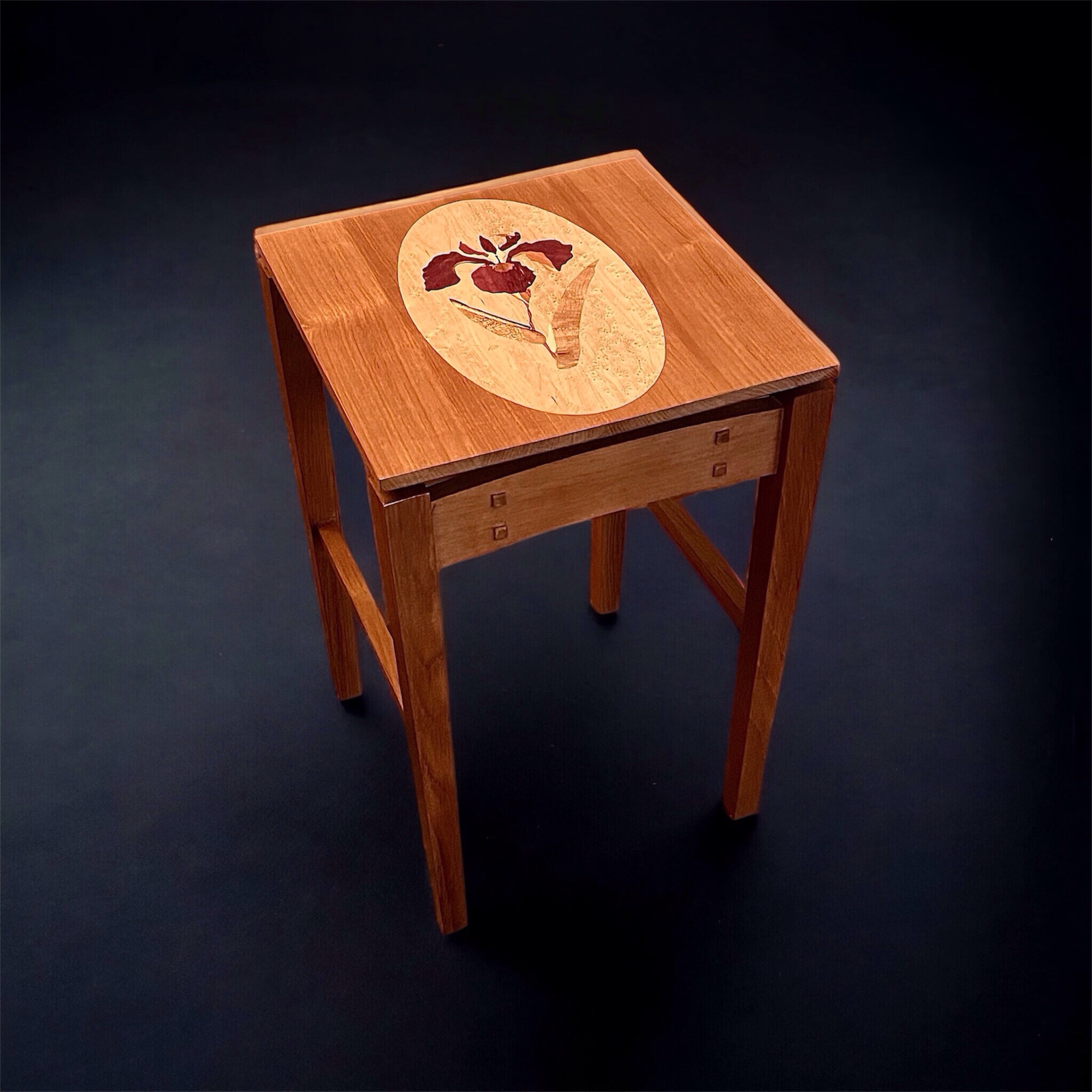

What Is Marquetry? Painting Pictures With Wood
Most people have never heard the word marquetry. Then they see a piece, run a hand across it, and can’t quite believe the picture in front of them isn’t painted or printed. It’s wood. Every shade, every curve, every shift of grain is a separate piece of veneer, cut and fit together like the world’s most patient jigsaw puzzle. No dyes. No paint. Just the color that grew inside the tree.
I want to pull back the curtain on this craft, because marquetry is one of the oldest techniques in fine furniture-making — and one almost nobody does by hand anymore.
The Idea Is Dead Simple. The Doing Is Not.
Here’s the whole concept behind marquetry: you take thin sheets of veneer from different species — walnut for deep browns, maple for cream, olive ash for that ribbon of gold, dyed pearwood when you want a color the forest doesn’t offer — and you cut shapes out of each one. Then you fit those shapes together edge to edge, no gaps, until they form an image. A leaf. A compass rose. A run of mountains along a drawer front.
Simple to describe. But those pieces of wood inlay have to meet with no daylight between them. A gap you could slide a business card into might as well be a mile. So you’re cutting curves the width of a hair, by hand, in material that wants to split if you look at it wrong, and every cut has to marry its neighbor perfectly.
Why Go to the Trouble?

Fair question. A machine can laser-cut veneer now. A printer can fake a wood-grain photo onto a panel. Both are faster and cheaper, and neither one is marquetry.
The difference is the same difference between a photograph of a place and standing in it. Real marquetry catches light. Because you’re working with actual grain, the image shifts as you walk past it — the maple flashes, the walnut goes from chocolate to near-black, the whole surface breathes. A printed panel is dead flat from every angle. Wood is alive from every angle.
And it lasts. This is a technique the French royal cabinetmakers were using three hundred years ago, and their pieces are sitting in museums right now, still holding their picture. Do it right and a marquetry piece outlives the person who commissioned it — which is exactly the point of heirloom furniture.
A Little History, Because It’s a Good One
Marquetry has been around since the ancient Egyptians were inlaying ebony and ivory into furniture for the pharaohs. It hit its golden age in 17th-century Europe, when cabinetmakers turned tabletops and cabinets into full landscapes and floral scenes — showpieces for people with more money than sense and, thankfully, good taste. The craft nearly died out when mass production took over, because you can’t hurry it and you can’t teach a factory to do it.
That’s the part I like. Marquetry survived precisely because it refuses to be rushed.
Where I Use Marquetry in Custom Furniture
I don’t put marquetry on everything — that’s how you cheapen it. But there’s a right moment for it. A single inlaid detail on an otherwise clean cabinet door. A family crest set into the top of a keepsake box. A landscape running across the front of a blanket chest that turns a piece of storage into a piece of story.
That’s usually how it starts with a client, too. Somebody wants a table, and somewhere in the conversation it turns out there’s a reason for the table — an anniversary, a homestead, a view out a window they grew up looking at. Marquetry is how you put that reason into the wood so it’s there for good.
If you’re in Olympia or anywhere around the South Sound and you’ve got a piece like that living in the back of your head, I’d love to hear about it. Custom marquetry work is my favorite kind of commission.
Discover more from Anderson woodworks custom furniture & cabinets
Subscribe to get the latest posts sent to your email.

Leave a Reply