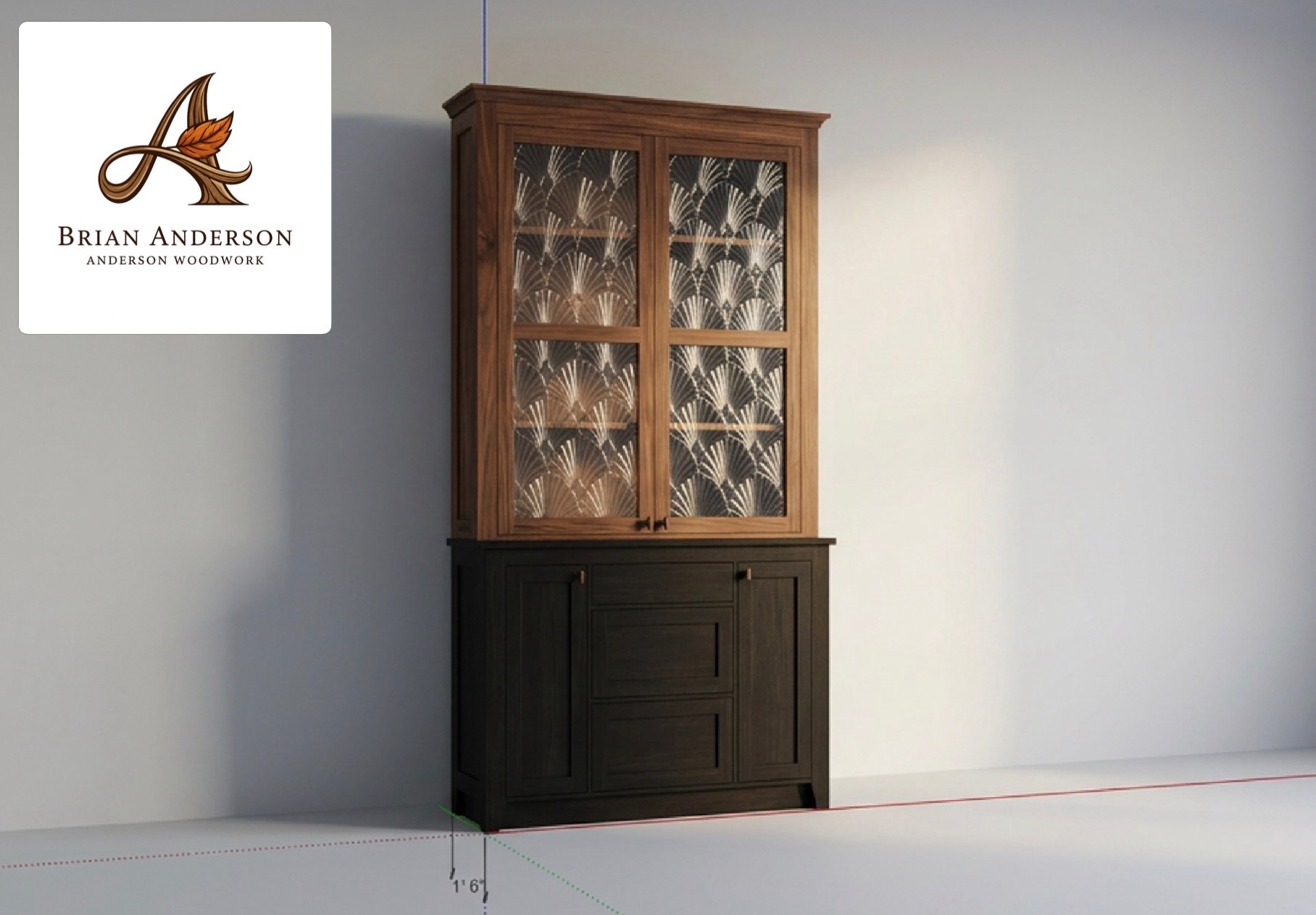
Right now I have both of these pieces in the shop at once: a dining room sideboard waiting on its walnut top, and a hutch I started this week. Building them side by side got me thinking about how old these forms are, and why people still ask for them.
The short answer is that they solve a problem every home has. Food has to be served, dishes have to live somewhere, and the things we care about deserve a place to be seen. These two pieces have been doing that job for about five hundred years.
What they are
A sideboard is a long, low cabinet with drawers and doors, built to stand along a dining room wall. A hutch is a cabinet base with a second case of shelves set on top, usually open or behind glass. Put simply, the sideboard works at waist height and the hutch adds a display wall above it.
The names get mixed up constantly, so here is how I use them:
Name
What it usually means
Sideboard
Long, low dining cabinet with drawers and cupboards, often on legs
Buffet
Nearly the same piece; the French term, often a bit heavier and closer to the floor
Credenza
Italian name; today it usually means a low, leggy cabinet, often in an office or living room
Hutch
A base cabinet with an upper case of shelves, open or glazed
Dresser
The older British word for a hutch, as in the Welsh dresser
China cabinet
A tall glazed cabinet, mostly for display rather than storage
If a client asks for any of these, the real questions are the same: what needs to be stored, what needs to be shown, and where is it going to stand.
Where they came from
Both pieces started as plain boards and boxes in medieval halls, and became fine furniture between the 1600s and 1800s.
Medieval halls. A “side board” was just that: a plank on trestles set against the wall of a great hall, where food was staged before it went to the table. Grain, bread and linens went into a huche, the Old French word for a chest or bin. That word is where we get “hutch.”
The Renaissance credenza. In Italy, the credenza was a side cabinet where food and wine were tasted before being served to the master of the house. The name comes from the Italian for belief or trust. In a world of poisonings, the cabinet was where you proved the food was safe.
Court cupboards and dressers. By the late 1500s, English households used open-tiered court cupboards to show off silver and pewter. Over the next century, country joiners set shelves on top of low cupboards, and the dresser was born. The Welsh dresser became the classic version: a cupboard below, plate racks above, and the family’s best pottery on display.
The Georgian sideboard. The sideboard as we know it took shape in 18th-century England. Robert Adam designed side tables flanked by pedestal cupboards, and by the 1780s and 1790s Hepplewhite and Sheraton were publishing designs that joined it all into one case: drawers for silver and linens, deep cupboards for bottles, and a serving surface on top, often on tapered legs with inlay. That is still the template most sideboards follow.
American farmhouses. In early America, the hutch and step-back cupboard were working kitchen furniture. Pennsylvania and New England makers built them in pine, cherry and walnut, often with pie safes and dough bins worked in.
Victorian to Arts and Crafts. The Victorians made sideboards huge, carved and mirrored, sometimes taller than the room’s doors. Around 1900, the Arts and Crafts movement pushed back. Makers like Gustav Stickley built honest oak sideboards with visible joinery, and the idea that construction itself could be the decoration still drives my own work.
Mid-century modern. After the war, the sideboard dropped low and long. Danish makers built them in teak and rosewood, and in American homes the credenza began to hold the hi-fi and the record collection as much as the good china.
What they were for, and why
Every feature on a traditional sideboard or hutch answers a specific need of the household that used it.
- Serving. The sideboard top is a staging area. Platters wait there, plates get filled there, and the dining table stays clear for eating.
- Storing the good stuff. Shallow drawers held silver and linens, often with a lock, because silver was real wealth. Deep cupboards held serving dishes and bottles.
- Keeping things close to where they are used. Before kitchens were full of built-in cabinets, the dishes lived in the room where they were used. The hutch was the kitchen cabinet.
- Showing what you had. Open shelves on a dresser or hutch put the family’s pottery, pewter or china on view. It was practical storage, and it was also a quiet statement about the household.
The height was not an accident either. A sideboard top usually sits a little above table height, so you can serve standing up without bending over.
Are they still relevant?
Yes, and maybe more than ever, because our homes have more stuff and fewer walls. Open floor plans mean the dining area often has no built-in storage at all. A sideboard or hutch gives that space a center and a job.
Here is how I see people using them now:
- The dining room, as always. Holiday serving, everyday dishes, table linens, the wine and glassware.
- Living room media. A long sideboard is the right height and length for a TV, a turntable and a record collection. The mid-century credenza never really stopped doing this.
- Entryways. A narrow sideboard catches keys, mail and shoes behind closed doors.
- Home offices. A credenza holds printers, files and supplies without looking like office furniture.
- Collections. A hutch is still the best way to display the things a family has gathered: grandmother’s china, pottery, books, or pieces picked up on travels.
- Coffee or bar stations. A hutch base for the machine and cups, shelves above for mugs and beans.
The reason they last is simple. A built-in stays with the house, but a sideboard or hutch moves with you. It is storage you can take to the next home, and the next generation.
Why build one by hand
The sideboards and hutches that survived three hundred years were built with real joinery, and that is the standard I build to. Most store-bought cabinets today are particleboard held with cam locks, and they are not meant to outlast the first move.
A handmade piece is different in a few ways that matter:
- Joinery that holds. Dovetailed drawers and mortise-and-tenon frames do not loosen with years of opening and closing.
- Wood that ages well. Solid walnut, cherry and oak darken and deepen over decades instead of chipping and peeling.
- Built for your room and your things. Drawer depths sized for your silver, shelf spacing for your china or your records, a length that fits the wall you actually have.
- Something to pass on. A well-built hutch is the kind of piece people fight over at estate sales. That is the difference between buying furniture and collecting it.
From the shop
The sideboard and hutch have outlasted almost every trend in furniture because they do honest work. I’ll be sharing progress on both of the pieces on my bench in upcoming posts, from the walnut top going on the sideboard to the upper case of the hutch.
If you have a wall in your home that needs a piece like this, I’d like to hear about it. I serve Thurston and Pierce Counties and start every project with a free on-site estimate.
Call or text (360) 259-0232, email A.woodworks@hotmail.com, or visit andersonwoodwork.net.
Brian Anderson, Anderson Woodwork, Yelm, Washington


Discover more from Anderson woodworks custom furniture & cabinets
Subscribe to get the latest posts sent to your email.

Leave a Reply