This piece began as an experiment in restraint—how little material it takes to say something lasting.
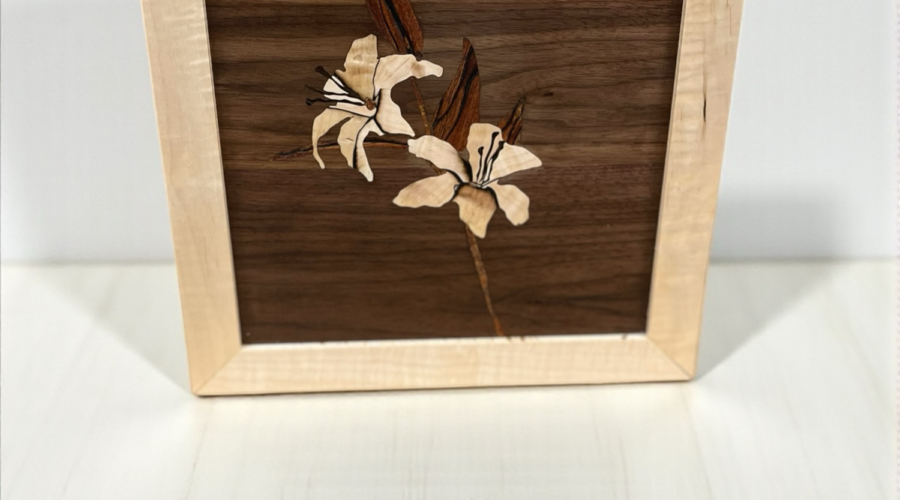
Set in solid walnut and framed in figured maple, this floral study is a one-of-one studio work. No reproductions. No second run. What you see here is the only version that will ever exist.
I’ve decided to offer it by open auction, allowing the final value to be set by those who see its worth—not by a price tag.
Bidding opens this Friday on my website.
Once it leaves the studio, it will not be recreated.
If you’ve followed my work for the furniture, consider this its quieter counterpart—a collectible object made with the same discipline, patience, and respect for material.
→ Auction opens Friday
→ Details and bidding at: andersonwoodwork.net
→ Questions welcome before bidding opens Friday January /2 at 9:00
For collectors and architects, furniture is not decoration. It is part of the built environment. When chosen well, solid wood furniture reinforces the intent of a space—quietly, precisely, and without explanation.
The most successful interiors do not rely on abundance. They rely on alignment: between architecture, material, proportion, and purpose.
Architecture Leads. Furniture Responds.
A home already contains its own logic. Ceiling height, light quality, rhythm of openings, and structural expression all dictate what belongs within it. Furniture that ignores these cues becomes visual noise.
In architecturally driven spaces, furniture should act as an extension of the structure. Pieces with clear geometry, honest construction, and deliberate restraint tend to integrate rather than interrupt. In older homes, this may mean visible joinery and mass. In contemporary environments, it often means precision, negative space, and clarity of form.
The question is not “What style do I like?” but “What does this building ask for?”
Style as a Function of Use and Permanence
Collectors understand that lasting design is rarely expressive. It is resolved.
Furniture intended to live with a home for decades should avoid novelty. Shaker-derived forms, craft-informed cabinetry, and refined modern profiles endure because they solve problems simply and honestly. These styles leave room for architecture, art, and life itself.
Good furniture does not demand attention—it earns it over time.
Wood Species as Architectural Material
Wood selection is often treated as a color choice. For serious collectors and designers, it is a structural and atmospheric decision.
White Oak offers neutrality with strength. Its grain reads clearly without dominance, making it ideal for spaces where balance and longevity matter.
Walnut introduces depth and warmth without excess. Used thoughtfully, it anchors a room while maintaining refinement.
Maple recedes, allowing proportion and form to lead. It is well suited to minimal architecture and detail-forward spaces.
Cherry evolves. Its transformation over time appeals to those who value patina and the passage of years as part of the design.
Soho special
Mahogany brings gravity. It belongs in spaces where tradition, scale, and formality are already established.
Each species carries weight—visually, structurally, and emotionally. Choosing one is less about preference and more about intent.
Grain, Variation, and the Value of Imperfection
Collectors recognize that uniformity is a modern invention. Solid wood carries evidence of growth, tension, and time. These characteristics are not defects—they are proof of authenticity.
A well-made piece does not hide the material. It organizes it. Grain selection, board orientation, and joinery should feel intentional, not erased.
Over time, wear becomes part of the surface language. Patina is not damage—it is participation.
Proportion Is the Silent Luxury
Luxury reveals itself in restraint. Scale, alignment, and spacing are often more important than species or finish.
Tables should relate to circulation, cabinets to fenestration, and storage to human reach. When furniture is properly proportioned, it feels inevitable—never forced.
This level of resolution is difficult to achieve without designing specifically for the space.
Why Custom Matters in Architecturally Significant Homes
In homes where architecture has been carefully considered, off-the-shelf furniture often feels temporary. Custom work allows furniture to share the same logic as the building itself.
Dimensions align. Materials converse. Details are resolved rather than compromised.
The result is not a showpiece—it is continuity.
A Quiet Invitation
For collectors, architects, and homeowners who value permanence over trend, solid wood furniture is less about acquisition and more about stewardship.
If you’re exploring a piece that needs to integrate—not decorate—your space, a thoughtful design conversation is often the best place to begin. Sometimes the right solution is obvious. Sometimes it needs to be drawn, tested, and refined.
Either way, the goal is the same: furniture that belongs.
If you’re considering a handcrafted piece for your home—or want to understand which line fits your needs—I invite you to reach out.
Intentional living isn’t a trend to me. It’s not a buzzword or a lifestyle badge. It’s something you arrive at after enough trial and error, enough fixing your own mistakes, and enough time watching what actually holds up.
At some point, you realize that most things fail not because they’re used hard—but because they were never built with much thought to begin with.
Intentional living starts right there.
What I Mean When I Say “Intentional”
To live intentionally means you stop letting convenience make all the decisions for you.
You slow down just enough to ask:
Why am I choosing this? Who made it? How long do I expect it to last? What happens when it needs care or repair?
These aren’t philosophical questions. They’re practical ones. They shape how we spend our money, how we build our homes, how we run our businesses, and how we show up for the people around us.
Intentional living doesn’t mean doing everything the hard way. It means doing things on purpose.
Looking Outside Our Own Culture Changes Everything
One of the biggest shifts in my thinking came from paying attention to how other cultures live and build.
In a lot of places around the world, longevity is just assumed. Furniture is expected to be repaired. Homes are expected to change over time. Businesses are expected to outlive the person who started them.
That perspective messes with you—in a good way.
It makes you realize how much of what we accept as “normal” is actually just convenient and short-term. Fast furniture. Disposable fixes. Businesses built to exit instead of endure.
When you see another way working—really working—it’s hard to unsee it.
Intentional Living Is Long-Term Thinking, Applied Daily
This kind of living doesn’t show up in one big decision. It shows up in a thousand small ones.
You choose fewer things, but better ones.
You fix instead of replace.
You invest where it matters and let go of what doesn’t.
And over time, those choices stack.
Intentional living isn’t about perfection. It’s about responsibility. You accept that what you choose today has a ripple effect later—on your finances, your time, your relationships, and the world around you.
How This Shows Up in Work and Business
In my experience, businesses fail for the same reasons furniture does: shortcuts, poor materials, and decisions made for speed instead of stability.
When you work intentionally, you stop chasing everything. You decide what matters and build around that.
That might mean:
Growing slower Saying no more often Charging honestly Building relationships instead of pipelines
It’s not always the easiest path, but it’s the one that lasts.
An intentional business supports your life—it doesn’t consume it. It leaves room for pride in your work, accountability for your choices, and trust with the people you serve.
Objects, Homes, and the Meaning We Assign Them
When you live intentionally, things stop being disposable.
A table isn’t just a surface. It’s where life happens.
A cabinet isn’t just storage. It’s part of how a home works.
When something is made—or chosen—with intention, you treat it differently. You maintain it. You respect it. You let it age.
And when enough people live this way, it changes the culture. Less waste. More care. Better decisions.
Why This Matters Right Now
We’re living in a time where it’s easy to disconnect from consequences. Everything is fast. Everything is replaceable. Everything is optimized for now.
Intentional living pushes back against that.
It reminds us that good things take time. That responsibility is part of freedom. And that building something to last—whether it’s a business, a home, or a life—is worth the effort.
This isn’t about going backward. It’s about choosing a direction that actually holds up.
Living With Intention Is a Choice
No one lives intentionally by accident.
You choose it every time you slow down instead of rush. Every time you fix instead of toss. Every time you decide that long-term value matters more than short-term ease.
Over time, those choices build a life that feels solid. One that doesn’t need constant replacing—just care.
That’s intentional living.
If you enjoy my work and want to talk about a custom piece or a new art idea, I’d love to hear from you.
Before this marquetry panel was framed, I considered giving it a different life.
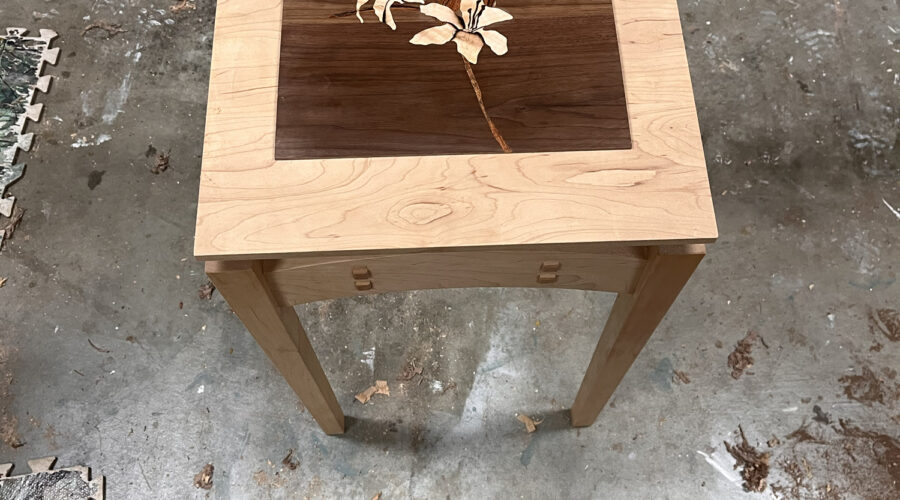
My original thought was to integrate it into this table—to let the art and the furniture become one object instead of two. Not as decoration, but as structure. Something meant to be touched, lived with, and slowly marked by time.
I was advised not to do that.
That art should remain untouched.
That no one wants to cover something so carefully made.
That a surface is meant to be protected, not experienced.
And I understand that thinking. There is a long tradition of preservation, of separating art from utility, of placing value in distance. Framed. Elevated. Observed.
But I’ve always been drawn to a different idea.
I believe the most meaningful objects in our lives are the ones we use. The table where meals are shared. The desk that holds years of thought. The cabinet door opened every morning without a second thought. These pieces don’t lose their value through use—they gain it.
Wear isn’t damage.
It’s evidence.
Evidence that something mattered enough to become part of daily life.
This table sits in that tension. Between preservation and participation. Between the desire to protect something beautiful and the instinct to let it live where it belongs—in the center of the room, not on the wall.
The marquetry itself was hand-cut from solid wood veneers, built slowly and intentionally. It wasn’t made to be precious. It was made to last. To move with the seasons. To age honestly.
When placed into the table, it asks a quiet question:
Is art something we look at, or something we live with?
I don’t think there’s a single right answer. Some pieces want stillness. Others want hands, sunlight, and time. What matters is the intention behind the choice.
For me, furniture has always been about more than function. It’s about creating objects that earn their place in a home—not because they’re perfect, but because they’re present.
Whether this panel lives framed on a wall or integrated into a table, the question remains the same.
What do we value more: preservation, or participation?
And what kind of objects do we want to carry our lives forward?
So I’ll leave this here, unfinished in the best way.
Do you believe art should be protected and preserved—kept separate from daily life?
Or do you believe it should be integrated, touched, and allowed to age alongside us?
I’d truly like to hear where you land.
Leave a comment and tell me how you see this piece.
Your perspective helps shape where this work goes next.
Please share and subscribe I appreciate the support.
Creativity has always been international. Long before trends, algorithms, or mass production, people across the world shaped wood, metal, clay, and fiber with care and intention. Different cultures, different tools, different aesthetics—but the same truth connects them all: the process mattered.
Thoughtful work asks for time. Every decision—material selection, proportion, joinery, surface, finish—requires attention. Nothing meaningful happens by accident. When makers are allowed to work slowly, they can respond to the material rather than overpower it. This is where quality begins.
(You may also enjoy reading: [Why Process Matters in Handcrafted Work])
Slow creative development is often misunderstood as inefficiency, but in reality it is discipline. Ideas need space to mature. Materials need to be understood, not rushed. When creativity is pushed too fast, depth is lost. The result may function, but it rarely endures.
(Related article: [The Philosophy of Slow Craft])
Why Price Is Part of the Conversation
Price is inseparable from process.
Handcrafted work carries the cost of time, experience, and decision-making. It reflects hours spent planning before a single cut is made, years spent learning how materials behave, and the restraint required to avoid shortcuts. Unlike mass production, where price is driven by speed and volume, handcrafted work is priced according to intention and care.
When something is made slowly and responsibly, by skilled hands, the price reflects that reality. It is not simply a number—it is a measure of time, knowledge, and respect for the craft. To lower the price is often to remove steps, dilute quality, or sacrifice longevity.
(Further reading: [What Goes Into the Cost of Handmade Furniture])
The Value of One-of-a-Kind Work
One-of-a-kind artistry exists outside of repetition. Even when two pieces begin with the same idea, they never end the same way. Materials vary. Grain shifts. Decisions evolve. The final result is shaped by countless small choices made along the way.
This uniqueness cannot be replicated or standardized. It carries presence. It carries identity. It reflects the moment in which it was made and the hands that made it. In a world filled with identical objects, one-of-a-kind work offers something rare: authenticity.
(See examples: [One-of-a-Kind Furniture & Marquetry Art])
Owning something truly original is not about luxury for its own sake. It is about connection. It is about living with objects that feel grounded, intentional, and personal—objects that don’t need to be replaced when trends change.
Why Supporting Craft Matters
Modern culture prioritizes speed and convenience, but humans are not designed to live surrounded by disposable things. We respond to work made at a human pace—work that carries thought, weight, and story.
Supporting craftspeople is not about nostalgia or resisting progress. It is about preserving knowledge, valuing skill, and choosing permanence over excess. It is a decision to invest in quality rather than quantity, and in meaning rather than immediacy.
(You might also like: [Why Handmade Furniture Matters in the Modern Home])
Slow creation is not outdated. It is essential. And when craft is supported, creativity remains thoughtful, diverse, and deeply human.
A Quiet Invitation
If this way of thinking resonates, consider supporting the craftspeople, artists, and makers who work slowly and intentionally. Read their stories. Share their work. Choose one-of-a-kind pieces when you can.
You can explore more writing like this in [The Journal], see current work in [Available Pieces], or learn about commissioning something made specifically for your space in [Custom Furniture & Cabinets].
These choices help ensure that thoughtful, human-made work continues to exist—not just as objects, but as a way of living.
If you enjoy my work and want to talk about a custom piece or a new art idea, I’d love to hear from you.
When someone books a design consultation, they usually think it starts when I open my notebook.
It doesn’t.
It starts the moment you say something like,
“Okay… so this space just doesn’t work.”
Because the second those words leave your mouth, my brain is already rearranging your house.
I’m not being dramatic—I genuinely see it. The clutter disappears. The awkward corner gets solved. The cabinet suddenly exists where there was once confusion… and a pile of stuff you meant to deal with three years ago.
At first, it’s a little fuzzy. More of a feeling than a shape.
But then you keep talking.
You mention how you actually use the space. What annoys you. What you wish you had done differently last time. And suddenly the image sharpens. The piece changes. The lines adjust. The idea starts behaving itself.
This is usually the point where I nod quietly while internally thinking,
“Ohhh. That’s the problem.”
And here’s the funny part: none of this is visible on the outside. From your perspective, I’m just listening. Maybe asking a question or two. But internally, I’m moving cabinets, stretching proportions, swapping woods, and quietly deleting about five bad ideas that almost worked.
Then comes the hard part.
I have to get what’s in my head… out of my head.
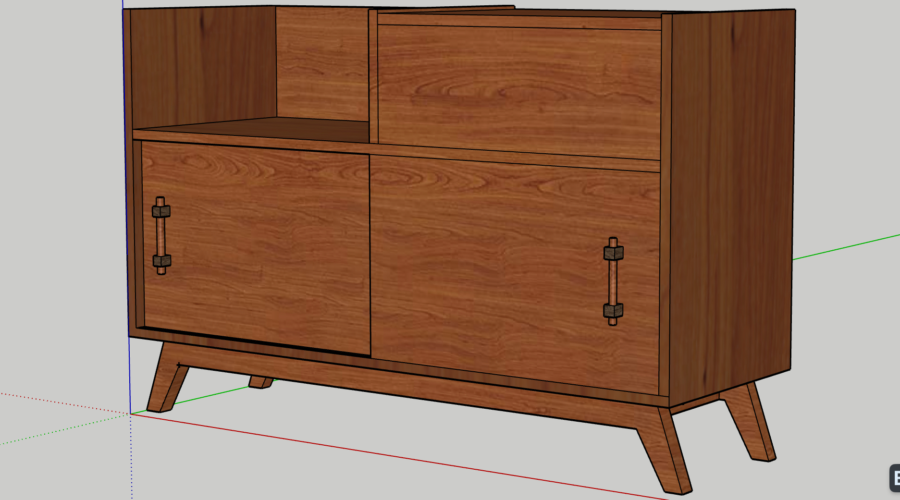
Because seeing something clearly and explaining it clearly are two very different skills. This is where drawing comes in. Not because I like drawing (I do), but because it’s the only way to make sure we’re both looking at the same thing.
The drawing is the translator.
It takes instinct and turns it into something concrete. It slows the process down just enough to catch the details that matter—proportion, balance, and how the piece will actually live in your home instead of just looking good on paper.
By the time a project makes it into my shop, it’s already been built dozens of times—quietly, in my head, while we were talking.
That’s the part most people never see.
Once the drawing is complete, everything shifts.
This is where it gets fun.
Because now the idea—the thing that only existed in your words and my head—gets to become real. I move from paper to wood. From lines to weight. From “I think this will work” to “okay… let’s find out.”
There’s something deeply satisfying about that transition. I get to see the idea all the way through. Not just imagine it. Not just plan it. But actually build it—board by board, joint by joint. Mistakes included.
And if you stop and think about it for a moment, it’s kind of incredible.
This piece didn’t exist. At all.
It was just a collection of problems, half-formed thoughts, and sentences that started with,
“What if…”
or
“I don’t know how to explain this, but…”
Those words turned into a drawing.
That drawing turned into a plan.
That plan turned into something you can see, touch, and live with.
Something solid. Something beautiful. Something completely unique—because it came from you.
That’s the part of this work that still amazes me. Taking something that wasn’t real and giving it form. Helping translate someone else’s thoughts and needs into a physical object that solves a problem and quietly belongs in their life.
To me, that’s what being human looks like.
We listen.
We imagine.
We make.
And in the process, we help each other live a little better—through objects that carry intention, care, and a story worth keeping.
Please share this post with friends if you like what you see subscribe . I also ask if there is a subject you would like me to cover leave a comment. Or just leave a comment I would love to hear from you.
To all my current subscribers thank you .
If you’d like to support the channel directly, you can make a viewer donation here
There’s a question I’ve been asked more times than I can count:
“Do you build anything simpler?”
The Studio Line is my answer.
Over the years, my work has become known for detailed joinery, marquetry, and one-of-a-kind commissions built to live for generations. I love that work—it’s the heart of what I do. But not every piece needs ornament to be meaningful, and not every home needs something that announces itself the moment you walk in.
Some pieces are meant to live quietly with you.
What the Studio Line Is
The Studio Line is a collection of furniture designed with restraint and intention.
These pieces are built in my studio from solid wood using the same principles I apply to my most complex commissions. What changes here is not quality, but complexity. The forms are simpler. The decisions are fewer. The focus shifts toward proportion, material, and longevity.
By limiting options and standardizing dimensions, I’m able to spend my time where it matters most—executing each piece carefully and consistently, without compromise.
This is furniture meant to be used every day.
Furniture that ages honestly.
Furniture that doesn’t ask for attention, but earns it over time.
Why I Created This Line
Handcrafted furniture is slow by nature. That slowness is part of its value—it allows for care, intention, and human judgment at every step. But I also understand that not everyone is ready for a fully custom commission, and not every project needs to be one-of-a-kind.
The Studio Line exists to make my work more accessible without lowering standards.
These pieces come directly from my shop, shaped by the same hands, built from the same materials, and held to the same expectations for strength and longevity. By narrowing the scope—fewer woods, fewer finishes, fixed dimensions—I’m able to offer pieces that remain honest, durable, and enduring.
What Defines the Studio Line
Each Studio Line piece shares a few key principles:
Built from solid wood Designed with clean, architectural forms Limited wood species and finishes Fixed dimensions Built to order in my studio Finished by hand to age gracefully over time
There is no veneer pretending to be something it isn’t.
No shortcuts hidden behind polish.
No trend-driven details that won’t hold up.
Just real material, thoughtful design, and careful execution.
The First Pieces
The Studio Line launches with a small, focused group of furniture—pieces I believe in and can build consistently without rushing the process:
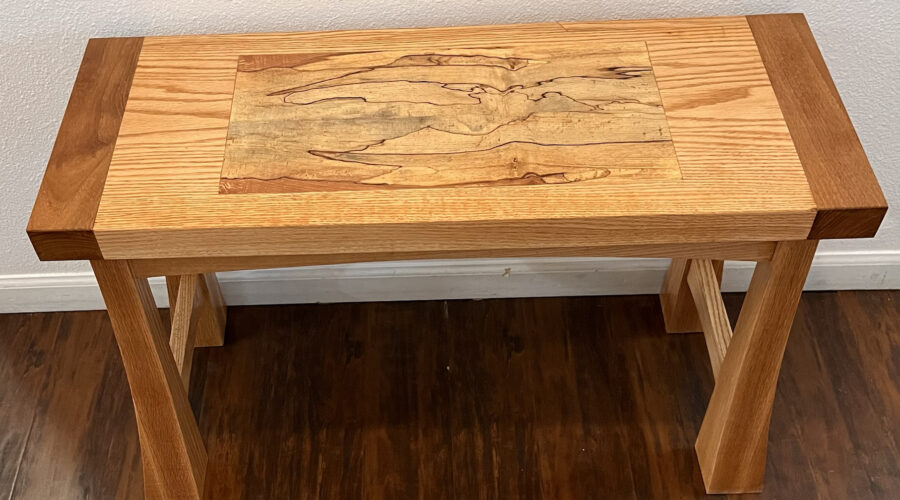
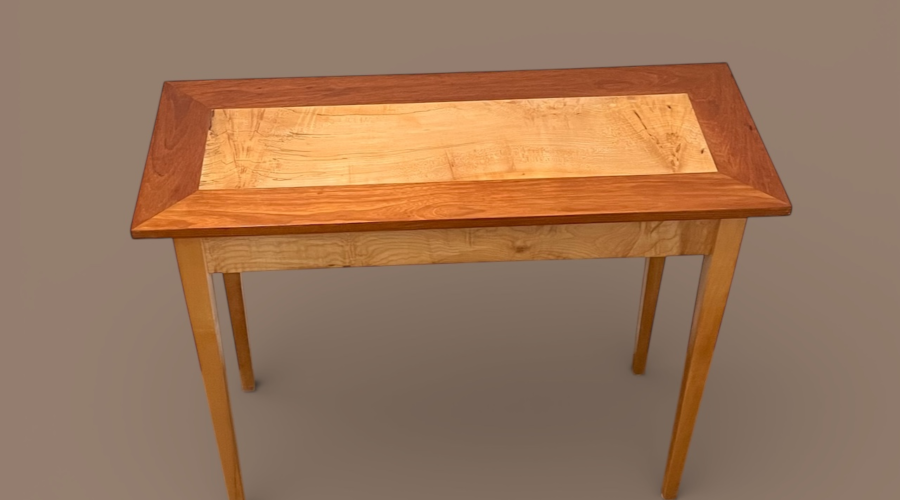
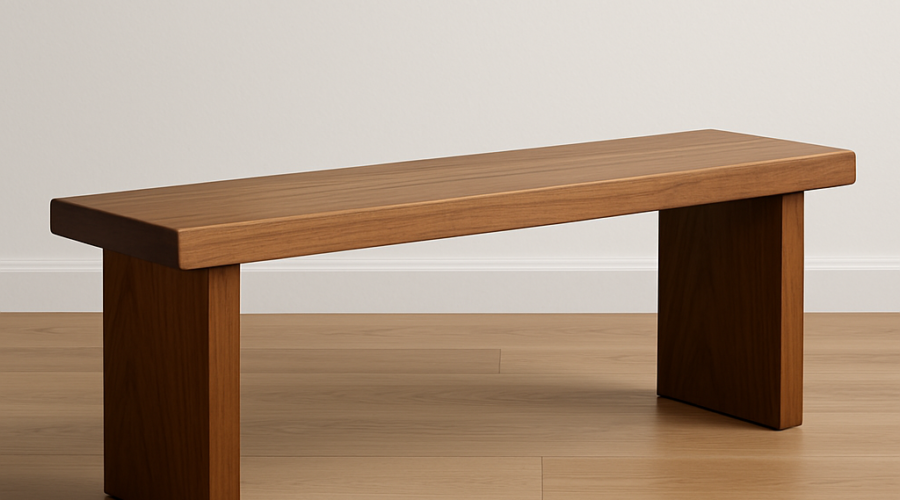
Studio Coffee Table Studio Bench Studio Writing Desk / Console
Each piece was designed to feel grounded and balanced, with proportions that work in a wide range of spaces. These are foundations—pieces meant to support daily life, not compete with it.
(Insert images of each piece here)
How This Fits Alongside Custom Work
The Studio Line doesn’t replace custom commissions—it complements them.
For clients who want something entirely one-of-a-kind, with expanded dimensions, inlay, or deeply personal details, custom work will always remain a core part of my practice. The Studio Line simply offers another way to engage with my work—one rooted in simplicity, clarity, and longevity.
Many collectors begin here. Some stay here. Others eventually move into fully custom pieces. All are welcomed.
A Final Thought
In a world that pushes speed, novelty, and constant consumption, I believe there’s value in making fewer things—better things.
The Studio Line is about slowing down, choosing carefully, and living with objects that grow more meaningful the longer they’re part of your home.
If you’ve been looking for something solid, honest, and built to last, I invite you to explore the . Studio line
I’m excited to welcome a new collector to Anderson Woodworks.
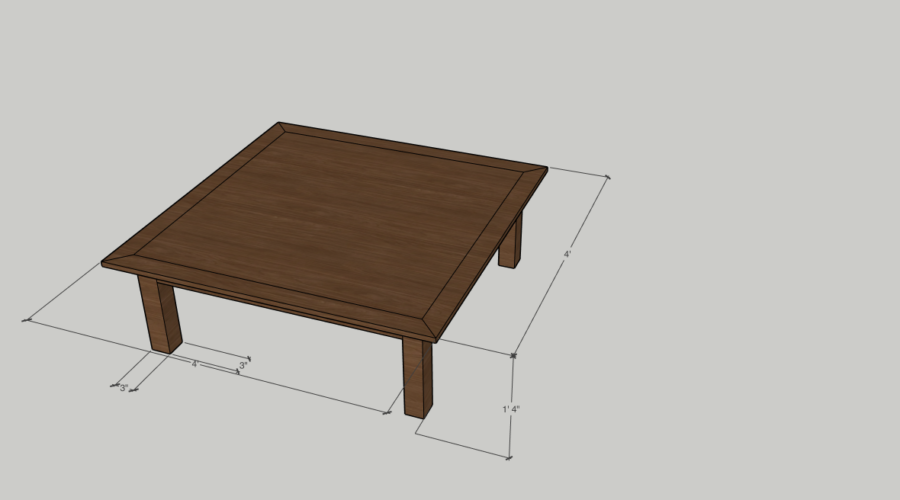
They’re new friends we met after moving to our new town—through a few game nights and local festivals. After spending some time together, they reached out about a new coffee table. Normally, they would order something from Williams Sonoma, but this time they asked a simple question: Could I build something similar, but sized specifically for their space?
That question is always an honor.
We talked through proportions, use, and materials, and decided to move forward with a custom piece that fits their home—something they simply couldn’t order off a shelf. They chose walnut, which meant a trip to one of my favorite places: Edensaw. I’ve been working with them for over twenty years, and it’s still a joy to walk through their stacks and select lumber for a new project.
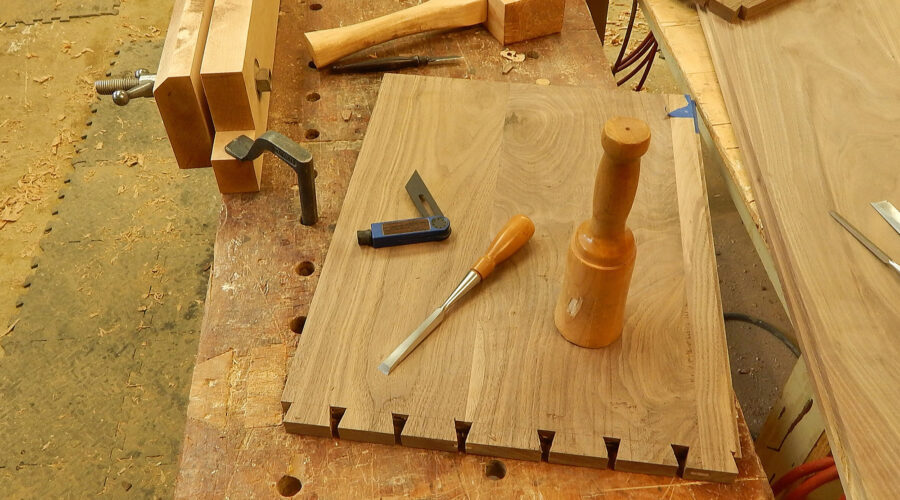
At this stage, I’ve milled and glued up the top and cut three of the legs. Next comes the joinery. This piece is moving along quickly, and I’m excited to see it take shape.
More to come soon.
If you enjoy my work and want to talk about a custom piece or a new art idea, I’d love to hear from you.
Every piece I create begins with intention, precision, and a belief in craftsmanship that lasts for generations.
To thank the people who support my work—and trust it enough to share my name with friends, family, and clients—I’m offering something meaningful in return.
How It Works
• Refer someone to Anderson Woodworks
• If they book a consultation or commission, your name is entered into my Quarterly Art Giveaway
Each quarter, one name is drawn.
🎁 The Gift
A Limited-Edition Marquetry Art Piece
Hand-cut using my own thick veneers and signed on the back.
A small heirloom—crafted with the same care, patience, and precision that goes into every desk, cabinet, and table I build.
Why I’m Doing This
Referrals are the heart of my business.
When you recommend my work, you’re placing real trust in my hands.
I want to honor that trust with something lasting—not a discount or coupon, but a piece of art made by my own hands.
How to Enter
Refer someone who’s ready for custom cabinets or fine furniture Have them mention your name when they reach out Once they book a consultation, you’re officially entered
Every referral counts as one entry. Enter as many times as you’d like.
Soft Luxury Invitation
If you know someone who values solid wood, thoughtful design, and heirloom craftsmanship, send them my way.