
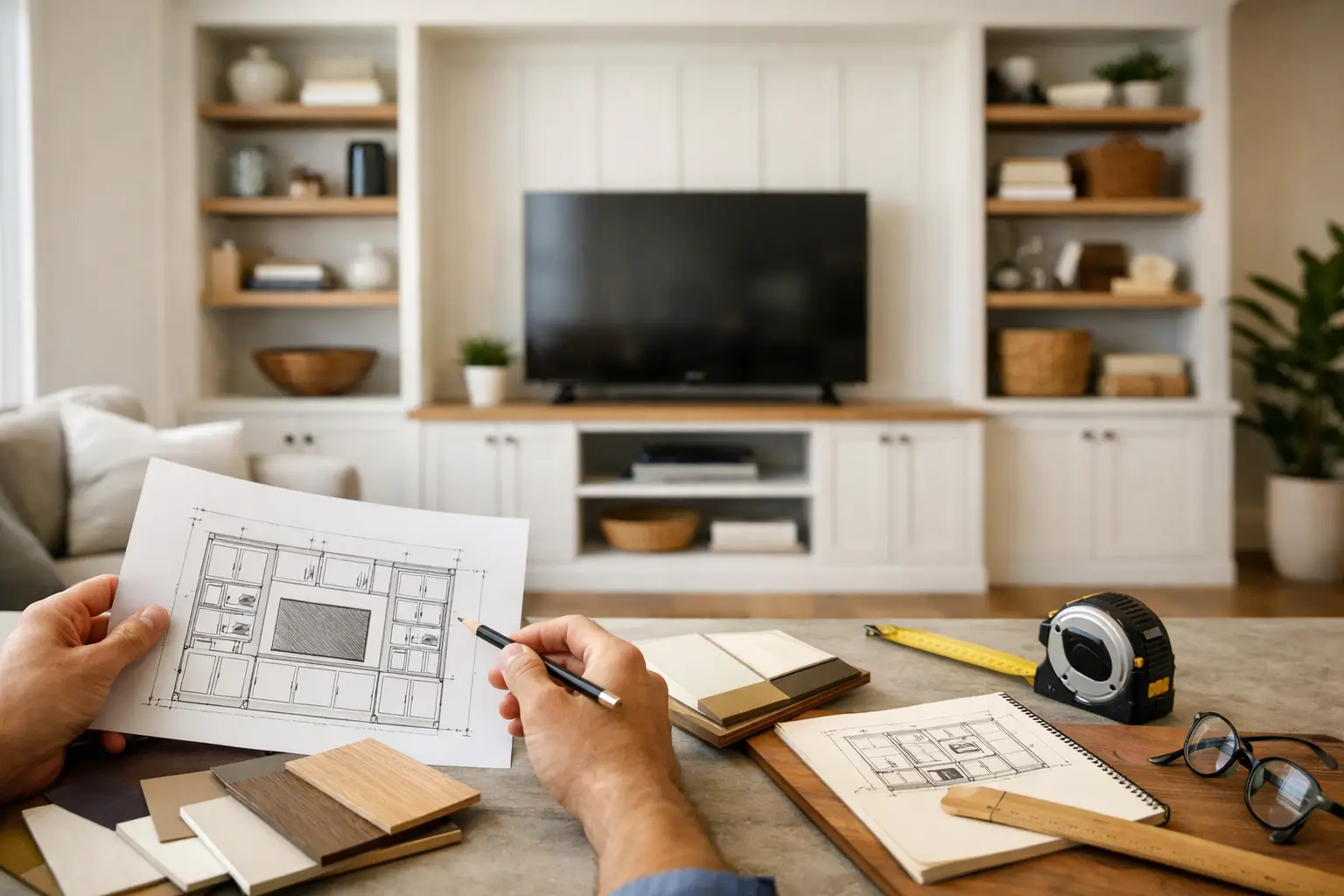
Most built-ins fail before the first board is cut. Not because the craftsmanship is poor, but because the plan is thin. A wall gets measured, a sketch gets approved, and only later does someone realize the cabinet doors collide with a vent, the shelves are too shallow for the books, or the entire composition makes the room feel heavier instead of better. If you want to know how to plan custom built ins well, start by treating them as part of the architecture of the room, not as decorative add-ons.
This is not decorating. Built-ins change how a room works, how it is read visually, and how it will age over time. Good planning protects all three.
Start with the room, not the unit
The first mistake homeowners make is planning the built-in in isolation. They focus on the wall where it will sit without asking what the room needs to do. A built-in in a study should not be planned the same way as one in an entry, a dining room, or a family room. Storage needs differ, but so do movement patterns, sightlines, and the level of visual weight the room can carry.
Before choosing dimensions, door styles, or finishes, define the job. Is this meant to conceal clutter, display collected objects, support a workspace, frame a fireplace, or solve an awkward architectural condition? Sometimes it needs to do two or three of those things at once. That is where the planning gets serious.
A built-in should answer a real need in the room. If it is only there to fill a blank wall, it will likely feel forced.
Decide what must be stored, displayed, or hidden
This is the most practical part of how to plan custom built ins, and it is where vague ideas need to become exact. Do not say, “We want shelves for books and some closed storage.” That is too loose to build from. Instead, identify what is actually going into the piece.
Measure the binders, record albums, serving pieces, baskets, electronics, printers, or oversized art books. Count the categories that need closed storage and the items that deserve open display. If the built-in is for a media wall, account for cable routing, speaker placement, ventilation, and future equipment changes. If it is for an office, think about paper storage, desktop height, task lighting, and whether the work surface will truly be used daily.
This process often reveals a tension between what clients want to see and what they need to hide. The answer is rarely all open shelving or all closed cabinetry. Most successful built-ins use a disciplined mix of both.
Measure the room with more rigor than you think you need
Built-ins are unforgiving. Minor errors in field conditions become obvious once cabinetry meets walls, floors, windows, and trim. You need more than overall wall width and ceiling height. Measure baseboards, crown details, outlet locations, vents, window casings, return walls, door swings, and any floor slope or wall irregularity that could affect fit.
Ceilings are rarely as straight as they appear. Older homes, especially, can move over time. In many houses across the Pacific Northwest, subtle settling, uneven plaster, and out-of-square corners are common enough that they should be assumed until proven otherwise.
Take measurements at multiple points, not just one. Width at the floor may differ from width at eye level. Ceiling height can change across the span of a wall. Planning around these realities early leads to cleaner installation details later.
Work out the proportions before the details
Homeowners often jump to finish samples and reference photos before they have settled the composition. That is backwards. Proportion matters more than decorative detail.
Start with the major masses. How wide should the piece be relative to the wall? Should it run full width or leave negative space at the sides? Does it need to reach the ceiling, or would a deliberate stop below the ceiling give the room better balance? If a desk, bench, or fireplace is involved, how should those elements anchor the composition?
A well-proportioned built-in can be visually quiet even when large. A poorly proportioned one can feel clumsy even with expensive materials and flawless joinery. Widths of cabinet bays, shelf spacing, toe kick height, and the scale of door and drawer fronts all contribute to whether the piece feels architectural or merely added on.
Plan for daily use, not idealized use
This is where many designs become less honest than they should be. Open shelves look appealing in drawings, but they collect visual noise quickly if every item lacks intention. Deep lower cabinets sound useful, but they can become dark voids if the storage is not accessible. A built-in desk may seem smart, yet if the room lacks proper lighting or privacy, it may never function as a real workspace.
The plan needs to reflect actual habits. If children will use the lower shelves, durability and easy access matter more than symmetry alone. If the room hosts frequent guests, concealed storage may be more valuable than display. If you work from home every day, ergonomic height, wire management, and task lighting are not secondary decisions.
Good built-ins are specific. They are shaped by routine, not aspiration.
Choose materials and finishes that suit the architecture
Material selection should reinforce the room, not compete with it. Painted built-ins can feel crisp and integrated, especially in rooms where the goal is continuity with surrounding trim and architecture. Natural wood can bring warmth, grain, and character, but it requires more discipline. Species choice, board selection, sheen, and color all matter.
A premium built-in should not be reduced to surface styling. The material palette needs to account for wear, repairability, and how the piece will look in ten years. White oak, walnut, painted hardwood, furniture-grade plywood, solid edging, and proper interior finishes each have a place, but not every place is the right one.
There is also a trade-off between visual quiet and statement-making. A painted built-in may support the room as a whole. A highly figured wood built-in may become the focal point. Neither is automatically better. The right choice depends on the architecture, the light, and the role the piece is meant to play.
Solve the technical issues early
If you are serious about how to plan custom built ins, technical planning cannot wait until fabrication. Lighting, power, HVAC, and installation access all need to be resolved before final drawings are approved.
Will there be integrated picture lights, library lights, or LED shelf lighting? If so, where will drivers and wiring live? Are there outlets that need to be relocated inside cabinets? Will doors block switches or access panels? Does a floor vent need to be redirected or incorporated into the design? If the unit is large, can it be brought into the house in manageable sections and assembled on site without compromising fit or appearance?
These are not minor details. They shape the design from the start.
Know where customization is worth the investment
Not every inch needs to be unique. Good planning distinguishes between the parts of the built-in that should be custom and the parts that can remain efficient.
Customization is worth paying for when it solves architecture, improves proportion, accommodates exact storage needs, or produces a level of integration that standard cabinetry cannot. It is less valuable when it is used simply to multiply options without improving the result.
This is where a disciplined studio approach matters. At Anderson Woodworks, the strongest projects are not the ones with the most features. They are the ones where every decision carries its weight.
Use drawings to test the design before construction
A hand sketch can start the conversation, but it should not be the final basis for approval. You want scaled drawings that show overall elevation, section logic, major dimensions, and enough detail to understand how the piece meets the room.
Drawings make problems visible while they are still easy to solve. You can test shelf spacing, check alignments with windows and doors, and evaluate whether the composition feels too top-heavy or too busy. If the built-in is part of a larger room plan, those drawings should also account for adjacent furniture, circulation clearances, and visual hierarchy.
This stage protects the build. It also protects the client from making expensive decisions on instinct alone.
Build for permanence, not trend
A custom built-in should feel more convincing five years from now than it does the day it is installed. That means avoiding details chosen only because they are currently circulating through design media. Arched niches, overscaled fluting, or novelty paint colors may be useful in the right project, but only if they belong to the architecture and the client’s life.
Permanence comes from restraint, strong proportion, durable materials, and honest use. It comes from knowing when to let the craftsmanship speak without layering on unnecessary effects.
The best built-ins do not try to impress at every angle. They fit so well, function so clearly, and hold the room so calmly that you stop imagining alternatives. That is the standard worth planning for.
Discover more from Anderson woodworks custom furniture & cabinets
Subscribe to get the latest posts sent to your email.