A cabinet decision rarely starts with cabinets. It starts with a room that is not working – a kitchen corner that wastes space, an entry that collects clutter, a study that needs storage without feeling heavy, or a dining room that deserves more than filler furniture. That is where the real question behind custom cabinets vs stock cabinets begins: are you solving a simple storage need, or are you shaping how the room will function for years?
That distinction matters because these two options are built on different assumptions. Stock cabinets are made for speed, standard sizing, and broad appeal. Custom cabinets are made for a specific room, a specific set of needs, and a specific standard of finish. Neither is automatically right. The better choice depends on what the room demands and how exacting you want the result to be.
Custom cabinets vs stock cabinets: the real difference
The easiest way to compare them is this: stock cabinets are products, while custom cabinets are a design and fabrication process.
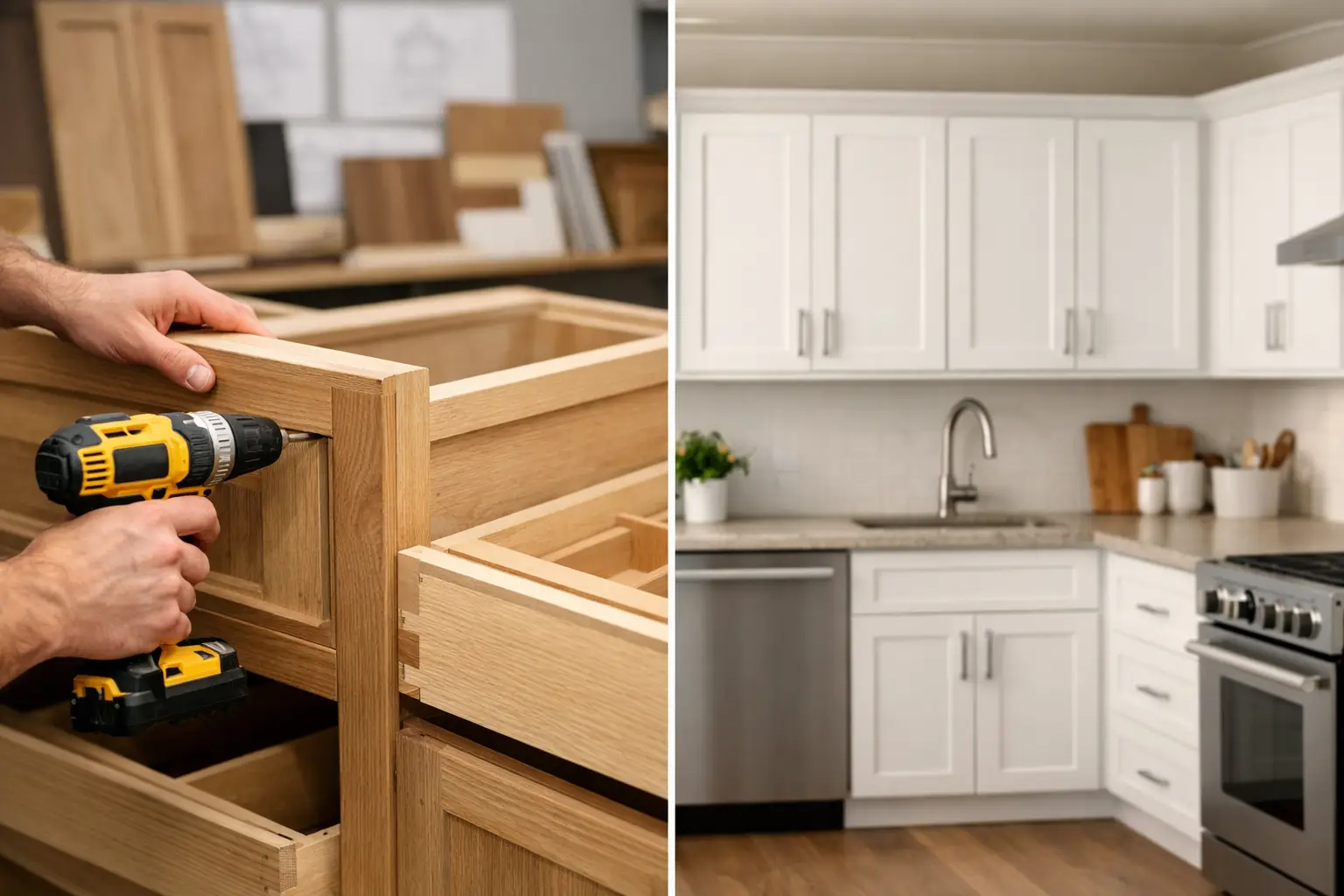
Stock cabinets come in predetermined widths, heights, finishes, and configurations. They are manufactured in volume, which keeps costs lower and lead times shorter. If your room is straightforward and your priorities are budget and speed, that can be a perfectly rational decision.
Custom cabinets begin with the room itself. Measurements, proportions, wall conditions, ceiling height, circulation, storage habits, visual weight, and adjoining materials all shape the final piece. That means the cabinetry is not just filling a gap. It is part of the architecture of the room.
This is not a small distinction. In a well-designed interior, cabinetry should resolve problems before they become compromises. It should use awkward dimensions intelligently, support the way you move through the space, and feel visually settled rather than inserted as an afterthought.
Where stock cabinets make sense
Stock cabinetry earns its place when the scope is simple and the expectations are realistic. In a laundry room, utility space, rental property, or a quick refresh where the layout already works, stock can be a practical solution. If the room is close to standard dimensions and you are comfortable making small compromises on fit and finish, the value can be strong.
Stock also suits homeowners who need a faster timeline. Because sizes and finishes are preselected, the ordering process is more direct. There are fewer decisions, fewer drawings, and less fabrication time.
But efficiency comes with limits. Fillers are often needed to bridge size gaps. Storage may be adequate rather than tailored. Material quality varies widely, and so does construction. Some lines hold up reasonably well. Others reveal their shortcuts quickly through thin drawer boxes, weaker joinery, lower-grade hardware, and finishes that do not age gracefully.
If you are choosing stock, the key is honesty. Buy it for what it is. Do not expect it to perform like a fully resolved architectural element if it was never designed to be one.
When custom cabinets are worth it
Custom cabinetry becomes worth the investment when the room has constraints, when the function is specific, or when the design standard is high enough that generic solutions will always feel off.
Older homes are a clear example. Walls are rarely perfect. Floors shift. Ceiling lines can vary. Standard boxes often leave dead space, awkward gaps, or proportions that look wrong against the architecture. Custom work lets the cabinetry belong to the room rather than fight it.
The same is true in spaces where storage needs are specific. A home office may need concealed printer storage, file organization, integrated lighting, and shelves scaled to the books and objects you actually own. An entry may need durable interiors, bench seating, shoe storage, charging access, and a visual presence that sets the tone for the house. A dining room built-in may need to display collected pieces without turning the wall into visual noise. None of that is solved well by choosing from a narrow menu of preset boxes.
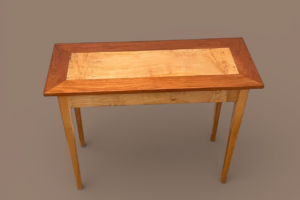
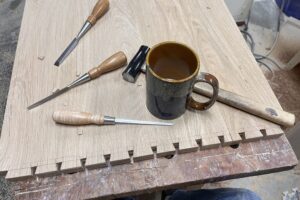
Custom also matters when material integrity matters. Solid wood components, better substrate choices, hand-finished details, and stronger joinery all affect longevity. Not every custom cabinet shop builds at the same level, but true custom work gives you access to decisions that are simply unavailable in mass-produced lines.
Cost is not the only math
Most comparisons stop at price, which is understandable but incomplete. Stock cabinets usually have the lower upfront cost. Custom cabinets usually cost more because they involve design time, detailed fabrication, finishing, and installation tailored to the room.
The better question is what you are buying with that difference.
With stock, you are often paying for acceptable function at a lower entry point. With custom, you are paying for precision, proportion, material selection, durability, and a solution that is specific to your life. If the cabinetry needs to carry the visual and functional weight of the room, those qualities are not extras. They are the point.
There is also a long-term value issue that homeowners often miss. Poorly fitted cabinets, wasted corners, weak hardware, and surfaces that age badly can create dissatisfaction long before the cabinets technically fail. The room works, but not well. And because cabinetry is not easy to replace, those compromises tend to stay in place for years.
A more expensive cabinet that solves the room properly can be the cheaper decision over time, especially in spaces you use every day.
Custom cabinets vs stock cabinets in design terms
Cabinetry affects more than storage. It affects visual balance, circulation, and the way a room feels at eye level. This is where custom work has a decisive advantage.
Stock cabinets are built around standard modules, so the final layout often reflects manufacturing logic more than spatial logic. You see filler strips, uneven reveals, top gaps, strange panel transitions, and proportions that are technically acceptable but visually unresolved.
Custom cabinetry allows the elevations to be composed with intention. Door and drawer sizes can be balanced to the wall. Crown details can meet the ceiling correctly or be omitted for a cleaner line. Panels can align with windows, casings, and adjacent architectural elements. Depth can be adjusted so the cabinetry has presence without overpowering the room.
That level of control is especially important in spaces beyond the kitchen. In studies, libraries, dining rooms, and entry halls, cabinetry is often seen as furniture as much as architecture. It should have rhythm, restraint, and a sense of permanence. This is not decorating. It is spatial planning through craftsmanship.
Quality varies more than labels suggest
Not all stock cabinets are poor, and not all custom cabinets are excellent. That needs to be said plainly.
Some stock lines offer solid value and decent construction. Some custom shops produce work that is overbuilt in the wrong places and under-considered in the details that matter. The label alone does not guarantee results.
When evaluating either option, look closely at the fundamentals: drawer box construction, door material, hardware quality, finish process, interior organization, and installation standards. Ask how the cabinets handle uneven walls, how they are scribed, what materials are used for exposed ends, and how replacement or refinishing is handled later.
For custom work, the design process matters as much as the shop capability. If a cabinetmaker is not asking detailed questions about use, proportion, storage behavior, and room layout, you may be getting bespoke dimensions without genuine design thinking. Those are not the same thing.
Which option fits your home?
If your goal is to improve a room quickly, stay within a tighter budget, and work within a standard layout, stock cabinets may be entirely appropriate. They can serve well when the room does not ask for much more than organized storage.
If your home has architectural quirks, if the room needs to perform at a higher level, or if you care deeply about material quality and visual coherence, custom is usually the stronger decision. It gives you control where standard options force compromise.
For many homeowners, the answer is not ideological. It is strategic. Use stock where the stakes are low. Invest in custom where the cabinetry defines the room.
That is often the clearest path to a home that feels considered rather than assembled. And if you are already investing in a room meant to last, it is worth asking for cabinetry that was designed with the same standard in mind.
if this interests you go see my blog How to plan built in
Discover more from Anderson woodworks custom furniture & cabinets
Subscribe to get the latest posts sent to your email.