Most home offices fail in the same way: the desk is bought first, the storage is added later, and the room never quite works. Cords show, paper piles up, the chair is wrong for the desk height, and the space starts to feel temporary. If you are asking how to furnish a home office, the real question is not which pieces to buy. It is how to create a room that supports focused work, holds what you need, and still feels like part of a well-made home.
This is not decorating. A good office begins with function, proportion, and the way you actually work each day. Furniture should set the logic of the room. Once that foundation is right, materials, lighting, and visual character fall into place with much less effort.
How to furnish a home office starts with the work itself
Before choosing a desk or shelving, define what happens in the room. Some offices are primarily digital. Others need space for paper files, samples, books, printers, or client meetings. A room used for deep solo work should feel different from one that also handles household administration, shared use, or creative spread-out tasks.
This matters because the furniture footprint changes with the work. If you spend all day at a monitor, your desk needs to support ergonomics and cable management more than surface area alone. If you review drawings or keep active files nearby, storage placement becomes just as important as the main work surface. If the room also serves as a reading space or private study, a secondary chair, side table, and lamp may belong there as much as the desk does.
Too many people furnish the room around a generic image of an office. A stronger approach is to inventory the work first, then select furniture that answers it directly.
Start with the desk, but not in isolation
The desk is the anchor, but it should never be treated as a standalone object. Its size, depth, and orientation affect everything else in the room.
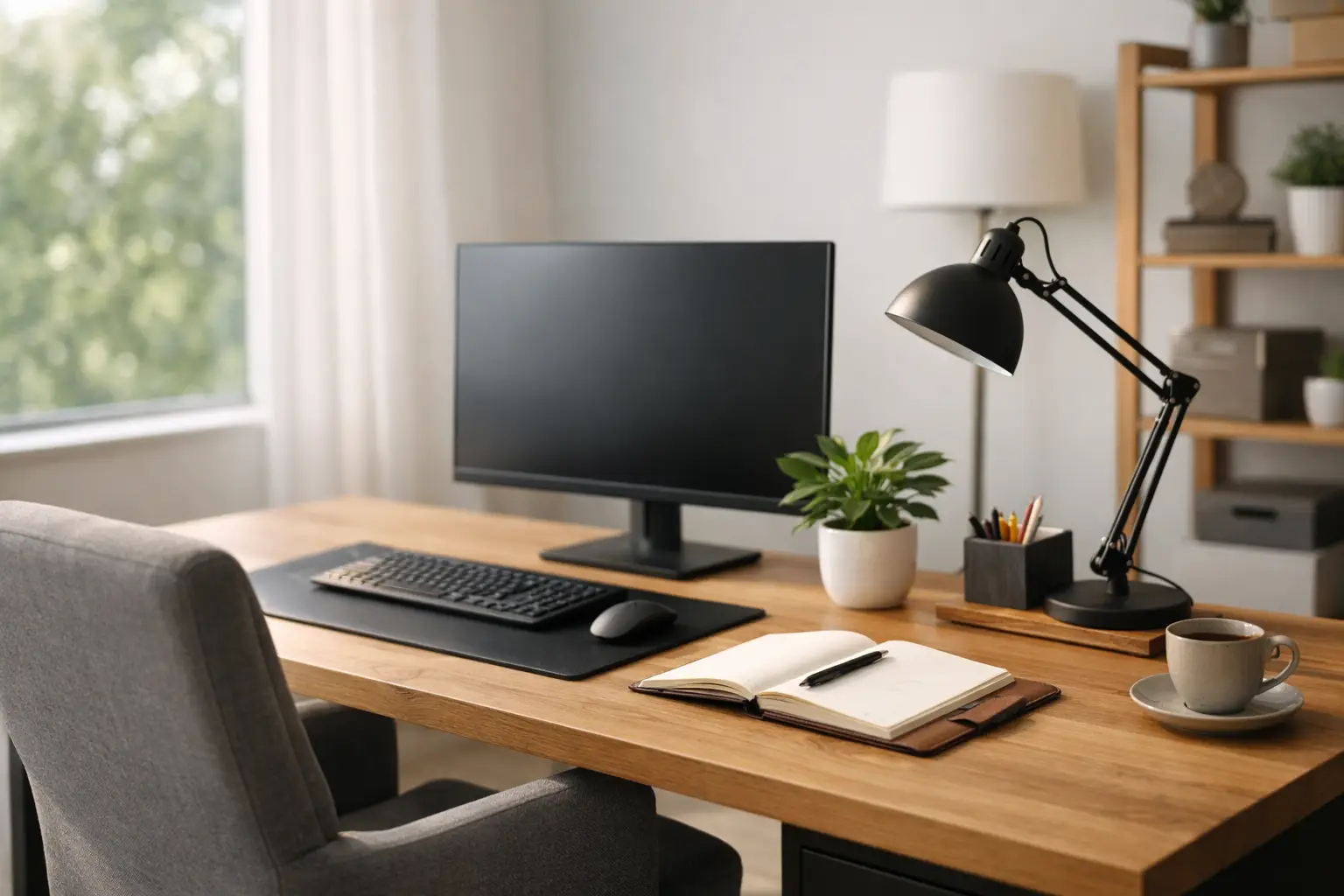
A desk that is too small creates clutter because active tools migrate to every available surface. A desk that is too large can choke circulation and make the room feel crowded. In most home offices, depth matters more than sheer width. You need enough room for a monitor, keyboard, task lighting, and writing space without forcing the chair too close to the wall behind you.
Placement matters just as much. Facing a blank wall can improve concentration for some people, while others work better with a window nearby for borrowed light. Putting the desk directly in front of a bright window often creates screen glare. Turning it so light comes from the side is usually more forgiving.
This is also where custom work has a clear advantage. A built desk can be tuned to the room, the user, and the equipment rather than forcing compromises around standard dimensions. That does not mean every office requires a fully bespoke solution. It does mean the desk should be chosen as part of a plan, not as a disconnected purchase.
Desk shape should match the room
A simple rectangular desk works in most spaces, but not all. In a narrow room, a wall-based desk with integrated storage may use the footprint better than a freestanding executive desk. In a square room, an L-shaped layout can separate computer work from writing or review space. In a smaller office, a lighter visual profile may keep the room from feeling overfurnished.
The best answer depends on the architecture. Ceiling height, window placement, door swing, and existing millwork all affect what the desk should be.
Storage is where most offices are won or lost
People often underestimate storage because it is less visible in the early planning stage. Then the printer lands on the floor, binders stack in corners, and the desktop becomes permanent overflow.
Good office storage is not just about volume. It is about assigning a proper place to each category of use. Daily items should be at arm’s reach. Weekly-use materials can sit in drawers or low cabinets. Archive material belongs farther from the desk, often in closed storage so the room stays calm.
Open shelving has its place, especially for books and objects that genuinely support the character of the room. But relying too heavily on open storage can make a home office feel visually busy. Closed cabinets, drawer banks, and built-ins create discipline. They let the room read as intentional rather than active in every direction.
If you have the space, a combination works best: one zone for display or books, one zone for concealed utility. That balance keeps the room useful without turning it into a storage closet.
Built-ins make sense when the room has to work hard
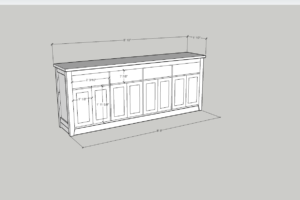
In dedicated home offices, built-ins often outperform pieced-together furniture. They use awkward walls well, take advantage of height, and can integrate file storage, printer housing, library shelving, and concealed charging in a way loose furniture rarely does.
They also give the room architectural weight. When cabinetry and desk proportions are designed together, the office feels settled. That is especially valuable in older homes or custom residences where off-the-shelf pieces can look generic or underscaled.
Seating should be chosen with the desk, not after it
A beautiful desk paired with a poor chair is a bad office. Comfort is obvious, but proportion matters too. Chair height, arm clearance, seat depth, and movement all need to relate to the desk design.
If you work long hours, task seating should be judged first on support and adjustability. If the room is used more occasionally, you may accept a cleaner silhouette with less technical articulation. Either way, the chair should not look like it came from a different world than the furniture around it.
Guest seating deserves the same discipline. If you meet with clients, review paperwork with a spouse, or simply want the room to function as a private retreat, one well-scaled lounge or side chair can make the office more useful. The mistake is adding extra seating by default in a room that does not have the space. Every piece should earn its footprint.
Lighting should be layered, not solved with one fixture
Overhead lighting alone rarely makes an office work. You need general light for the room, task light for the desk, and often softer secondary light to keep the space from feeling harsh late in the day.
A desk lamp should illuminate the active work surface without reflecting into the screen. Overhead fixtures should provide even ambient light, not a single hot spot. If the office includes shelving or cabinetry, integrated lighting can help define the room and improve usability.
Natural light is valuable, but it is not universally beneficial without control. Bright western exposure may need shades. A north-facing room may need warmer artificial light to avoid feeling cold. The right lighting plan responds to the room you have, not the room you wish you had.
Materials matter because this room gets daily use
The office is one of the few rooms in a house where furniture can be under constant friction. Hands rest on the desk edge. Chairs roll. Drawers open repeatedly. Cheap surfaces show wear fast.
That is why material choice should be based on durability as much as appearance. Solid wood, quality veneer work, durable finishes, and well-made joinery age better than thin laminates and disposable hardware. A home office does not need to feel heavy or formal, but it should feel substantial.
This is also the place to resist trend-based choices. The office should still feel right in ten years, after technology changes and work habits shift. Quiet materials, strong proportions, and honest craftsmanship hold up longer than novelty.
Furnish for focus, not for staging
Many offices are overstyled and underplanned. Decorative objects crowd shelves, chairs are chosen for appearance alone, and the room looks finished until someone actually has to work in it.
A stronger office has visual restraint. Leave surface area open. Let storage do its job. Use fewer, better pieces. If you want the room to feel refined, pay attention to line, scale, and material consistency rather than adding more accessories.
In practice, this often means investing more in foundational pieces and less in filler. One well-made desk, properly scaled storage, and thoughtful lighting will carry the room further than a dozen decorative additions.
When custom is worth it
Not every office needs fully custom furniture, but some rooms clearly benefit from it. Tight footprints, unusual architecture, high storage demands, or a desire for the office to feel integrated with the rest of the home are all strong reasons to build specifically for the space.
Custom work is also worth considering when you are tired of compromise. If standard desks are always too shallow, too deep, too flimsy, or visually wrong for the house, that is a design problem, not a shopping problem. In those cases, a planned solution often costs more upfront and far less in regret.
At Anderson Woodworks, that is the distinction we care about most. Furniture should not be an afterthought placed into a room. It should establish the room’s function, order, and character from the beginning.
A home office should make work easier, not simply look appropriate. Furnish it with the same seriousness you would give a kitchen or primary suite, and the room will reward you every day you step into it.
Discover more from Anderson woodworks custom furniture & cabinets
Subscribe to get the latest posts sent to your email.