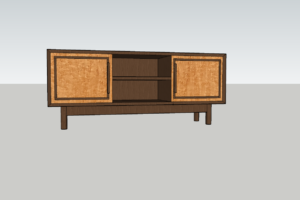

A dining table that is 4 inches too wide for the room will irritate you every day. A media cabinet with the wrong depth will always look awkward. A desk that ignores how you work will turn a good room into a compromised one. That is where the real question begins: is custom furniture worth it? In the right space, for the right reason, absolutely. But not every room needs it, and not every piece justifies the investment.
Custom furniture is worth it when the piece has to do more than fill a blank spot. If it needs to solve a layout problem, support the way you live, carry visual weight in the room, or last for decades, custom starts to make practical sense. If you are buying purely on price or need a temporary solution, retail is often the smarter move.
Is custom furniture worth it for every room?
No. Treating every room like it requires bespoke work is just as misguided as buying everything off the showroom floor. Some spaces carry more functional and visual responsibility than others.
A home office, dining room, study, entry, or living room often benefits from custom because these rooms ask more of the furniture. The piece may need to anchor the space, provide storage, fit an exact wall, or establish the proportions that everything else follows. In these rooms, furniture is not an accessory. It determines circulation, scale, comfort, and often the entire design direction.
A guest room used a few weekends a year may not need that level of specificity. A side table in a secondary corner may be perfectly fine as a retail purchase. The point is not that custom is always better. The point is that some decisions deserve precision, and others do not.
What you are actually paying for
Many people compare custom furniture to retail by looking only at the sticker price. That is too narrow. A custom piece includes design thinking, material selection, proportion study, construction method, and fabrication. If the maker is doing the job properly, you are paying for a piece that has been resolved before it is built.
That matters more than most homeowners realize. Good custom work accounts for dimensions that suit the room, joinery that supports real use, and details that keep the piece from feeling generic or overdesigned. It also accounts for the relationship between the furniture and the architecture around it – floors, trim, windows, circulation paths, sight lines, and storage needs.
This is not decorating. It is problem-solving through craftsmanship and design discipline.
A poorly chosen retail piece can cost less upfront and still be expensive in the long run if it needs replacing, never fits properly, or forces a series of compromises around it. A well-made custom piece often costs more because it removes those compromises from the start.
When custom furniture is clearly worth it
The strongest case for custom usually falls into one of four situations.
First, the room has unusual dimensions or architectural constraints. Older homes, tight alcoves, long narrow entryways, sloped ceilings, and difficult wall conditions rarely cooperate with standard sizes. Trying to force stock furniture into these spaces often creates dead zones, crowding, or awkward gaps.
Second, the piece has to perform multiple jobs. A built-in bench with concealed storage, a desk that supports specific equipment, a dining table designed around daily family use and larger gatherings, or cabinetry that blends display and utility all benefit from a custom approach. When the demands are specific, the solution should be as well.
Third, the furniture is meant to anchor the room for years. If a piece is central to how the space works and feels, it deserves more thought than a quick online order. A substantial bookcase, sideboard, dining table, or executive desk shapes the room in a lasting way. These are not casual purchases.
Fourth, you care about materials and construction. If you want solid wood, durable joinery, repairable finishes, and a piece that improves with age rather than breaking down under ordinary use, custom offers a level of control retail usually cannot.
When custom furniture may not be worth it
There are honest cases where custom is unnecessary.
If you are furnishing a short-term home, expect to move soon, or are still figuring out how a room will be used, flexibility may matter more than permanence. It can be wise to live with a simpler solution before commissioning something highly specific.
Custom may also be excessive if your needs are generic and easily met by well-made standard pieces. If a room accepts common dimensions and your requirements are straightforward, there is no virtue in ordering bespoke work just to say it is custom.
Budget matters too. A good room does not require every dollar to be concentrated in one piece while everything else is neglected. Sometimes the better decision is to choose custom for the one item that truly drives the room, then build around it with restraint.
The retail comparison most people miss
Retail furniture is designed for broad appeal, efficient shipping, and predictable manufacturing. That does not make it inherently bad. It does mean it is built around averages.
Average room sizes. Average user needs. Average style preferences. Average budgets.
But your house is not average in the ways that matter most. The room may be deeper, narrower, brighter, darker, busier, or more architecturally demanding than the model spaces used to sell furniture. Your family may need hidden storage, tougher surfaces, a different working height, or better use of wall space.
Custom earns its value when the average solution creates persistent friction. That friction may be visual, practical, or both. A room that almost works never fully settles. You feel it every time you walk in.
Is custom furniture worth it if you care about resale?
Sometimes yes, but not in the simplistic sense people often mean.
A beautifully made custom built-in, entry piece, or dining room anchor can strengthen the perceived quality of a home because it signals intentionality and permanence. It can make a room feel more resolved and architecturally complete. In that sense, custom can support resale.
But custom furniture should not be treated like a financial instrument. Its strongest return is daily use, long-term durability, and a room that works better over time. If resale is your only concern, you are asking the piece to do the wrong job.
The better question is whether the investment improves how you live now while maintaining quality that future buyers can recognize. If it does, that is a meaningful return.
The difference between expensive and valuable
Not all custom work is valuable. Some pieces are merely expensive because they rely on ornament, novelty, or unnecessary complexity. Good custom furniture is not about excess. It is about fit, function, material honesty, and proportion.
That distinction matters. A piece can be visually loud and still fail at storage, comfort, or durability. Another can look quiet and restrained while being exceptionally well resolved. The second is usually the better investment.
This is one reason design guidance matters. A serious maker does not just ask what style you like. They ask how the room should function, what dimensions support movement, what materials suit your habits, and what role the piece should play in the larger interior. At Anderson Woodworks, that discipline is part of the value. The furniture is not treated as an isolated object but as the element that often determines the room itself.
How to decide if custom furniture is worth it for you
Start with pressure points, not aesthetics. Ask where the room is failing. Is the layout unresolved? Do standard dimensions keep almost working but not quite? Does the room need one piece to establish order? Do you want this item to last 20 years, not five?
Then look at the piece through three filters: function, permanence, and importance. If it has a serious job, if you expect to live with it for a long time, and if it will strongly influence the room, custom is usually worth exploring. If those answers are weak, retail may be enough.
Finally, be honest about your standards. If craftsmanship, originality, and long-term use matter to you, custom furniture often aligns with those values better than mass-market options ever will. If convenience and lowest upfront cost matter more, there is no shame in choosing accordingly.
The point is not to custom-order everything. It is to stop treating all furniture decisions as equal. Some pieces are background. Some define the room. When a piece falls into the second category, precision is not indulgence. It is good judgment.
Discover more from Anderson woodworks custom furniture & cabinets
Subscribe to get the latest posts sent to your email.