A room usually tells on itself within seconds. The dining table is too small for the space, the media console blocks a vent, the office storage looks busy but solves very little. That is where commissioned furniture versus retail furniture becomes more than a price comparison. It becomes a question of whether the room is being asked to work around the furniture, or whether the furniture is built to serve the room.
This is not decorating. It is a design decision that affects layout, movement, storage, visual balance, and how the space feels to live in over time. Retail furniture has its place. Commissioned furniture has its place. The right choice depends on what the room needs, how specific your requirements are, and whether you are buying for convenience or building for permanence.
Commissioned furniture versus retail furniture: the real difference
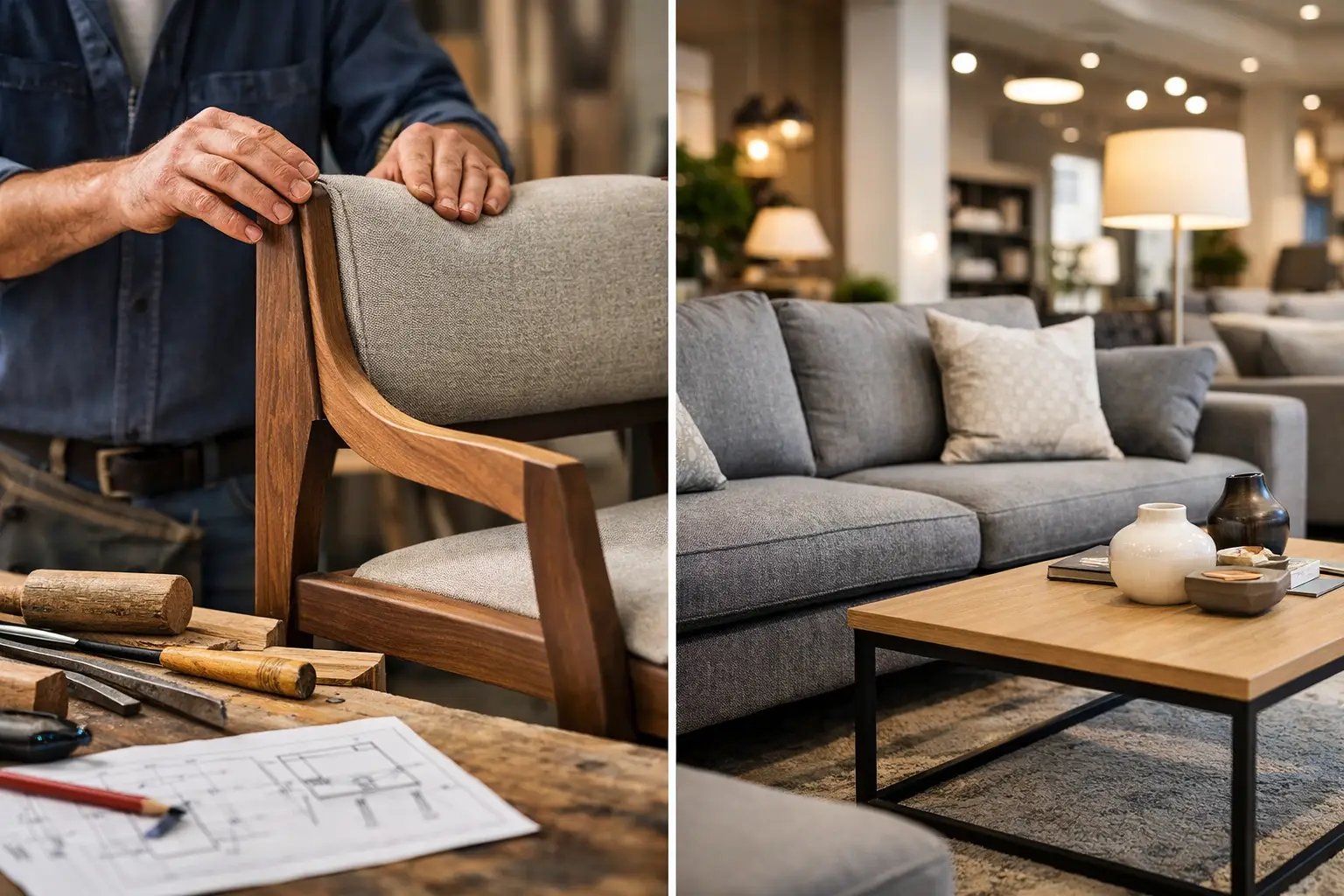
Retail furniture is designed for broad appeal. It is produced to fit average dimensions, common floor plans, and familiar buying habits. That does not make it bad. It makes it generalized. When you buy retail, you are selecting from what already exists and adapting your home around those options.
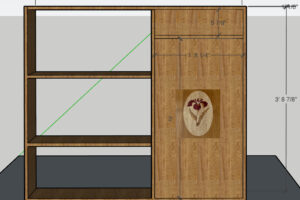
Commissioned furniture works the opposite way. It begins with the room, the use case, and the person living with it. Dimensions are not guessed. Materials are not selected because they photograph well in a catalog. The piece is designed to answer specific needs, whether that means a dining table with the right seating overhang, a built-in that resolves an awkward wall, or a desk that supports long hours of focused work without wasting floor space.
The core distinction is not simply custom versus ready-made. It is specificity versus standardization.
When retail furniture makes sense
Retail furniture is often the right answer when speed, budget, and flexibility matter most. If you need to furnish a guest room quickly, replace a temporary piece, or solve a low-stakes need in a space that is still evolving, retail can be practical.
There is also a range within retail that deserves acknowledgment. Not every store-bought piece is disposable, and not every custom piece is automatically superior. Some retail makers produce well-designed furniture with strong materials and respectable construction. For certain rooms, especially those with straightforward dimensions and modest functional demands, a retail piece may do the job well enough.
The trade-off is that “well enough” often becomes the ceiling. You may find something close to the right scale, almost the right finish, or mostly adequate storage. If the room is simple and your expectations are moderate, that compromise may be acceptable. If the room is central to daily life, compromises tend to surface quickly.
Where retail furniture starts to fail
Retail furniture struggles most when the room has architectural constraints or when the function is highly specific. Alcoves, sloped ceilings, narrow entries, uneven walls, older homes, and multi-use spaces all expose the limits of standard dimensions.
This is especially true in home offices, dining rooms, studies, and entry spaces – rooms that need to perform cleanly while carrying a strong visual presence. A desk that is two inches too deep can ruin circulation. A sideboard that sits too low can flatten an entire wall. An entry bench with no real storage turns into clutter wearing a nicer finish.
Retail also tends to separate furniture from the larger design conversation. You buy a cabinet here, a table there, maybe a shelf later. The result can feel fragmented because each piece was chosen independently instead of as part of a deliberate plan. A room built that way often looks furnished but not resolved.
Why commissioned furniture costs more
Commissioned furniture is more expensive because it requires design time, material judgment, fabrication skill, and a level of accountability that mass production avoids. You are not paying only for labor. You are paying for decisions made correctly before the first board is milled.
That process includes proportioning the piece to the room, selecting materials for durability and visual character, determining joinery based on use, and refining details so the final piece belongs to the architecture rather than competing with it. Good commissioned work is not expensive because it is exclusive. It is expensive because it is exact.
There is also a longer value horizon. A well-made commissioned piece is usually intended to stay, to age well, and to continue making sense as the house evolves. That changes how cost should be evaluated. Retail is often priced as a purchase. Commissioned furniture is better understood as a long-term design investment.
Commissioned furniture versus retail furniture in daily use
The strongest case for commissioned furniture is not abstract beauty. It is daily use. A piece earns its place by how consistently it solves the right problems.
A commissioned dining table can be sized for the number of people you actually host, with the right clearance around it and the right relationship to lighting and nearby casework. A commissioned home office can integrate storage for paper, equipment, and cords in a way that reduces visual noise instead of creating more of it. A built-in can turn a difficult wall into the organizing structure of the entire room.
That is where custom work often justifies itself. It removes friction. Doors open fully. Chairs tuck properly. Storage reflects real habits. Materials feel right to the hand and hold up under use. The room becomes calmer because fewer compromises are being managed every day.
Quality is more than wood species
People often reduce the custom versus retail conversation to materials alone. Solid wood versus veneer. Hardwood versus engineered panels. Domestic species versus imported species. Those choices matter, but they are only part of the equation.
Quality is also found in construction logic, proportions, hardware, finish durability, and how honestly a piece is designed for use. A retail piece can advertise premium materials and still be poorly resolved. A custom piece can use a mix of solid wood and stable engineered components and be far better built because each material was chosen intentionally.
What matters is whether the construction matches the job. Wide spans need proper support. Drawers need reliable joinery and hardware suited to their load. Finishes need to withstand the abuse the room will actually deliver. Good furniture is not defined by romantic language. It is defined by integrity.
The design advantage most homeowners miss
The biggest benefit of commissioned furniture is often not the furniture itself. It is the clarity it creates in the room.
When a key piece is designed first, the rest of the space can be resolved with far more precision. Layout decisions become easier. Lighting placement improves. Material selections feel connected. The room stops relying on filler pieces to patch over bad early decisions.
This is one reason custom furniture works so well as a foundation in residential design. It sets the visual weight, the functional priorities, and the material tone. From there, cabinetry, paint, textiles, and circulation can all be shaped around something intentional rather than around whatever happened to be available for delivery that month.
How to decide which route is right for your home
If the space is temporary, the function is simple, and time matters more than precision, retail is often the rational choice. There is no virtue in commissioning a piece for a problem that does not require it.
If the room is central to your daily life, the dimensions are unforgiving, or you are tired of living with pieces that are almost right, custom deserves serious consideration. The more permanent the room and the more specific the demands, the more commissioned work begins to make practical sense.
It also depends on your tolerance for compromise. Some homeowners can live happily with a piece that is close enough. Others feel every mismatch in scale, storage, and proportion every time they enter the room. Knowing which kind of homeowner you are matters.
At Anderson Woodworks, that distinction often becomes clear in the first design conversation. Clients are rarely looking for furniture alone. They are trying to make a room function properly, feel grounded, and stop looking assembled in parts.
A better question than custom or retail
The better question is not which category is superior in theory. It is whether the piece you are choosing is worthy of the room it will define.
Furniture is not background. It governs use, sets proportion, and establishes the character of a space long before accessories enter the picture. If a room matters, the furniture should be chosen with that level of seriousness.
Buy retail when standard solutions truly meet the need. Commission furniture when the room deserves precision, permanence, and a piece built around how you actually live. A well-made room does not happen by accident, and neither does the furniture that anchors it.
let’s start the conversation to design your special piece visit my contact me page
Discover more from Anderson woodworks custom furniture & cabinets
Subscribe to get the latest posts sent to your email.