A dining room should not depend on a sideboard that is too shallow for serving pieces, too low for the wall behind it, or too small for the household it serves. Custom dining room storage begins with a more useful question: what must this room hold, and how should that storage shape the room itself?
This is not decorating. It is planning a working piece of architecture around the rituals that happen at your table: weekday dinners, larger gatherings, holiday meals, inherited china, linens, glassware, and the serving pieces that otherwise migrate to three different closets. When storage is designed as part of the room rather than added afterward, the dining room becomes calmer, more capable, and far more convincing.
Start With the Life of the Room
The best storage solution is not defined by a single style label. It is defined by use. A formal dining room that hosts ten people twice a year needs different storage than a room used every evening by a family of four. A home with an open kitchen may need a place for platters and table linens, while a separate dining room may need to hold a complete collection of entertaining ware.
Before drawing a cabinet, establish what belongs there. Count the everyday dishes, extra place settings, serving bowls, stemware, candles, linens, and bar items. Then consider what needs to be easy to reach and what can live behind doors. This inventory prevents a common mistake: building a beautiful cabinet around an assumed need, then discovering it cannot accommodate the objects that matter.
The room’s circulation matters just as much. Dining chairs need room to move back without colliding with cabinetry. Doors and drawers need to open without forcing someone to step aside. If a storage wall sits near the route from kitchen to table, it should support service, not create a bottleneck. Good proportion is not an abstract design principle. It is the difference between a room that feels composed and one that feels crowded.
Custom Dining Room Storage Should Set the Proportion
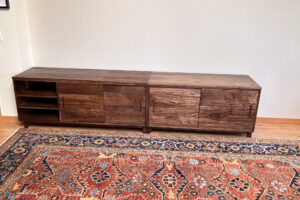
A well-made dining room cabinet does more than conceal objects. It gives the room a visual anchor. In a long, narrow dining room, a low credenza can widen the perceived footprint and preserve openness above. In a room with high ceilings or a large blank wall, a full-height built-in can establish the scale the architecture failed to provide.
This is where custom work has a clear advantage over standard furniture. A freestanding cabinet is made to suit a broad market and a limited number of dimensions. A custom piece can be sized to the wall, the ceiling height, the table length, and the circulation around it. It can align with a window sill, sit precisely below artwork, or create a deliberate relationship with an adjacent doorway.
That does not mean every dining room needs a wall of cabinetry. Overbuilding is as damaging as underplanning. A small room may benefit most from a single, substantial sideboard with generous drawers and concealed storage. A larger room may warrant a built-in that combines closed cabinets below with a restrained display area above. The correct answer depends on the room’s architecture, not on a trend or a showroom image.
Built-Ins, Credenzas, and Storage Walls
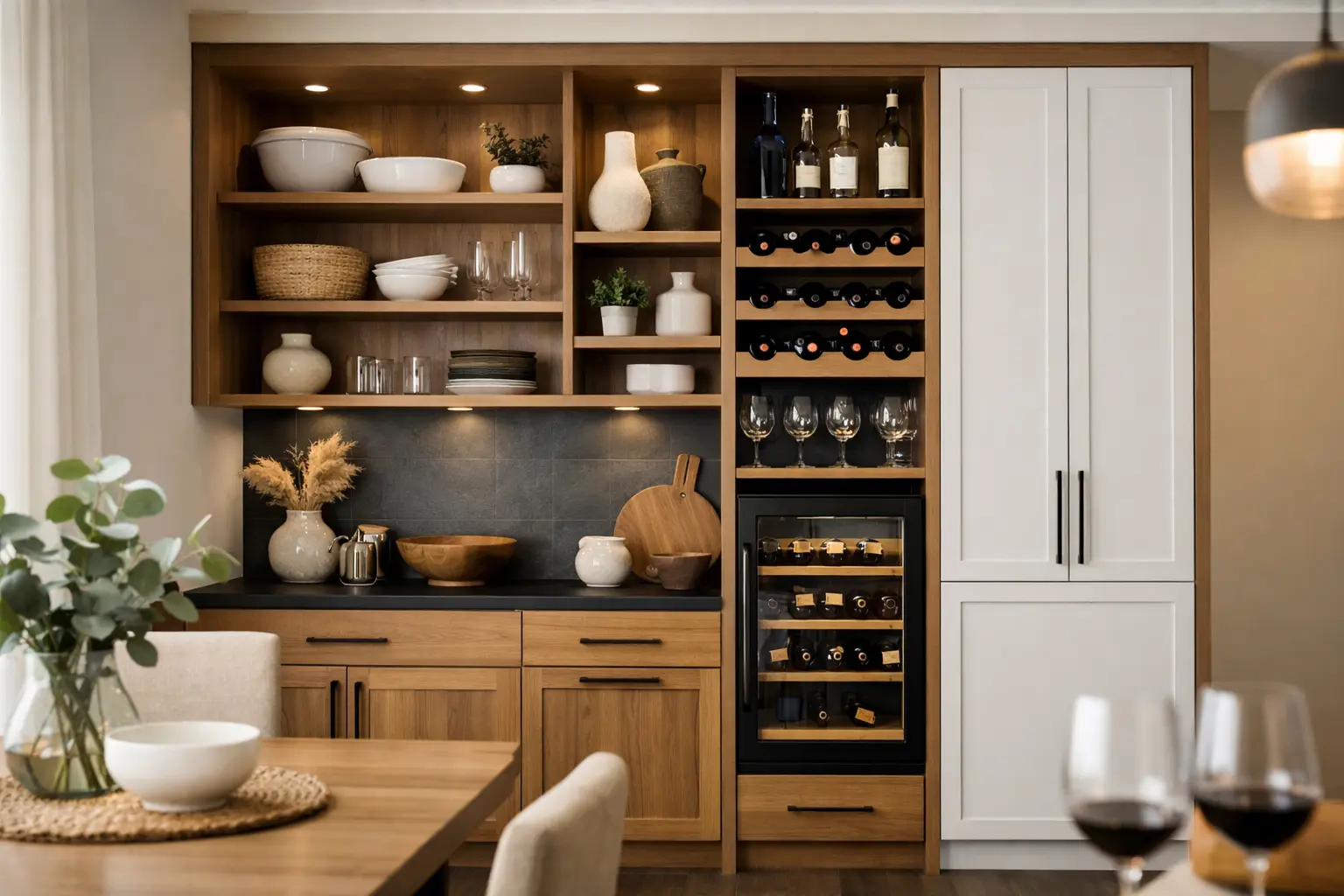
Built-ins are strongest when the room needs architectural definition or when storage requirements are significant. They can incorporate adjustable shelves, drawers sized for linens, shallow compartments for flatware, and discreet locations for barware or serving trays. Because they are integrated with the room, they also offer an opportunity to resolve awkward walls, unused corners, or inconsistent trim details.
A freestanding credenza is often the better decision when flexibility matters. It can read as furniture rather than millwork, giving the room a more layered and collected character. It is also appropriate when the wall should remain visually light, when the home may change over time, or when a single exceptional piece is enough to carry the room.
A storage wall occupies the middle ground. It may include a built-in base cabinet with open shelving, framed panels, or a central niche above. This approach can be highly effective, but restraint is essential. Open shelves ask for disciplined display and regular editing. If the contents will be a mix of mismatched glasses, paper napkins, and holiday serving dishes, doors are usually the more honest choice.
Design Storage From the Inside Out
Cabinet exteriors receive the attention, but interior planning determines whether the piece will be used well for decades. Deep drawers are generally more useful than deep shelves for table linens, serving bowls, and heavier items. Drawers bring contents forward rather than requiring someone to reach into a dark lower cabinet.
Shelves work best for stacked dinnerware, larger platters, and pieces that need vertical clearance. Their depth must be controlled. A cabinet that is excessively deep can turn everyday objects into a difficult-to-reach collection at the back. For stemware, adjustable shelving gives the flexibility to accommodate different glass heights without wasting space.
Consider the details that make daily use feel deliberate: soft-lined drawers for silver, vertical dividers for platters, integrated cord access if a lamp will sit on the cabinet, and ventilation if the piece will house wine. These are not gimmicks. They are small decisions that acknowledge how a household actually functions.
Hardware also carries real weight. Pulls and knobs should be selected for grip, scale, and relationship to the furniture, not as a final decorative flourish. A large drawer full of stoneware needs hardware that feels secure in the hand. A refined cabinet front may call for discreet integrated pulls or carefully proportioned metal hardware. The joinery, drawer construction, and door fit should support the same standard. Fine storage is felt every time it opens and closes.
Materials Need to Age Well
Dining rooms are active spaces. Glasses sweat, wine spills, serving platters scrape surfaces, and sunlight can shift color over time. Materials must be chosen with that reality in mind.
Solid wood brings warmth, repairability, and depth that manufactured surfaces rarely match. Its movement must be respected in the construction, particularly in the Pacific Northwest, where seasonal moisture can be pronounced. Veneer can also be an excellent choice when used well, particularly for broad panels or carefully matched grain. The question is not whether a material is fashionable. It is whether it is appropriate to the scale, construction, and expected wear of the piece.
Finish deserves equal consideration. A dining room cabinet should not be so precious that it cannot hold a decanter or a bowl of fruit. A durable, low-sheen finish often allows the material to remain the focus while making routine care realistic. Lighter woods can bring quiet to a darker room; richer species can give a pale space needed gravity. Neither is automatically right. The table, flooring, wall color, and natural light all need to be considered together.
Avoid the Usual Compromises
The most common failure is treating storage as an afterthought. Another is choosing a cabinet solely because it matches a dining table. A room does not need every wood surface to match exactly. It needs materials and forms that relate with intention.
Avoid designing around temporary display objects, too. A cabinet should be proportioned for the room even after the flowers, candles, and seasonal styling are gone. Likewise, do not sacrifice functional storage for rows of open shelves simply because they appear lighter in a photograph. Closed storage can be elegant, especially when the cabinet itself has strong lines, thoughtful material selection, and exacting craftsmanship.
The strongest custom dining room storage makes entertaining easier without turning the room into a utility zone. It holds what the household uses, gives the architecture a clearer sense of order, and becomes more convincing as the years pass. That is the standard worth building toward.
Discover more from Anderson woodworks custom furniture & cabinets
Subscribe to get the latest posts sent to your email.