
There’s a certain kind of object that changes the room it’s in. You’ve felt it. A table that makes you want to sit down and stay a while. A built-in that looks like it grew out of the wall. A cabinet your hand finds the same smooth edge on, morning after morning, without you ever thinking about it. That feeling doesn’t come off a truck. Somebody made it, on purpose, for a place they could picture.
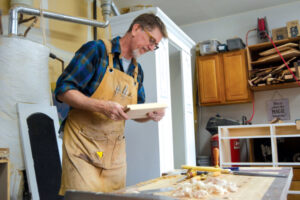
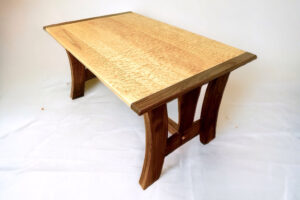
I build furniture and cabinetry by hand here in the South Sound, and I want to make an honest case for something I believe in: commissioning a craftsman is one of the better decisions you can make right now — for your community, your home, your money, and, quietly, for your own head. Not because handmade is a luxury or a status thing. Because in the times we’re living in, it turns out to be the sensible choice hiding inside the beautiful one.
Let me walk through it the way I’d talk to you across my bench.
The times we’re actually living in
We buy things faster and keep them shorter than any people who have ever lived. A dresser shows up in a flat box, gets assembled with a hex key, and starts sagging before the warranty language has faded off the receipt. We’ve gotten very good at acquiring and very bad at owning. Everything is one-click, disposable, and interchangeable — and a lot of us are quietly tired of it.
At the same time, more of the world is being automated, outsourced, and flattened into sameness. The skills that used to live on every block — the joiner, the smith, the seamstress — thinned out over a couple of generations. So when you decide to have something made, by a real person, with their hands, near where you live, you’re not being nostalgic. You’re pushing back against a current that a lot of people can feel but can’t quite name.
That’s the backdrop. Now here’s what it actually does for you.
For your community: you’re keeping a skill alive, and the money stays home
When you commission local work, your dollars don’t evaporate into a supply chain that ends three continents away. They land in your own region. They pay a tradesperson, who buys lumber from a regional mill, who buys hardware from the shop across town, who hires the neighbor’s kid for a summer. Economists have a dry term for this — the local multiplier effect — but you don’t need the jargon to understand it. Spend $5,000 with a factory and it’s gone. Spend it with someone in your county and a good chunk of it circulates right back through the place you live.
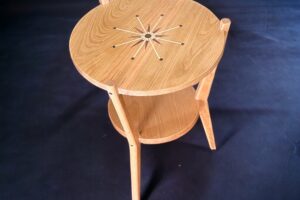
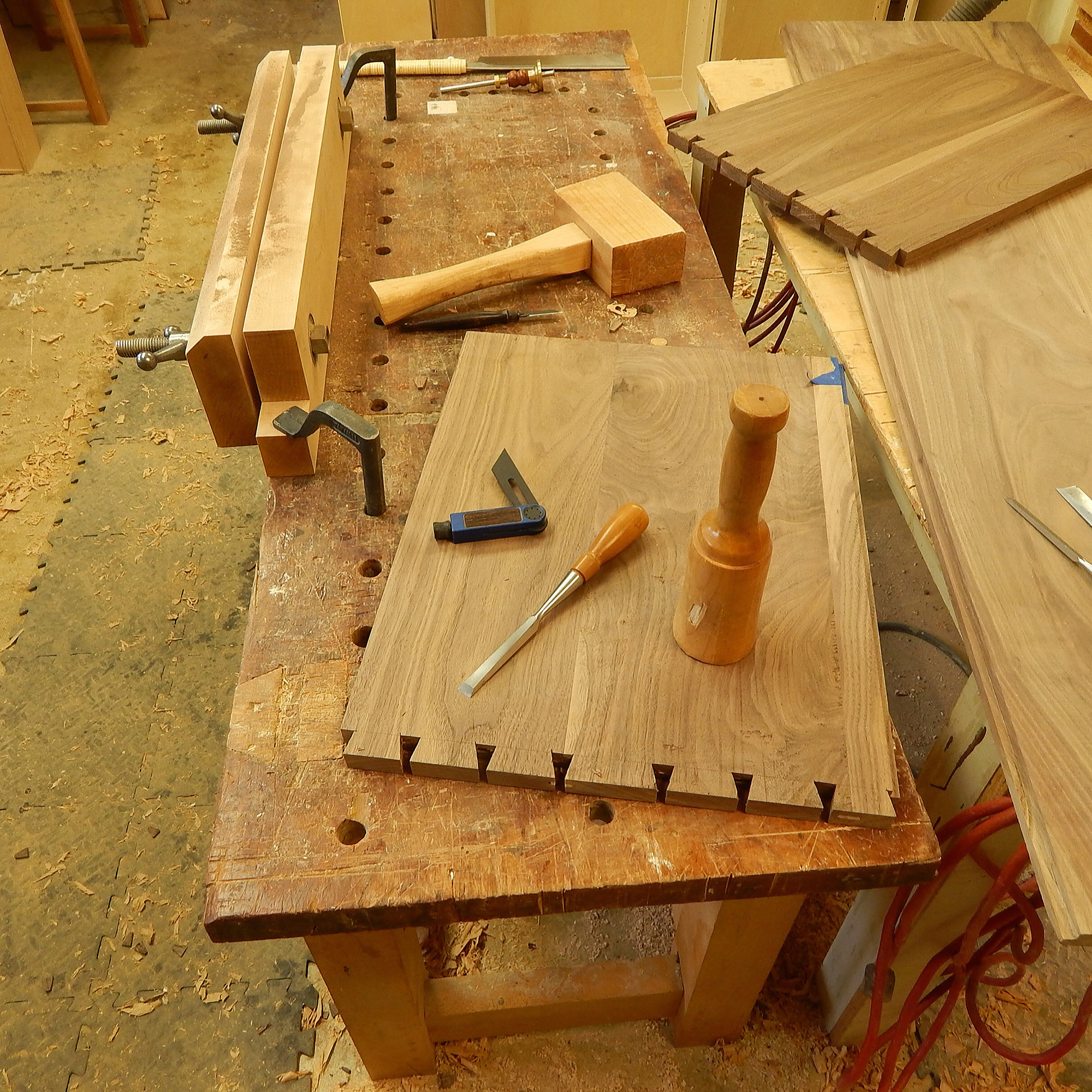
There’s a second thing, harder to measure but more important. Every craft is one uninterested generation away from disappearing. Hand-cut dovetails, mortise-and-tenon joinery, marquetry — these survive only because someone is still paid to do them. When you commission that work, you’re not just buying a piece. You’re voting to keep the knowledge in circulation. You’re the reason a skill that took a lifetime to learn gets to be worth learning again.
And there’s a relationship at the end of it. You’ll know the name of the person who made your table. You can call them in ten years. Try that with a big-box receipt. Communities aren’t built out of transactions; they’re built out of people who make things for each other and stand behind them.
For your home: it’s built for your life, not the average of everyone’s
Mass-produced furniture is designed for a statistical average — a room that doesn’t exist, in a house nobody lives in. That’s why the bookshelf is two inches too short for the wall, why the sideboard blocks the outlet, why the “one size” never quite fits your one life.
Commissioned work starts from the opposite end. It starts with your wall, your ceiling height, your awkward bay window, your record collection or your grandmother’s china or the reading nook you’ve always wanted. A built-in fits its space like it was born there — because it was. A piece of furniture gets sized to how tall you are and how you actually use the room.
Then there’s how it’s made. Real hardwood instead of veneered particle board. Joinery that’s cut to hold — mechanical connections that get stronger under load, not glued butt-joints and cam locks that loosen with the seasons. Finishes chosen for the wood and the room instead of whatever sprays fastest on a line. The difference isn’t just that it looks better on day one. It’s that it’s still standing, still tight, still beautiful on day ten thousand.
A well-made piece also anchors a room. One honest, handmade object raises everything around it. People walk in and can’t say why the space feels considered — it’s because there’s something in it that was actually considered.
For your wallet: the math is friendlier than it looks
I know the number on a commission looks bigger than the number on a showroom tag. Let’s take that seriously, because the sticker price isn’t the real price.
Think cost-per-year, not cost-at-checkout. A flat-pack dresser that lasts six years and a handmade one that lasts sixty aren’t in the same conversation. Divide the price by the years you’ll actually own the thing. Do it honestly and the “cheap” option is usually the expensive one — you just pay for it in installments, one replacement at a time, plus the delivery fees and the disposal and the Saturday afternoons spent shopping for the same item again.
It doesn’t depreciate the same way. Most furniture loses nearly all its value the moment it leaves the store. Well-made solid-wood pieces hold value, and the best of them appreciate — they become the thing your kids fight over, the piece an estate sale prices as an antique. This is the heart of what I mean when I talk about going from being a buyer to being a collector: a buyer spends money and it’s gone; a collector spends money and it turns into an asset that outlives them.
One right piece replaces three wrong ones. A lot of household spending is the slow accumulation of near-misses — the almost-right thing bought because the right thing felt like too much. Commission the right thing once and you stop bleeding money on the compromises.
None of this means everyone should commission everything. It means that for the pieces that matter — the ones you’ll live with daily, pass down, or build a room around — the honest lifetime math tends to favor the craftsman, not the factory.
For your mental well-being: fewer, better things are easier to live with
This is the part people don’t expect a woodworker to bring up, but I think it’s the most important, so I’ll say it plainly.
We are surrounded by things that were made at us — optimized to sell, engineered to be replaced, indifferent to whether we ever loved them. Living inside all that disposability has a low background hum to it. A kind of clutter that isn’t only physical.
A handmade object is the opposite of that hum. It carries the evidence of a decision — someone chose this grain, cut this joint, sanded this edge because it would feel right under a hand. Living with a few things made with that kind of care does something quiet and real: it makes your space feel intentional instead of accumulated. It gives you permission to own less and value it more.
There’s also the calm that comes from not thinking about the thing. You stop wondering when it’ll break. You stop planning its replacement. It just works, and holds, and is there — and that reliability is its own kind of peace. In a moment when so much feels temporary and out of our hands, a room full of things that will outlast us is a genuinely steadying place to be.
And if you commission the work, you get one more thing: a story. You’ll remember the conversation, the choices, the day it was delivered. That table won’t just be a table. It’ll be the table — the one with the history, the one you were part of making. That’s not something money usually buys. Here, it comes standard.
How commissioning actually works
If you’ve never done it, the process is simpler and less precious than people fear. In my shop it looks like this:
1. We talk. You tell me what you need, where it goes, and how you live. I come out for a free on-site look and a rough estimate so we both know we’re in the same ballpark before anyone spends real money.
2. We design it. If it makes sense to move forward, a modest design fee gets us into the details — dimensions, wood, joinery, finish, how it’ll wear over time. This is where your one life gets built into the piece.
3. I build it. By hand, in my shop, with joinery meant to last generations.
4. You live with it for the rest of your life. And, if it goes the way it should, your kids do too.
No pressure, no showroom, no pretending the average fits you.
The bottom line
Commissioning a craftsman isn’t a splurge you justify. It’s a set of choices that happen to line up: money that stays in your community, a home built for your actual life, a wallet that comes out ahead over the long run, and a quieter, steadier relationship with the things you own. In an age of the fast and the forgettable, choosing something made slowly and made to stay is one of the most practical — and most human — things you can do.
If you’ve got a wall, a room, or an idea you keep coming back to, I’d be glad to talk it through.

Discover more from Anderson woodworks custom furniture & cabinets
Subscribe to get the latest posts sent to your email.