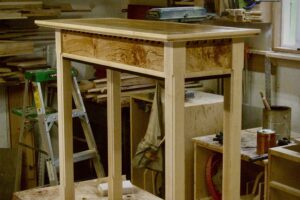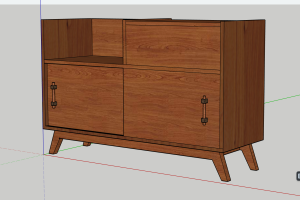
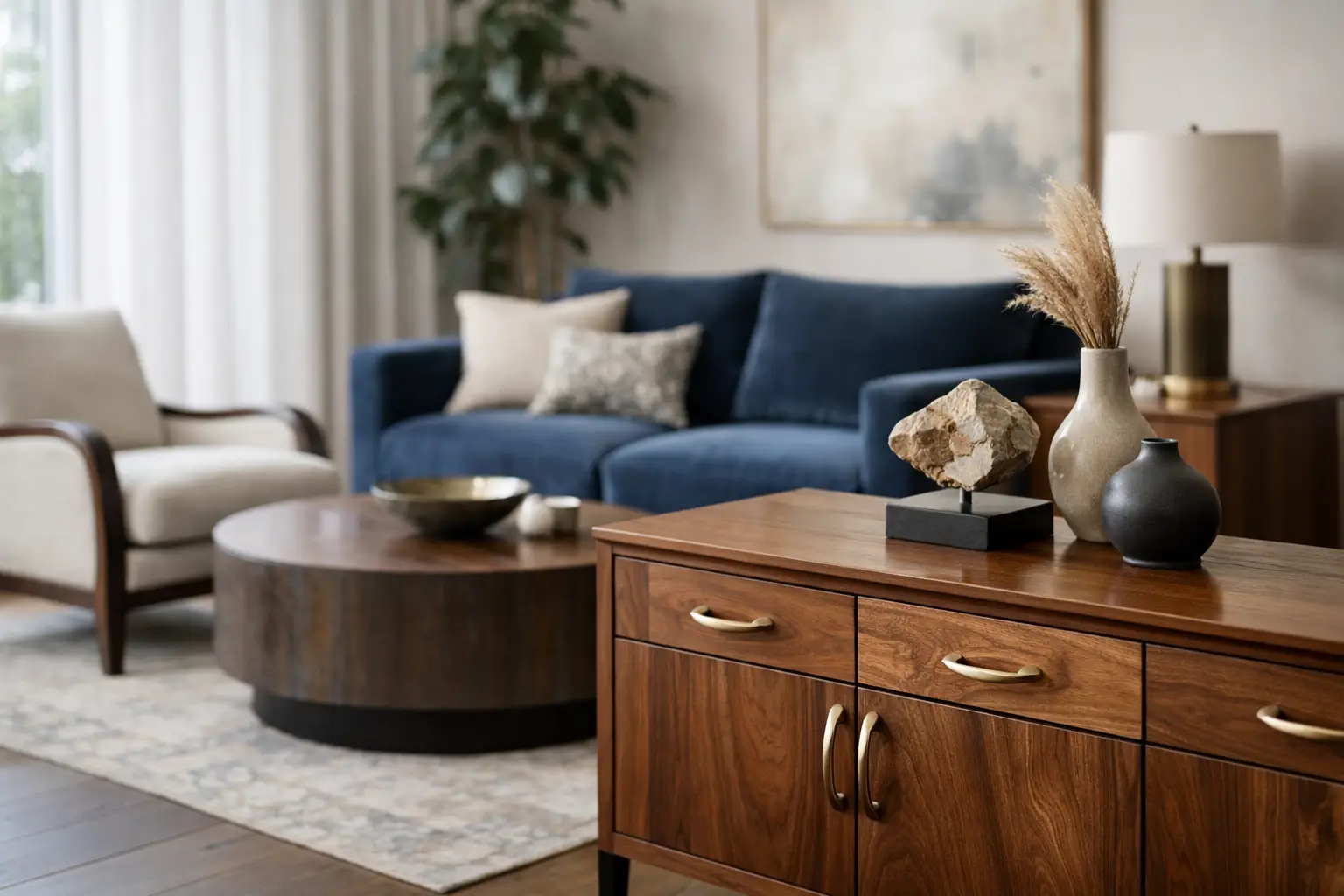
A room usually tells you what went wrong before it tells you what looks good. The desk is too shallow, the dining table is oversized, the storage is scattered, and the traffic flow feels awkward every day. That is where custom fine furniture earns its place. It does not exist to decorate around a problem. It exists to solve the room at its foundation.
This is not about adding luxury for its own sake. It is about making better decisions earlier, with proportion, use, material, and permanence considered together. When furniture is treated as the starting point rather than the last layer, the room becomes clearer, more functional, and far more coherent.
What custom fine furniture actually changes
Most homeowners have lived with the opposite approach. Paint is chosen first. Finishes are gathered from a dozen sources. Furniture comes in later, often selected to fit a style board rather than the realities of the room. The result may look acceptable in photos, but it rarely holds up in daily use.
Custom fine furniture changes that sequence. A built-in study wall, a dining table made for the exact dimensions of the room, or a properly scaled entry bench with integrated storage does more than fill space. It establishes visual weight, defines movement, and sets the standard for every material decision that follows.
That matters because furniture is one of the few elements in a room that affects nearly everything else at once. It determines sightlines, circulation, comfort, storage, and how people actually gather or work. If that core element is wrong, no amount of styling fixes it.
Custom fine furniture as a design decision, not a product purchase
The biggest misconception is that custom furniture is simply a more expensive version of retail furniture. It is not. A retail purchase asks, “Which piece do I like best?” A custom commission asks, “What does this room need in order to work well for years?”
That difference is significant.
A homeowner furnishing a home office may think they need a beautiful desk. In practice, they may need a desk with enough depth for real work, cable management that keeps the surface clear, adjacent cabinetry for reference materials, and a layout that preserves natural light while controlling visual clutter. The desk is still important, but it is no longer treated as an isolated object.
The same is true in a dining room. Many tables are bought based on how many people they seat twice a year, not how they function the other 363 days. A custom table can be sized for the room, shaped for movement, detailed to suit the architecture, and built for the way the household actually uses it. That may mean extension leaves. It may mean a more compact footprint with stronger proportion. It depends on the room and the habits of the people living in it.
Where bespoke furniture makes the strongest impact
Not every space needs the same level of intervention, but certain rooms benefit immediately from a furniture-led approach.
Home offices and studies
These rooms fail when they are treated as temporary. A generic desk and a few shelves may fill the space, but they rarely support concentration, storage, and visual order at the same time. A custom solution can integrate work surface height, task lighting placement, storage capacity, and the room’s architectural lines into one disciplined composition.
That is especially important when a home office must do real work every day. The difference between a piece that fits and a piece that was designed for the room is felt in posture, workflow, and mental clarity.
Dining rooms
Dining rooms are often underfurnished or incorrectly scaled. A table that is too small makes the room feel adrift. One that is too large makes every meal feel cramped. Custom fine furniture allows the table, sideboard, and even seating strategy to be considered together, which creates a room that feels settled rather than improvised.
Entryways and transitional spaces
These are hard-working areas, and they are often handled poorly. A narrow hall needs storage, a surface for daily items, and enough restraint to avoid visual congestion. Off-the-shelf furniture rarely addresses all three. Well-designed custom pieces can give these spaces clarity without making them feel crowded.
Why craftsmanship still matters
A room can be thoughtfully planned and still fall short if the work is poorly made. This is where craftsmanship stops being a marketing word and becomes a practical requirement.
Joinery affects longevity. Wood selection affects movement, wear, and how a piece ages. Construction methods affect whether drawers continue to operate properly, whether a tabletop remains stable, and whether a cabinet face holds its alignment over time. Fine furniture should not only look resolved on installation day. It should continue to function and gain character with use.
That does not mean every project needs the rarest species or the most ornate detailing. In fact, restraint often produces the strongest result. But restraint only works when the underlying workmanship is exact. Clean proportion, crisp execution, and durable construction are what give a piece authority.
The trade-offs homeowners should understand
Custom work is not the right answer for every piece in every room. If speed is the only priority, retail usually wins. If the room is temporary, or if the budget needs to cover many unrelated spaces at once, a fully custom approach may not be the most disciplined use of resources.
But there is a false economy in buying several near-misses over time. Many homeowners spend years replacing pieces that were cheap enough to justify in the moment but wrong enough to keep disappointing them. When that cycle repeats, the total cost rises while the room never becomes settled.
The better question is not whether custom costs more upfront. It is whether the room deserves a solution that actually resolves its problems.
There are also levels within custom work. Some clients need a one-of-a-kind statement piece with highly original detailing and a strong design presence. Others need a refined built-to-order solution that is efficient, precise, and materially consistent with the rest of the home. Both can be valid. The right path depends on the room’s role, the client’s priorities, and how much originality the project calls for.
How the process should work
Good custom furniture does not begin in the shop. It begins with decisions.
The first step is understanding the room. That includes dimensions, architectural conditions, circulation, natural light, and the practical demands placed on the space. After that comes a more disciplined conversation about use. What needs to be stored? What needs to remain visible? Where does the eye land first? What should the piece do quietly, and where should it carry visual presence?
From there, design direction becomes critical. Proportion, material palette, profile, joinery language, and finish should be established before fabrication starts. This is the point where many weak projects lose control. They move too quickly from idea to production without resolving the underlying design. The result is a well-made object that still feels slightly wrong in the room.
A stronger process keeps design and fabrication connected. That is one reason studios such as Anderson Woodworks approach furniture as part of a broader interior plan rather than an isolated commission. When furniture, cabinetry, and room function are considered together, clients make fewer fragmented decisions and get a more coherent result.
What to look for before you commission a piece
If you are considering custom fine furniture, look past the surface image. Ask whether the maker understands interiors, not just object-making. A beautiful table in a workshop photograph is one thing. A table that fits the architecture, supports circulation, and sets the tone for the room is another.
You should also listen for conviction. A serious craft-led designer will not say yes to every impulse. They will challenge poor sizing, trend-driven requests, and details that weaken the room. That guidance is part of the value.
Most of all, look for clarity. You should understand what is being designed, why specific choices are being made, how the piece will function, and what level of craftsmanship you are paying for. Custom work should feel exact, not vague.
A well-made room does not happen because every element is expensive. It happens because the important decisions were made with care, and the furniture was treated as architecture in miniature. If a space in your home still feels unresolved after paint, styling, and repeated purchases, the problem may not be the room at all. It may be that the room has never had the right piece to lead it.
Discover more from Anderson woodworks custom furniture & cabinets
Subscribe to get the latest posts sent to your email.