
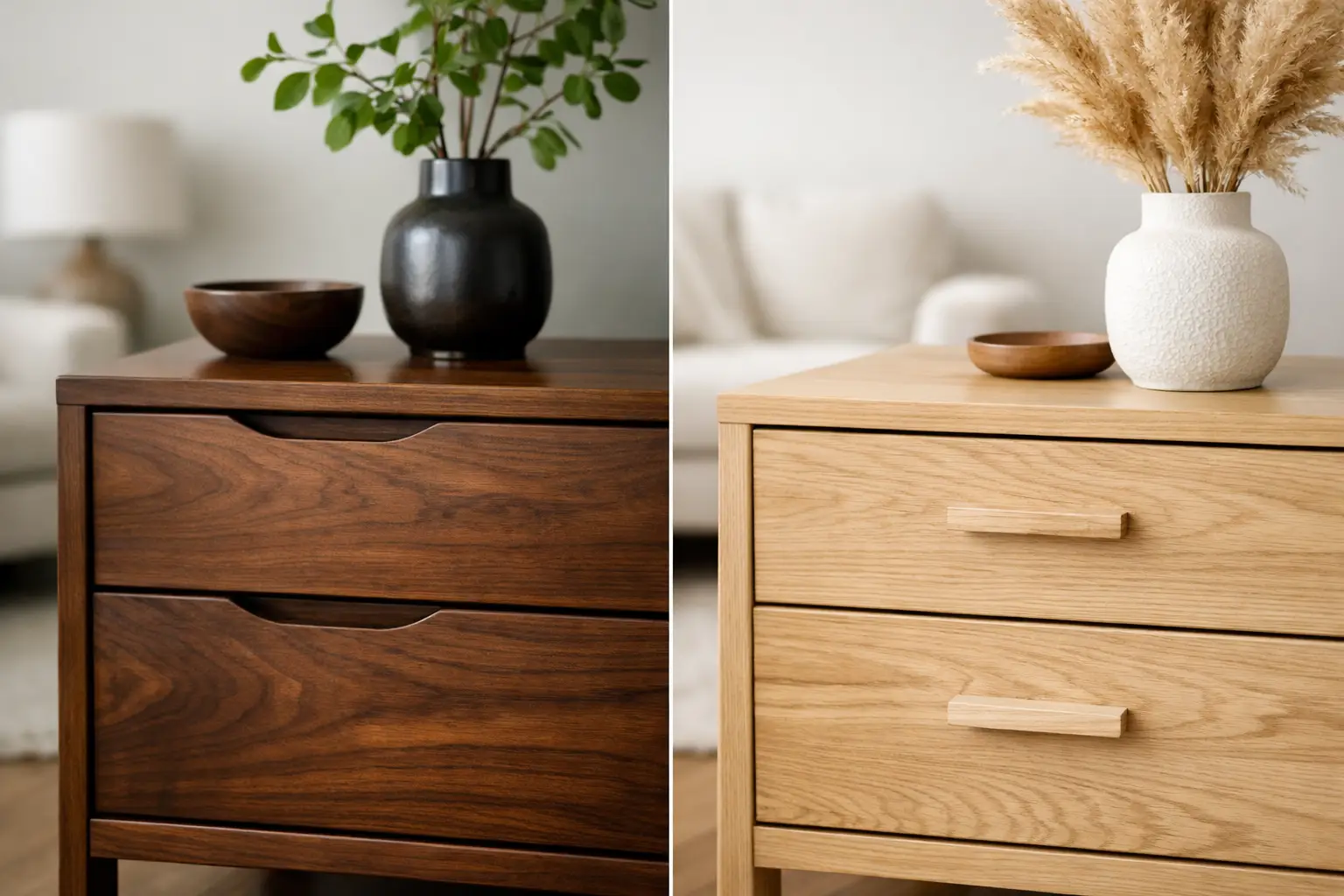
The choice between walnut versus white oak furniture is rarely just about wood species. It is a decision about mood, proportion, light, wear, and what kind of room you are trying to build. If you are investing in a dining table, built-in storage, or a desk you expect to live with for decades, the better question is not which wood is better. It is which wood is better for the way you live.
That distinction matters because furniture sets the tone of a room long before styling does. The wood you choose affects how heavy or quiet a piece feels, how much visual movement it brings, and whether the room reads as grounded, warm, crisp, formal, or relaxed. Walnut and white oak are both excellent furniture woods. They are not interchangeable.
Walnut versus white oak furniture: the visual difference
Walnut is darker, richer, and generally more uniform in tone than white oak. It typically ranges from medium brown to deep chocolate, often with subtle undertones of gray, purple, or amber. Good walnut has depth without looking busy. It absorbs light rather than throwing it back into the room, which is one reason it feels composed and architectural.
White oak is lighter and more open-grained. Its color moves from pale tan to warm beige to soft brown, sometimes with olive or gray undertones depending on the board selection and finish. It reflects more light and tends to make a piece feel larger, brighter, and more casual at first glance, though it can be made very refined with the right proportions and detailing.
The grain is where the emotional difference really shows up. Walnut often has a smoother visual read. Even when it has figure or variation, it usually feels cohesive. White oak has a stronger grain pattern and a more pronounced texture. That can be a strength if you want the material to speak clearly, but it can become too active if every surface in the room is competing for attention.
How each wood changes the feel of a room
Walnut brings weight and focus. In a home office, it can make a desk feel deliberate and permanent. In a dining room, it gives the table a sense of occasion without needing ornament. In a bedroom or study, it creates contrast and visual calm, especially against lighter plaster, painted millwork, or natural textiles.
White oak tends to open a room up. It works especially well when you want cabinetry, shelving, or larger case pieces to feel integrated rather than dominant. In homes with softer natural light, white oak can help keep a room from feeling heavy. In more contemporary interiors, it often supports a cleaner, quieter palette.
This is where homeowners sometimes make the wrong call. They choose walnut because it feels expensive, or white oak because it feels current. Neither is a good enough reason. A wood should support the architecture of the room and the function of the piece. A dark wood in a small, poorly lit space can feel oppressive. A light wood in a room that already lacks contrast can feel unfinished.
Durability and daily use
If your comparison of walnut versus white oak furniture is mostly about toughness, white oak usually has the edge. It is harder than walnut and generally more resistant to dents and surface wear. For kitchen stools, dining tables that see daily use, mudroom cabinetry, or family pieces that take abuse, white oak is often the more forgiving material.
Walnut is still a durable hardwood and performs very well in fine furniture. It is not delicate. But it is slightly softer, so it can show dents and wear more readily over time. For many clients, that is not a drawback. A walnut desk or dining table can age beautifully, and the patina often adds character rather than subtracting from it. The key is to be honest about use. If you want a wood that hides every hard knock, walnut is not the best candidate.
Finish also matters here. A well-built piece with an appropriate finish will outlast a poorly built piece in a harder species. Joinery, structural design, board selection, and the right finish schedule matter as much as the species itself. This is one reason custom furniture tends to age better than mass-market furniture made from good wood but assembled without much discipline.
Walnut versus white oak furniture for different applications
For dining tables, both species work well, but they do different jobs. Walnut gives you a more formal, anchored table. It is excellent when the table is meant to be a central object in the room. White oak is often better when the room needs brightness or when the table must handle hard use with less visible wear.
For desks and library furniture, walnut often wins on presence. It has a seriousness that suits focused spaces. White oak can be equally strong in a workroom or study, but it reads more relaxed and less club-like.
For cabinetry and built-ins, white oak is often the more versatile choice, especially in larger runs. It keeps walls from feeling too dense and can work across a broader range of paint colors, flooring tones, and natural light conditions. Walnut cabinetry can be exceptional, but it needs restraint and strong design discipline. Too much of it, or the wrong finish, can make a room feel overdone.
For bedroom furniture, it depends on whether you want the furniture to recede or define the room. Walnut creates contrast and a sense of intimacy. White oak feels lighter and more breathable.
Cost, availability, and what you are really paying for
Walnut is usually more expensive than white oak, sometimes significantly so depending on board quality, width, and figure. That price difference is not just about scarcity. Wider, cleaner walnut boards are highly sought after, and when a design depends on excellent grain matching, material selection becomes more exacting.
White oak is often the more practical value. It offers excellent performance, broad design flexibility, and a lower material cost in many cases. But cheaper material does not automatically mean better value. If walnut is the right wood for the piece and the room, choosing oak to save money can leave you with furniture that never feels fully resolved.
The smarter way to think about cost is to ask where the material should carry visual importance. If you are commissioning one statement piece, walnut may be exactly where the budget belongs. If you are building an entire room with cabinetry, shelving, and millwork, white oak may give you a more balanced result both aesthetically and financially.
Color stability and aging
Both woods change over time. Walnut generally lightens with exposure to sunlight, especially in the early years. That surprises some owners who expect it to stay as dark as the day it was built. White oak tends to mellow and warm, though the exact shift depends heavily on the finish and the amount of UV exposure.
This is not a flaw. It is part of living with real wood. But it does mean finish selection should be deliberate. If you want white oak to stay pale, that requires control in the finishing process. If you want walnut to retain depth, placement and maintenance matter. Sample boards are useful here because they show not just color, but how the pore structure, sheen, and undertones behave in actual light.
Which one is right for your home?
Choose walnut if you want depth, restraint, and a piece that feels grounded. It excels when the furniture should carry visual authority and when you want the grain to read as refined rather than pronounced. It is especially strong in dining rooms, studies, and statement pieces where color contrast gives the room structure.
Choose white oak if you want clarity, durability, and greater flexibility across a whole room. It is often the better material for cabinetry, larger furniture programs, and spaces where you want warmth without visual heaviness. It also suits households that need a little more forgiveness in day-to-day wear.
The right answer is often not about preferring dark wood or light wood. It is about the role the piece plays, the light in the room, the finish on the floor, and whether you want the furniture to lead or support. At Anderson Woodworks, that is where the decision gets interesting. Wood selection is never isolated from proportion, function, and the overall plan.
If you are torn between the two, stop looking at species as a trend decision. Look at the room as a whole, the life the piece needs to support, and the kind of permanence you actually want. Good furniture should not merely match a palette. It should make the room make sense.
Discover more from Anderson woodworks custom furniture & cabinets
Subscribe to get the latest posts sent to your email.