
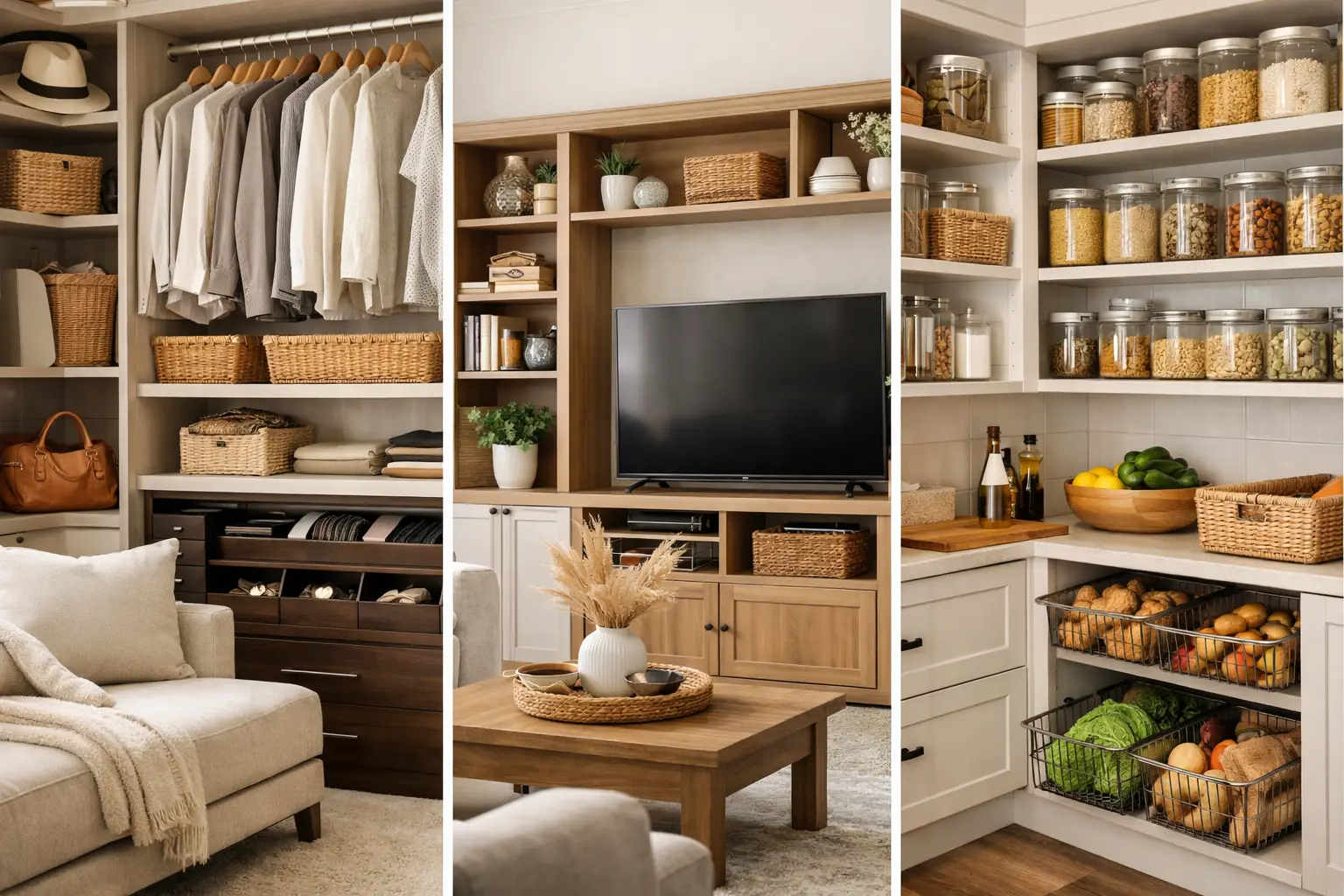

Custom work isn’t about extravagance. It’s about precision.
A built-in can meet an existing window casing without crowding it.
A desk can be designed around your preferred monitor arrangement, cable routing, and the reach you need for daily work.
A cabinet can carry the visual weight of a long wall while solving a storage requirement that freestanding furniture never handles cleanly.
But this doesn’t mean every piece in a room must be custom. It means every piece must belong. A strong plan might combine commissioned furniture with heirlooms, built-to-order pieces, and carefully selected existing items. The question is never “Is it custom?” The question is “Does it earn its place?”
The Decisions That Should Happen Before Fabrication
A well-planned room prevents expensive reversals because the major decisions happen in the right order. Layout comes before decorative finishes. Function comes before accessories. Proportion comes before impulse purchases.
These choices form the backbone of a room that feels intentional rather than improvised.
- Define the Room’s Primary Use
Every room can do more than one thing—but it cannot do everything well.
A study that doubles as a guest room, library, and video-call space can absolutely work. But only if those competing uses are acknowledged. When every square foot is asked to serve every purpose, the room ends up doing nothing particularly well.
A thoughtful planning process identifies the priorities and makes the trade-offs visible.
- Plan Circulation Before Anything Else
Circulation is the unglamorous part of design, and it’s often the difference between a room that feels composed and one that feels cramped.
The path from the doorway to a chair, cabinet, or adjacent room should be direct enough for daily life. In high-use areas, a few inches determine whether people move naturally or sidestep around corners.
This is where custom furniture shines: it can be sized to respect the way people actually move through a space.
- Design Storage Around What It Will Hold
“More storage” is not a useful brief.
Files, serving pieces, board games, records, bags, seasonal gear, and display objects all require different depths, access points, and levels of protection. Custom cabinetry succeeds when its interior organization is defined with the same care as its exterior proportions.
A cabinet built to hold records is different from one built for linens. A drawer designed for camera gear is different from one designed for flat files.
- Choose Materials and Finishes Last
Wood species, grain direction, hardware, fabric, wall color, and lighting all matter. They shape the emotional tone of a room. They influence how a piece ages and how it feels to live with.
But they cannot rescue a room whose layout is wrong.
The finest walnut cabinet will still frustrate you if its doors open into a narrow passage. A beautiful desk will still feel wrong if it forces you to twist every time you reach for your keyboard.
Materials are the final layer—not the foundation.
Why This Order Matters
When a room is designed in the right sequence, every piece earns its place. The furniture supports the architecture. The architecture supports the life lived inside it. The room feels settled, intentional, and quietly confident.
This is the heart of furniture-led design: clarity first, craft second, materials last.
Discover more from Anderson woodworks custom furniture & cabinets
Subscribe to get the latest posts sent to your email.

Leave a Reply