A room can look finished and still fail you every morning. The entry fills with shoes and rain gear, the office collects paper on every open surface, or the dining room becomes a holding area for objects with no proper home. The best custom storage solutions do not begin with a catalog of organizers. They begin with an honest assessment of what needs to be held, how often it is used, and what the room should feel like when everything is put away.
This is not decorating. Storage is a functional part of the architecture of a room, and it deserves the same attention as circulation, light, proportion, and material. When it is designed well, it makes daily life easier without turning the home into a collection of compartments.
Start With Behavior, Not Available Wall Space
The usual mistake is to identify an empty wall and ask what kind of cabinet will fit there. That approach produces storage, but not necessarily useful storage. A better question is: what happens in this room every day?
In an entry, that may mean a place to sit while removing boots, a concealed drawer for gloves, vertical space for umbrellas, and hooks that are substantial enough for heavy coats. In a home office, it may mean accessible reference materials, a charging drawer, lockable files, and a work surface that does not disappear beneath equipment. In a dining room, the real need may be generous storage for serving pieces, linens, and glassware that are used often but do not belong in the kitchen.
Pay attention to the small frictions. Where do bags land? Which items are carried from room to room because there is no assigned place for them? What is always left out because storing it is inconvenient? Those patterns define the project more accurately than a list of desired cabinet features.
A custom piece should reduce the distance between use and storage. If the coffee supplies are used every morning, they should not be in a deep lower cabinet behind rarely used platters. If a printer is essential to the household, it needs power, ventilation, and a serviceable location, not an improvised shelf.
The Best Custom Storage Solutions Respect Proportion
More storage is not automatically better. A wall-to-wall built-in can solve clutter while making a room feel heavy, crowded, or visually flat. Scale matters. So does the relationship between the storage piece and the architecture already in the room.
A substantial library wall can anchor a study with high ceilings and generous windows. The same mass in a smaller room may need to be broken into lower cabinets and open shelving, leaving breathing room above. In a narrow hallway, shallow cabinetry may be more valuable than full-depth storage because it preserves a comfortable passage.
Depth is one of the most consequential decisions. Standard cabinet depths are useful reference points, not rules. A shallow cabinet for mail, linens, or shoes can preserve valuable floor area. A deeper cabinet may be necessary for appliances, hanging coats, or media equipment. The interior must suit the contents, but the exterior must serve the room.
This is where furniture-led planning makes a meaningful difference. A built-in is still a piece of furniture in its relationship to the room. Its base, top, panel proportions, hardware, shadow lines, and visual weight should be deliberate. It should appear to belong there, not simply occupy every available inch.
Open Shelving Has a Job, Not Just a Look
Open shelves can be useful, but they ask more of the homeowner. They keep frequently used books, ceramics, and display objects visible and accessible. They also expose visual clutter, mismatched containers, and neglected dusting.
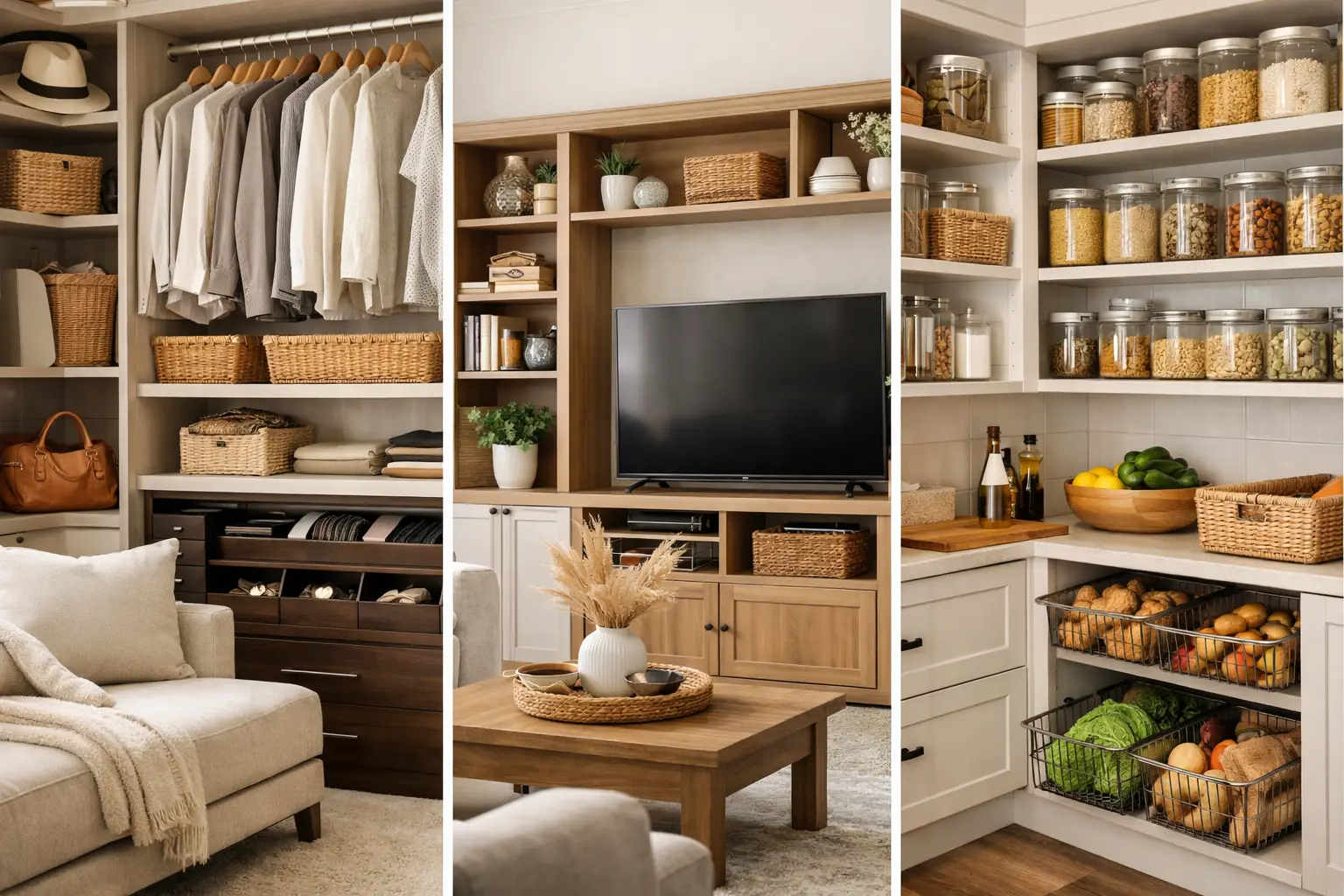
Use open storage where the contents add value to the room or are reached constantly. Use doors and drawers where visual quiet matters more. Most successful built-ins use both: open areas to give the composition life, closed areas to carry the practical burden.
Build the Interior Around What You Actually Own
Custom cabinetry earns its value inside the casework. A beautiful exterior with generic interiors is an expensive missed opportunity.
Begin by measuring the objects that drive the design. Record albums, binders, board games, large serving platters, art supplies, boots, camera equipment, and specialty cookware all require different clearances. Consider the heaviest items as carefully as the largest ones. A deep drawer full of files or cookware needs appropriate construction and hardware, not a decorative front attached to a weak box.
Drawers are often the most effective storage format for small and medium items because they bring the full contents forward. They are especially strong in lower cabinetry, where a fixed shelf forces you to bend and reach into a dark recess. Doors make sense for taller items, larger equipment, and spaces where interior flexibility is needed.
Do not overcomplicate the interior with a divider for every possible object. Highly specific inserts can become limiting when a household changes. The strongest approach balances tailored organization with adaptability: adjustable shelves, removable dividers, and drawers sized for real categories of use.
Choose Materials That Can Take Daily Use
Storage pieces are touched constantly. Doors are opened with full hands. Drawers are pulled while someone is in a hurry. Entry cabinetry encounters damp coats, grit, and seasonal equipment. Material selection cannot be separated from this reality.
Solid wood, quality veneered panels, durable finishes, and properly constructed drawer boxes age differently from thin, disposable casework. The goal is not to make every surface precious. The goal is to make it capable. A finish should have the depth and character appropriate to the room while tolerating the ordinary marks of a lived-in home.
In the Pacific Northwest, entry storage deserves particular attention. Wet outerwear, muddy shoes, and changing seasons make ventilation, durable interior surfaces, and sensible separation especially useful. A closed bench cabinet may look clean, but it needs a strategy for drying gear if it is expected to hold it regularly.
Hardware is equally practical. The right hinge, slide, pull, or latch should feel assured in the hand and remain dependable after years of use. Soft-close hardware is worthwhile when it supports the experience, but it is not a substitute for well-built doors and drawers.
Plan for Access, Power, and Maintenance
A storage solution is only successful if it remains easy to use. Before finalizing a design, test how doors and drawers will operate in the room. Can two people move through the space when a drawer is open? Will a cabinet door block a passage? Is there enough room to stand in front of a file drawer or pull out a hamper?
Integrated power is often worth planning early. A home office cabinet may need concealed outlets for chargers, a printer, and a router. A media cabinet needs ventilation and access for future service. A small appliance station needs outlets placed where cords will not interfere with drawers or doors.
Maintenance access is not glamorous, but it is part of good design. Valves, electrical panels, cable connections, and equipment that will eventually need replacement should not be buried behind permanently fixed work. Custom work should make a home more functional over time, not create a future problem for the sake of a cleaner elevation drawing.
Decide Where Custom Work Matters Most
Not every storage need requires commissioned cabinetry. Freestanding furniture can be the better choice when flexibility matters, when a room may change purpose, or when a distinctive piece deserves to stand on its own. A well-made credenza, bookcase, or cabinet can provide meaningful storage without permanently committing a wall.
Built-ins are most valuable when they solve a precise architectural problem: an awkward alcove, an underused wall, a compact office, a working entry, or a room that needs an integrated focal point. They are also appropriate when storage must coordinate with a larger interior plan rather than operate as an isolated purchase.
The trade-off is straightforward. Custom work costs more than mass-produced furniture and requires decisions before fabrication begins. In return, it can use space intelligently, support the exact habits of the household, and bring order to a room without sacrificing character. The right choice depends on permanence, function, and the role the piece must play.
A Better Standard for Storage
The strongest storage does not announce itself through novelty. It feels inevitable. The shelves are where your hand expects them to be. The drawers hold what they should. The proportions make the room feel calmer, not more crowded. Years later, the piece still serves the household because it was designed around real life rather than a passing idea of organization.
Before you add another basket, shelf, or cabinet, take inventory of the friction in the room. That is where a lasting solution begins.
Discover more from Anderson woodworks custom furniture & cabinets
Subscribe to get the latest posts sent to your email.