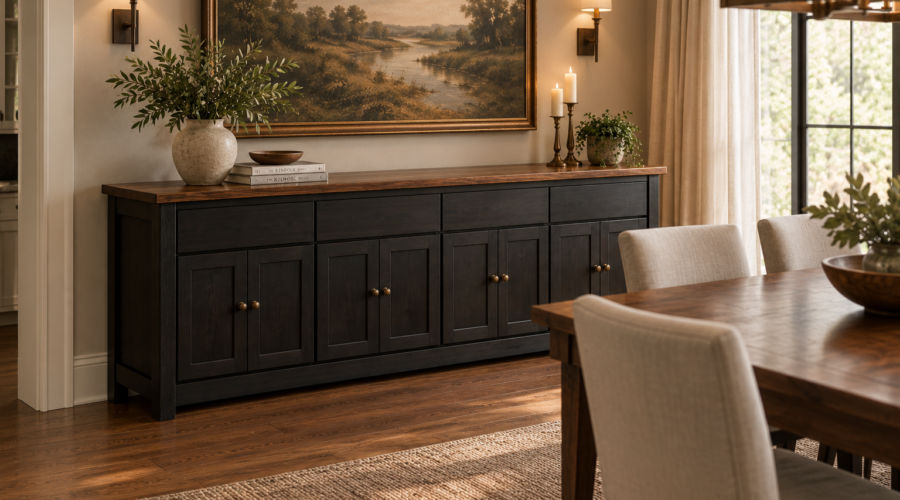
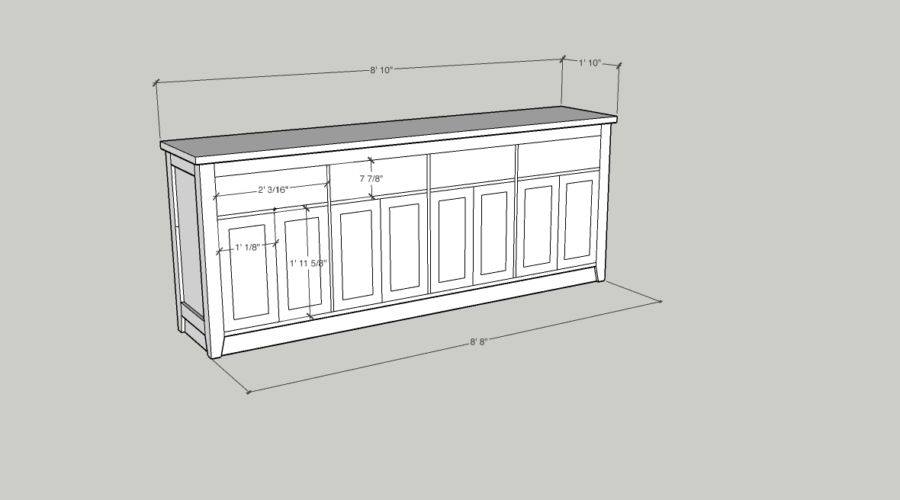
Every custom piece starts with a conversation. For this one, my client wanted something for her dining room that would work hard when she has people over for dinner: plenty of storage for dishes, and a generous surface for setting out food. She came to me with the idea, and after a day of designing, we landed on the piece you see in the rendering: a long, dark sideboard with four drawers across the top, eight doors below, and a warm walnut top to tie it all together.
A Little History of the Sideboard
The sideboard has been part of the dining room for centuries. In medieval Europe, the name was pretty literal: a simple board or table set along the side of the hall where food was laid out and served before it reached the main table. Over time that humble serving table grew into something more.
In 18th-century England, architect Robert Adam designed elegant sideboard tables flanked by pedestals and urns, and furniture makers like George Hepplewhite and Thomas Sheraton refined the idea into the form we’d recognize today: a single piece combining a serving surface with drawers for linens and silverware and cupboards for dishes and bottles. By the Victorian era, sideboards had become grand, heavily carved showpieces, a sign of a well-kept home. In the 20th century, mid-century designers stripped them back to low, clean-lined credenzas.
You’ll hear a few names for the same idea. “Buffet” comes from the French, and “credenza” from the Italian, where it’s said to trace back to the custom of tasting food on a side table before serving it to make sure it was safe. Whatever you call it, the purpose hasn’t changed much in 500 years: a place to store what you need for a meal and a surface to serve it from. That’s exactly what my client was after, and it’s what this piece is built to do.
Starting with the carcass
The first step in any cabinet build is the carcass, the main box that everything else depends on. I cut the panels to size and make the joinery, then move into assembly. This is when the piece starts to take shape and you can finally see the scale of it standing in the shop. Once the box is together, I edge band all the exposed edges so they’re clean and durable, then stain and finish the carcass.
Drawers and doors
Next I turn to the drawers and doors, and honestly, this is one of my favorite parts of the build. Up until now it’s been a big box on the bench. Once the drawers and doors start going in, it stops looking like parts and starts looking like a real piece of furniture.
Where things stand
Right now I’m fitting the doors, which takes patience. Every gap and reveal needs to be even so the whole front reads as one clean piece. Soon I’ll start on the walnut top, which is where this sideboard really comes to life. Check back for the next update, and if you’re dreaming up a piece for your own home, I’d love to hear about it.
Anderson Woodwork · (360) 259-0232 · andersonwoodwork.net
The design for this record console is final, and the project is officially underway. This week my client stopped by the shop to see a sample board I built to show the finish and edge details in person. We talked through the last few decisions, and a week later they gave me the green light.
The Design
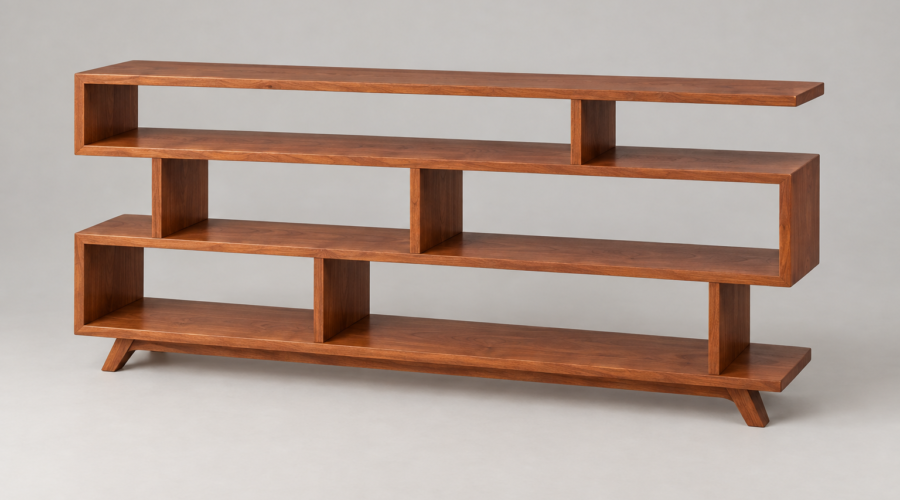
This console is built around one idea: a family’s music collection deserves furniture as considered as the music itself. It will hold their vinyl records, their turntable, and their compact disc collection, all in one piece.
The shelves step back and forth across the front, with each level offset from the one below. Vertical dividers break the long runs into compartments sized for records and CDs, and a set of splayed legs lifts the whole piece off the floor. The open, staggered layout gives it a mid-century feel while keeping everything easy to reach and browse.
I worked it out in a 3D model first, checking proportions and compartment sizes, then produced a rendering so the client could see it in cherry before a single board was cut.
Seeing It in Person
A rendering can only tell you so much. Finish and edge profiles are things you need to see in the light and feel with your hand, so I made a sample for the client to review at the shop.
We looked at how the finish brings out the cherry’s grain and how the edge details read from across the room and up close. While she was here we also worked through a few remaining details, the kind of small decisions that make a custom piece fit the people who will live with it.
Taking the Time to Decide
The clients spent about a week with the design, thinking it over and making sure it was right for their space. I always encourage that. A piece like this should last generations, and it is worth a little patience up front.
At the end of that week they decided to move forward and paid the materials deposit. That is the moment a drawing becomes a real project.
What Happens Next
The first step is ordering the cherry. Once it arrives, it will sit in the shop to acclimate before I cut into it. Wood moves as it adjusts to a new environment, and giving the boards time to settle to the shop’s humidity helps keep the finished piece stable and true for years to come.
While the lumber settles, I am finishing the two projects currently in the shop. That clears the space and my attention so this console gets the focus it deserves when the build begins.
Follow Along
Keep an eye on this one. I will be posting updates as the cherry comes in and the build takes shape, from rough lumber to the final finish.
If you have a piece of your own in mind, I offer a free on-site estimate to get the conversation started. Call or text (360) 259-0232, email A.woodworks@hotmail.com, or visit andersonwoodwork.net.
Think about what that table will hold. Birthday cakes. Homework. Late-night talks. The empty chair after someone’s gone, and the new high chair pulled up years later. A table isn’t just furniture. It’s where life happens.
I spent twelve years building homes before I opened my own shop. Somewhere along the way I realized what I loved most wasn’t the building. It was the idea that people would live their lives inside what I made.
Now I build furniture one piece at a time. I walk through the lumber and choose every board by hand. I cut each joint myself, slowly, the way it’s been done for hundreds of years. And while I work, I think about the family who’ll sit there someday. The meals, the arguments, the laughter, the kids growing up around it.
It takes longer. It costs more. I won’t pretend otherwise. But we rush through almost everything now, and I think we’ve lost something in that. Choosing something slowly, on purpose, from someone whose name you know, is a quiet way of saying your life deserves more than disposable.
When you commission a piece from me, you’re not just buying a table. You’re letting me be a small part of your story. And I don’t take that lightly.
Walk into most factories and the finish going onto that “solid wood” table is a catalyzed lacquer or a conversion varnish solvent-heavy coatings loaded with VOCs, sprayed on fast because time is money. It off-gasses into your home for weeks. It’s the same instinct behind everything else in modern life: do it quicker, do it cheaper, and don’t ask what it costs down the line.
I go the other way.
On my pieces I use a hard wax oil finish or a traditional French polish. The hard wax oil soaks into the wood instead of sitting on top of it in a plastic shell it protects, it’s repairable, and it lets the grain stay alive to the touch. The French polish is shellac, a natural resin, hand-applied in dozens of thin passes. It’s one of the oldest finishes there is, food-safe once cured, and it’s how the great furniture of the last few centuries got that depth you can’t fake.
Both are low-VOC. Both are non-toxic once they’ve set. Both are better for the maker breathing them in and the family living around them and better for the planet that has to absorb whatever we throw at it.
Here’s the part I’m genuinely excited about: more of you are choosing this. When I lay out the options, people are picking the natural finish over the factory-standard toxic version more and more. A few years ago I had to explain why it mattered. Now clients are asking for it by name. That tells me something’s shifting folks want a home that’s healthier, and they’re willing to wait a little longer and pay for work done right.
That’s the whole philosophy, really. Slower, by hand, and honest from the first cut of the joint to the last coat of wax. A piece that’s kinder to the people who live with it, and to the world it came out of.
Anderson Woodwork heirloom pieces, hand-built and hand-finished in Yelm, WA.
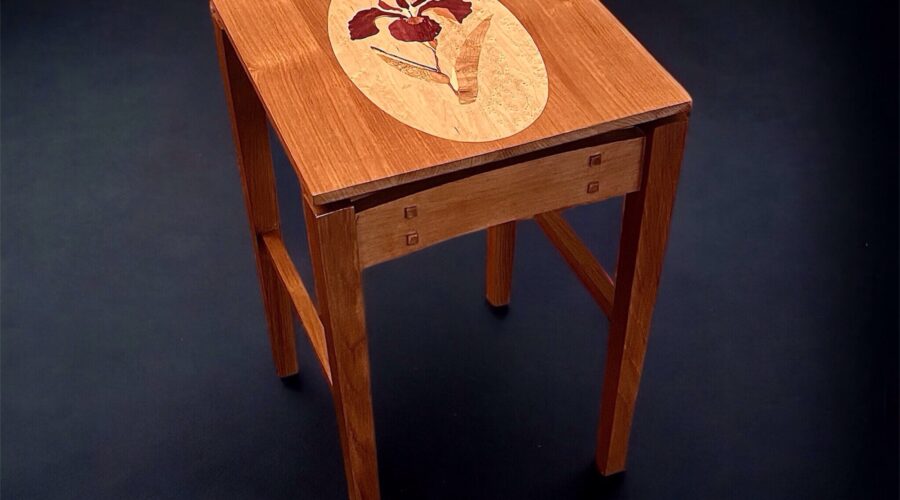
Most people have never heard the word marquetry. Then they see a piece, run a hand across it, and can’t quite believe the picture in front of them isn’t painted or printed. It’s wood. Every shade, every curve, every shift of grain is a separate piece of veneer, cut and fit together like the world’s most patient jigsaw puzzle. No dyes. No paint. Just the color that grew inside the tree.
I want to pull back the curtain on this craft, because marquetry is one of the oldest techniques in fine furniture-making — and one almost nobody does by hand anymore.
The Idea Is Dead Simple. The Doing Is Not.
Here’s the whole concept behind marquetry: you take thin sheets of veneer from different species — walnut for deep browns, maple for cream, olive ash for that ribbon of gold, dyed pearwood when you want a color the forest doesn’t offer — and you cut shapes out of each one. Then you fit those shapes together edge to edge, no gaps, until they form an image. A leaf. A compass rose. A run of mountains along a drawer front.
Simple to describe. But those pieces of wood inlay have to meet with no daylight between them. A gap you could slide a business card into might as well be a mile. So you’re cutting curves the width of a hair, by hand, in material that wants to split if you look at it wrong, and every cut has to marry its neighbor perfectly.
Why Go to the Trouble?
Fair question. A machine can laser-cut veneer now. A printer can fake a wood-grain photo onto a panel. Both are faster and cheaper, and neither one is marquetry.
The difference is the same difference between a photograph of a place and standing in it. Real marquetry catches light. Because you’re working with actual grain, the image shifts as you walk past it — the maple flashes, the walnut goes from chocolate to near-black, the whole surface breathes. A printed panel is dead flat from every angle. Wood is alive from every angle.
And it lasts. This is a technique the French royal cabinetmakers were using three hundred years ago, and their pieces are sitting in museums right now, still holding their picture. Do it right and a marquetry piece outlives the person who commissioned it — which is exactly the point of heirloom furniture.
A Little History, Because It’s a Good One
Marquetry has been around since the ancient Egyptians were inlaying ebony and ivory into furniture for the pharaohs. It hit its golden age in 17th-century Europe, when cabinetmakers turned tabletops and cabinets into full landscapes and floral scenes — showpieces for people with more money than sense and, thankfully, good taste. The craft nearly died out when mass production took over, because you can’t hurry it and you can’t teach a factory to do it.
That’s the part I like. Marquetry survived precisely because it refuses to be rushed.
Where I Use Marquetry in Custom Furniture
I don’t put marquetry on everything — that’s how you cheapen it. But there’s a right moment for it. A single inlaid detail on an otherwise clean cabinet door. A family crest set into the top of a keepsake box. A landscape running across the front of a blanket chest that turns a piece of storage into a piece of story.
That’s usually how it starts with a client, too. Somebody wants a table, and somewhere in the conversation it turns out there’s a reason for the table — an anniversary, a homestead, a view out a window they grew up looking at. Marquetry is how you put that reason into the wood so it’s there for good.
If you’re in Olympia or anywhere around the South Sound and you’ve got a piece like that living in the back of your head, I’d love to hear about it. Custom marquetry work is my favorite kind of commission.
A contractor brought me on to build two vanities and a walk-in closet for his client. Straightforward work — good work — the kind of job that lets you put your head down and let the joinery speak. But somewhere between the boxes and the doors, the client started paying attention. She saw how the pieces came together. And when the cabinets were done, she came back with a question that means more to me than any ad ever could: would I design two pieces of furniture just for her?
That’s the best kind of referral there is. Nobody sold her anything. She watched the work happen and decided she wanted more of it in her home.
So now there are two new pieces on the board — a sideboard and a matching hutch. This post is about the first one.
The brief
She came to me already knowing the color story she wanted: black with walnut. That’s a gift, honestly. When a client knows their palette, my job shifts from guessing to executing — figuring out how to make those two materials sing together instead of just sitting next to each other.
The plan: black on the case and the face frame, with walnut carried across the top and into every recessed door and drawer panel. The black gives the piece its structure and weight. The walnut does the talking. Every panel becomes a little window of grain framed in shadow.
Where it lives right now
At this stage, the whole thing exists in SketchUp — a model I can spin around, measure, and second-guess before a single board gets milled.
This is my favorite part of the process, and the most important. Right now, changing a proportion costs me a few minutes. Changing how much walnut shows against the black is a click. Rethinking the panel layout is free. Once I’m at the bench cutting joinery, none of that is cheap anymore. So this is where I slow down and get it right — the balance, the spacing, the rhythm of eight doors across the front.
The numbers, for those who like them: 8 feet 8 inches wide, eight doors, and a run of drawers along the top. A big, honest piece of furniture meant to anchor a room.
What’s next
Once she signs off on this design, I start on the matching hutch — because these two need to read as a set, not as neighbors who happened to move in at the same time. Same language, same materials, same hand.
I’ll bring you along as this moves from the screen to the shop to a finished piece you could run your hand across. That’s the whole reason I do this: watching something travel from a conversation, to a drawing, to a thing that outlives all of us.
More soon.
Anderson Woodwork — custom, heirloom-quality furniture and cabinetry for the South Sound. (360) 259-0232 · andersonwoodwork.net
Ever wonder what it’s actually like to be a custom furniture maker — what building handcrafted, heirloom-quality furniture really involves?
Here’s the part most people don’t realize: before a single board is touched, it all starts with you. Believe it or not, you’re the whole reason my world exists. Here’s how a custom piece goes from your first phone call to a finished heirloom delivered to your door — right here in Olympia and the South Sound.
It Starts With You: The First Call About Your Custom Piece
Usually I’m out in the shop working on someone else’s project when my phone rings or an email comes in — somebody in the Olympia area asking about having a custom piece made, and how the whole process works. I call back, and we talk. I get a feel for what you have in mind, and then we set up a time to look at the space your furniture is going to live in.
When I come by, I’m not just measuring. I’m reading your style and your taste, so the custom furniture I build actually belongs in your home.
The Design Phase: A 3D Plan for Your Custom Furniture
That first visit turns into the design phase the most important step of all. I create a detailed 3D design of the exact piece I’ll be building for you. That design does two jobs at once: it gives you something real to look at and price out, and it gives me my plan for the days ahead at the bench.
I can’t stress enough how important this step is. Every cut I make in the shop comes back to this plan. Get the plan right, and the whole build goes right.
Selecting the Finest Wood
With the plan set, we move on to the wood. I hand-pick the finest solid hardwood boards for your piece and bring them back to the shop to acclimate for a week or so. Wood is a living material it needs time to settle into its new home before I ever cut into it. This is one of the quiet steps that separates true custom furniture from mass-produced pieces.
Milling and Cutting Each Part
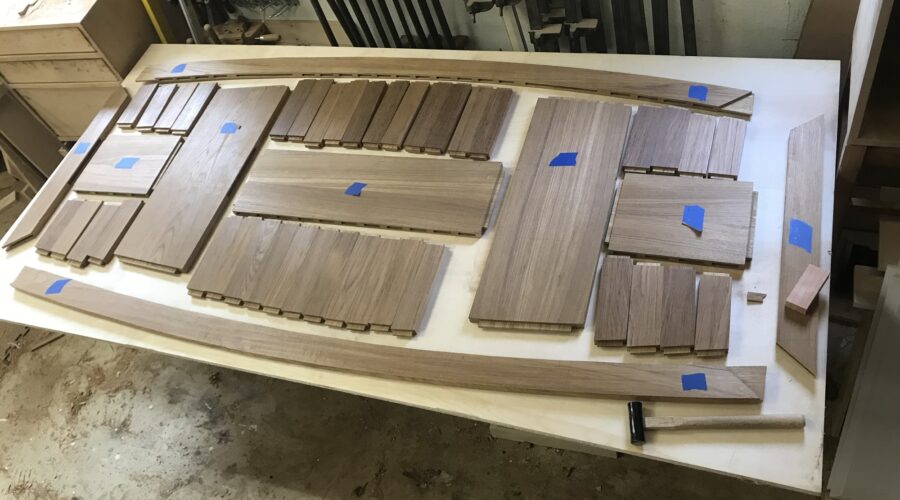
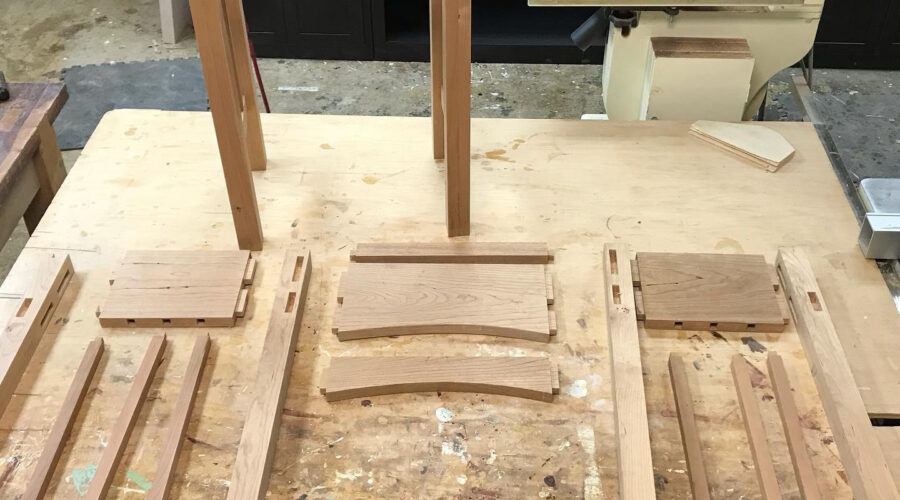
Once the wood is ready, I get to work. I start with the glue-ups first, then mill everything to the exact thickness and size and cut each part down to its final dimensions. Precise milling now is what makes for tight, clean joinery later.
Hand-Cut Joinery: Built to Last Generations
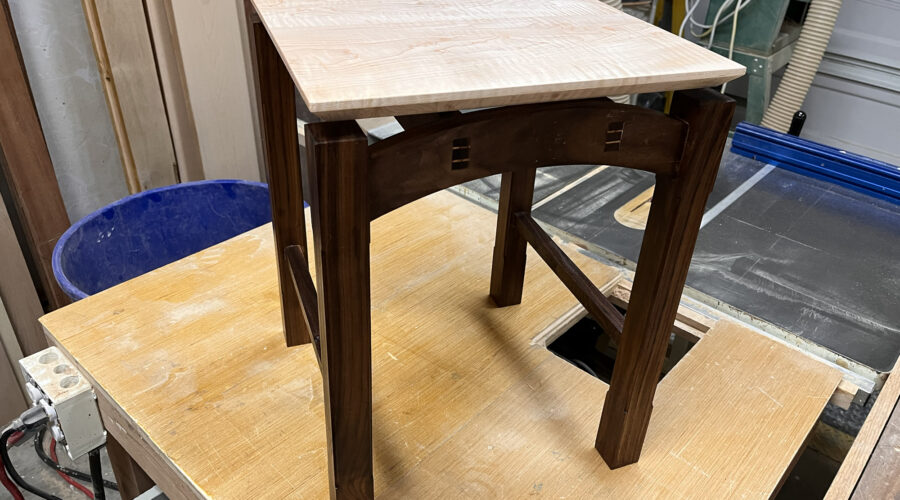
Then comes the joinery — the heart of the whole thing. I mark and cut every joint by hand, from dovetails to mortise-and-tenon. This is what separates heirloom furniture built to last for generations from something that’s just screwed together. It’s slower. It’s also the reason your piece will still be standing strong long after we’re gone.
The Dry Fit: Watching Your Furniture Take Shape
Next is the dry fit, and this is where it gets exciting — it’s where your piece really starts to appear. As I work, I assemble the furniture again and again, checking that every joint comes together clean and true before a drop of glue is ever involved.
Sanding, Glue-Up, and Delivery
Right before glue-up, every part gets a thorough sanding. Then comes the glue-up — clamps everywhere, all the parts finally becoming one. After that, a final sanding and one last careful look over the whole piece.
And then the best part: delivery. Your custom, handcrafted furniture leaves my shop and comes home with you — where it’ll be lived with, and passed down, for generations.
Frequently Asked Questions About Custom Furniture
How long does it take to build a custom piece of furniture? Every project is different, but most custom pieces take a few weeks from approved design to delivery — including about a week just to let the wood acclimate in the shop.
How much does custom furniture cost? Cost depends on the size, the wood, and the complexity of the joinery. I start with a free on-site estimate, then a paid design fee to create your 3D plan, so you know exactly what you’re getting before any wood is cut.
How do I commission a custom piece? It’s simple — reach out by phone, text, or email, and we’ll set up a time for me to see your space. From there we move into design, wood selection, and the build.
What areas do you serve? I’m based in Yelm, Washington, and build custom furniture for clients throughout the country although most of my work is in the south sound including Olympia, Lacey, Tumwater, Tacoma, gig harbor, Seattle, and Thurston, king, and Pierce Counties.
Is handmade furniture really worth it? A piece built from solid wood with hand-cut joinery isn’t disposable — it’s an heirloom. Cared for, it will outlast anything you’d buy off a showroom floor and can be passed down for generations.
Ready for a Custom Piece of Your Own?
If you’re in Olympia or anywhere in the South Sound and you’ve been dreaming of a piece of furniture made just for you, let’s talk. Call or text me at (360) 259-0232, email A.woodworks@hotmail.com, or visit andersonwoodwork.net to get started.
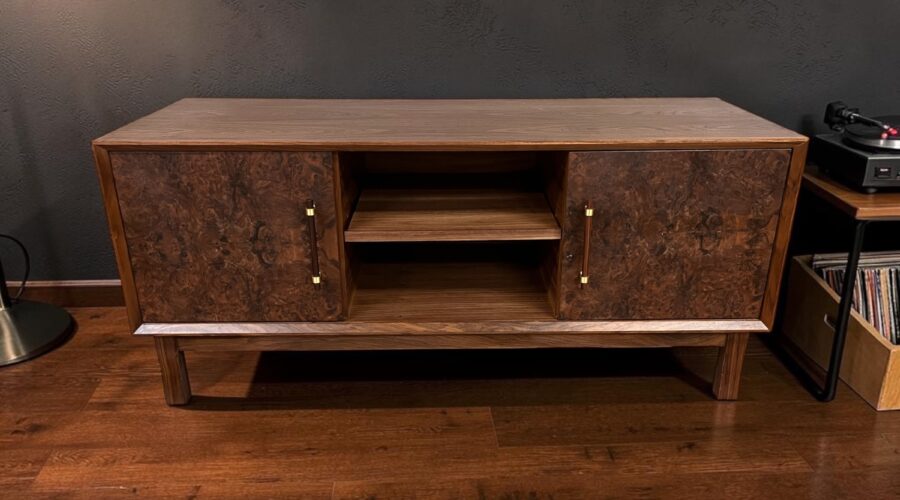
After more door styles than I care to admit, this one is finished — and it’s in the store. This walnut record credenza has been a long time coming. Not because the case or the base gave me any trouble, but because of one deceptively simple question I kept circling back to: what happens at the doors? The doors are the face of a piece like this. They’re the first thing your eye lands on, and they set the mood for everything around them. So I built version after version in my head — and a few on the bench — before I finally landed on the answer. Finding the right door Every iteration came down to contrast. I didn’t want a boring monotone piece where the doors disappear into the frame and the whole thing reads as one flat wash of brown. But I also didn’t want doors that scream at you the second you walk into the room. I wanted something in between — a subtle contrast that makes you look twice without shouting for attention. Walnut burl turned out to be exactly that. Set against the calm, straight-grained walnut of the top and frame, the burl brings a swirl of movement and figure that catches the light and rewards a closer look. It’s warm. It has drama. But it’s a quiet kind of drama — the kind that grows on you over years of living with it, not the kind that wears you out by next week. That balance is what I was after the whole time. The piece itself Here’s what you’re looking at: • Solid walnut base and frame, built to last generations • Book-matched walnut top • Walnut burl door fronts on soft-close doors • Turned walnut-and-brass pulls • An open center bay sized for a turntable, with records and gear tucked into the compartments on either side • 48”L × 19”D × 21”H It’s designed to be lived with — a real home for a record collection and the ritual that goes with it, made to still be in the family long after the rest of us have moved on. Want something louder? Let’s talk. Subtle was my choice for this one. It doesn’t have to be yours. If you want a bold, high-contrast statement instead, give me a call. I can build this same credenza with maple burl for a far louder contrast — pale, bright figure against the dark walnut, impossible to miss. Or we can take it somewhere else entirely with a hand-cut marquetry door: an inlaid design, worked piece by piece into a one-of-a-kind pattern that’s yours alone. That’s the beauty of custom work — the piece bends to you, not the other way around. This is just the first version I have a strong feeling this credenza is going to be built a lot of different ways down the road — different woods, different door treatments, different sizes to fit different rooms and different collections. This walnut burl version is where the design starts, not where it ends. Come take a look The credenza is in the store now, and I’d love for you to see it. Photos are one thing, but burl really has to be seen in person to understand what the fuss is about. Go take a look — and if you know someone who loves custom furniture, send them this way. Word of mouth from people who appreciate the work means more to a one-person shop than any ad ever could. Anderson Woodwork Custom, heirloom-quality furniture — Yelm, WA, serving the South Sound Call or text: (360) 259-0232 · andersonwoodwork.net · A.woodworks@hotmail.com
On longevity, economics, and what the furniture in your home is really costing you.
There are two ways to lose money on furniture, and most of us have tried both. You can buy cheap furniture that falls apart in a few years, or you can overpay for something that goes out of date anyway. This post is about a third option — custom heirloom furniture — and the surprising math that makes it the most affordable furniture you’ll ever own.
The Hidden Cost of Cheap Furniture
The first way to lose money is obvious. You buy something cheap, and it falls apart. The particleboard dresser that swells and sags after one humid summer. The “solid wood look” bookshelf held together with staples and a promise. It cost you ninety dollars, it lasted three years, and now it’s on the curb.
That’s the real cost of cheap furniture: you didn’t save money, you rented it — and paid full price. Do it enough times and you’ve quietly spent a small fortune, with nothing to show for it but a stack of receipts and a few trips to the landfill.
High Price Doesn’t Mean Long Life: The Apple Problem
The second way to lose money is sneakier, and the best example is sitting in your pocket.
Buy a flagship phone and you’re holding one of the most beautifully engineered objects ever mass-produced. Real materials, genuine build quality. You paid a premium and you got a premium object. And in a handful of years, it’s done — not because it broke, but because the world moved on around it. The battery fades, the software support ends, and a newer model is always calling.
Here’s the lesson worth keeping: a high price and high quality are not the same thing as longevity. Technology has obsolescence built into the category. No amount of craftsmanship saves a phone from going out of date, because the whole product is a moving target.
Which is exactly what makes furniture different.
Why Solid Wood Furniture Never Goes Obsolete
A well-made table has no software to stop updating. There’s no newer “version” that makes yours quit working. A hand-cut, dovetailed dresser does exactly the same job in the year 2075 that it does today: it holds your clothes, it stands square, and it looks beautiful doing it.
Solid wood furniture is one of the only things you’ll buy that gets better with age. It earns a patina. Small dents become part of its story. And when it finally shows wear, solid wood can be sanded, repaired, and refinished — brought back to life instead of thrown out. You can’t refinish a laminate.
So real, handmade furniture sidesteps both traps at once. It doesn’t crumble like the cheap stuff, and it doesn’t go obsolete like the expensive tech. Which brings us to the numbers.
The Boots Theory: The Economics of Buying Quality
The novelist Terry Pratchett once explained the economics of poverty through a pair of boots, and the idea has stuck for thirty years because it’s true. A good pair of boots costs a lot up front but lasts ten years and keeps your feet dry the whole time. Cheap boots cost a fraction of the price, but they leak and split, so you buy them again and again. Ten years on, the person who could afford the good boots has spent less — and had dry feet the entire time.
Pratchett’s point was about how expensive it is to be poor. Flip it around, and it’s also the strongest argument there is for buying quality furniture when you can. Quality isn’t the extravagant choice. Stretched over decades, it’s the frugal one.
Cheap Furniture vs. Custom Furniture: The 40-Year Math
Run the numbers on a single dresser. (Figures below are illustrative — swap in real quotes for your project.) Fast-furniture dresser Custom heirloom dresser Upfront cost ~$250 Several times more Lifespan 5–6 years 40+ years / generations Replacements over 40 years 6–7 0 Total spent over 40 years $1,600 and climbing Paid once What you’re left with A pile of landfill An heirloom you hand down
The cheap piece is cheap once and expensive forever. The custom piece is expensive once and, if it’s built right, close to free after that — because you buy it a single time, and then it just keeps working. Amortize the cost across forty years, or across two or three generations, and the “expensive” dresser quietly becomes the cheaper one.
What You’re Really Buying With Custom Heirloom Furniture
When I quote a price for a custom piece, I know it lands above the big-box tag, and I won’t pretend otherwise. What I’d ask you to compare isn’t the sticker — it’s the cost of ownership over the whole life of the thing.
That’s the whole idea behind what I build here in the South Sound: joinery cut by hand, solid wood, and pieces made to outlive the person who commissioned them. Not disposable. Not obsolete. It’s the difference between being a buyer — always shopping for the next replacement — and being a collector, who buys the last one they’ll ever need.
Frequently Asked Questions
Is custom furniture worth the money?
Over a long enough timeline, yes. Cheap furniture is replaced every few years, so its true cost adds up well past its low sticker price. Custom heirloom furniture is bought once and handed down, which often makes it the more economical choice per year of use.
Why is solid wood furniture more expensive than particleboard?
Solid wood costs more in materials and skilled labor, and hand-cut joinery takes time. But solid wood lasts for generations and can be refinished and repaired, while particleboard swells, sags, and heads to the landfill within a few years.
How long does handmade furniture last?
Well-built solid wood furniture with proper joinery routinely lasts decades and is often passed down across generations. Unlike mass-produced pieces, it can be sanded and refinished many times over its life.
Does buying quality furniture actually save money?
It can. This is the “boots theory” of spending: paying more up front for something that lasts often costs less over time than repeatedly buying cheap replacements — and you end up with an heirloom instead of a receipt.
Where can I get custom furniture in the South Sound?
Anderson Woodwork builds custom, heirloom-quality furniture, cabinetry, and built-ins by hand in Yelm, Washington, serving families across Thurston and Pierce Counties.
Ready to stop replacing the same cheap thing every few years? Let’s build the one you won’t have to. Anderson Woodwork offers a free on-site estimate throughout the South Sound.
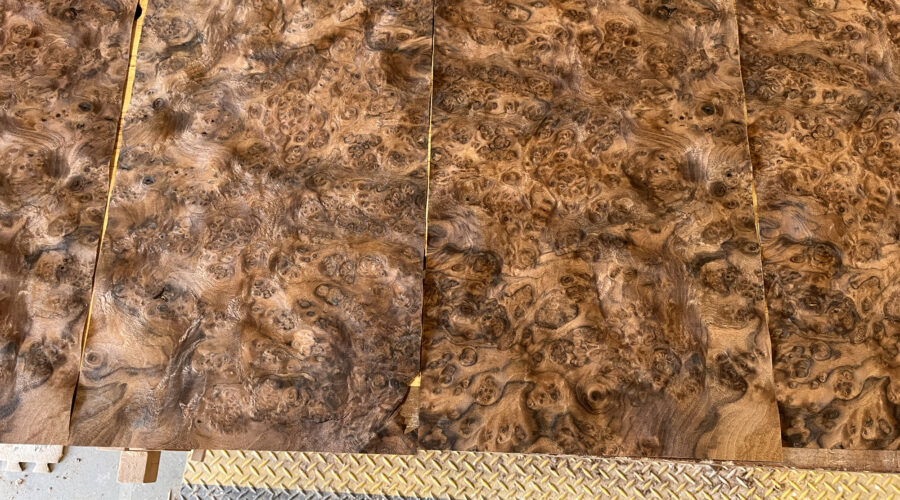
It got delivered today, and I couldn’t wait to open it up. Here’s a short video of the unboxing this is the walnut burl I’ll be using for the doors of the audio cabinet I’m building.
If you’ve never worked with burl before, it’s a different animal. It forms when a tree grows in on itself, creating a knot of swirling, chaotic grain you’ll never find in a straight board. No two pieces are alike, and that unpredictability is exactly what makes it so striking. Set front and center on a pair of cabinet doors, it becomes the whole story of the piece.
Now the real work begins letting the material settle, planning the layout so the figure flows the way I want it across both doors, and taking my time with the joinery so the cabinet does the wood justice.
I’ll be posting a video of the finished piece once it’s complete. Stay tuned. I think this one’s going to be a beauty.