Most rooms go wrong before a single accessory shows up. The mistake is not paint color or artwork. It is starting with the room as an empty box, then trying to fill it. If you want to know how to design a room around furniture, start by treating the furniture as the architecture of daily life. A room should take its cues from the pieces that actually carry the work of living – the dining table, the desk, the built-in storage, the reading chair, the bed.
This is not decorating. It is planning. Good rooms are built from function, proportion, circulation, and material relationships. Furniture is not the finishing touch. It is the starting point.
Why furniture should lead the room
When furniture leads, the room gains structure. You make clearer decisions about layout, storage, lighting, and scale because they are all responding to something real. A table has dimensions. A desk needs task light and leg room. A media cabinet affects viewing distance, wire management, and wall composition. Those realities produce stronger design decisions than any mood board ever will.
When furniture does not lead, rooms often feel disconnected. The rug is too small, the lighting hangs in the wrong place, the artwork floats, and the traffic path cuts through the space awkwardly. None of those issues are separate. They are symptoms of designing backward.
This matters even more if you are investing in custom work or high-quality furnishings. A well-made piece deserves a room that supports it. Otherwise, the room diminishes the furniture instead of the other way around.
How to design a room around furniture from the start
The first step is to identify the primary piece, not the most expensive piece. Those are not always the same. The primary piece is the one that defines how the room works. In a dining room, that is usually the table. In a study, it may be the desk or a wall of built-ins. In an entry, it could be a storage bench and cabinet system. In a living room, it is often the sofa, though in some homes a fireplace wall or media cabinet plays the stronger role.
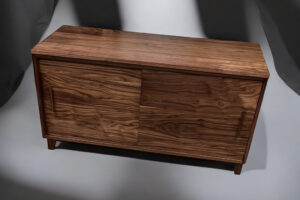
Once you know the anchor, measure it precisely and let it set the terms for the room. Width, depth, height, and visual weight all matter. A long, low credenza creates one kind of room. A tall cabinet with paneled doors creates another. Furniture establishes not only footprint, but also eye level, rhythm, and emphasis.
From there, define the clearances around it. This is where most rooms either become easy to live in or quietly frustrating. Dining chairs need room to pull back. Desks need enough depth for movement and access. Beds need walking space on both sides if the room is meant to function well for two people. An entry piece should not force a sidestep every time someone comes in carrying groceries.
The room begins to reveal itself once those clearances are respected. Layout stops being theoretical. It becomes practical and accurate.
Start with use before style
Ask what the room needs to support on an ordinary Tuesday, not during a holiday gathering or for a photograph. Does the dining room need to seat six every day and ten occasionally? Does the home office need concealed storage for equipment and paper, or open shelving for books and display? Should the living room favor conversation, reading, television, or some combination that requires compromise?
Those answers affect the furniture you choose and the way the room should form around it. A room designed for real use tends to feel calmer because it is not working against itself.
Let the largest piece establish the layout
In most rooms, the largest furniture piece sets the geometry. That does not mean every other item must line up with it rigidly, but it does mean the layout should acknowledge its presence. If the sofa is substantial, tiny occasional tables will look apologetic. If the dining table is narrow and refined, oversized heavy chairs may distort the balance.
This is where proportion matters more than style labels. You can mix traditional and modern forms successfully. What you cannot ignore is scale. Good rooms rely on visual hierarchy. Something must lead, and the supporting pieces must be in conversation with it.
Room planning that supports furniture
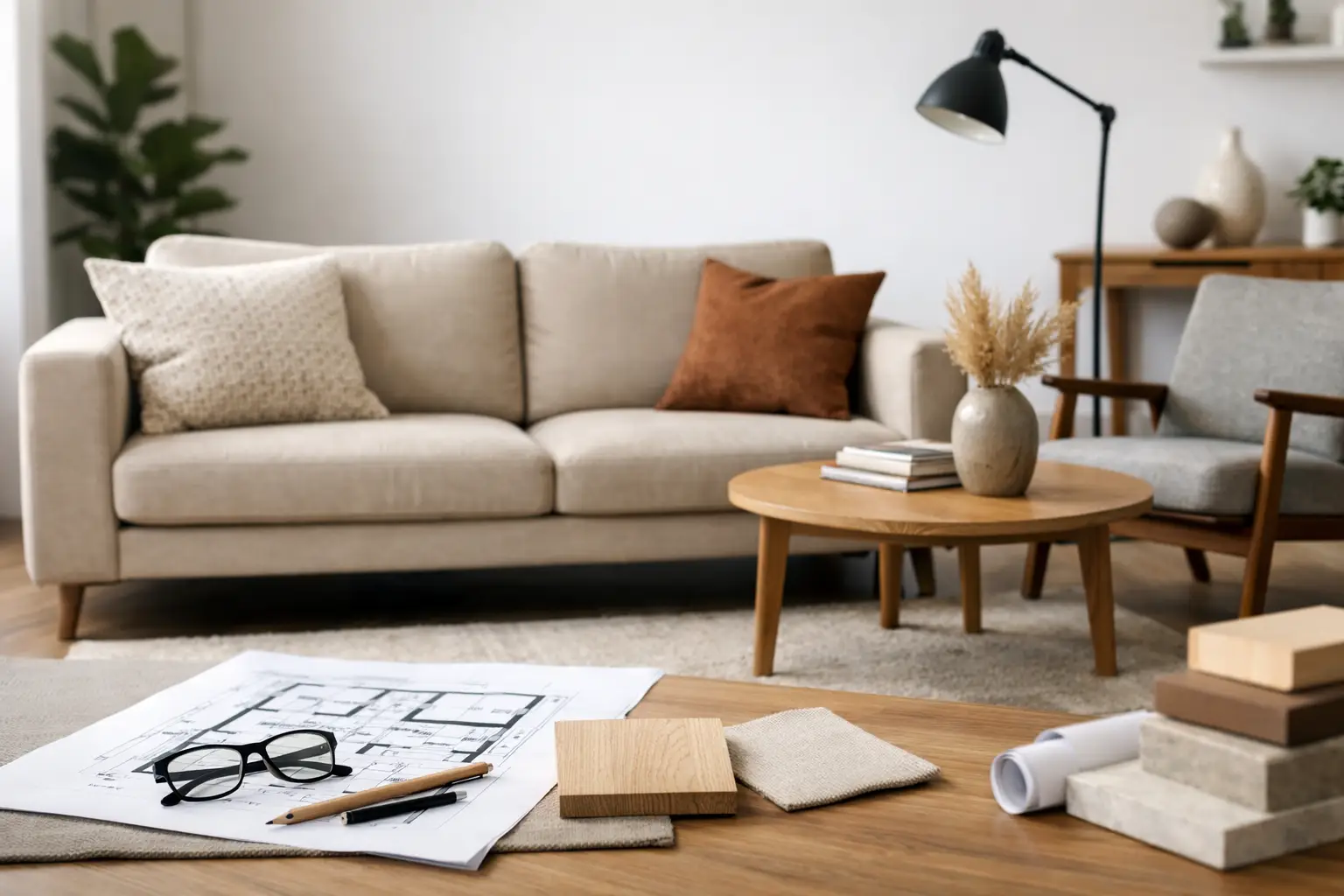
After the primary furniture is placed, look at the room in layers. Circulation comes first. You should be able to move through the space without clipping corners or squeezing past edges. Then consider secondary furniture, then lighting, then textiles and art.
People often reverse that order because finishes feel easier than planning. But a beautiful rug will not fix a desk that faces the wrong direction, and a statement light fixture will not solve poor cabinet placement.
Walls, windows, and built-ins
Permanent conditions matter. Windows determine glare, privacy, and natural light. Door swings affect usable wall area. Baseboards, vents, and outlets shape what can actually go where. If a room includes custom cabinetry or built-ins, those elements should be developed in direct relationship with the furniture rather than as separate ideas.
A built-in bookcase beside a reading chair should support that seating area in both scale and function. A sideboard in a dining room should align with how the table is centered and how service happens. This is where custom design separates itself from generic furnishing. The room can be made coherent because the parts are planned together.
Lighting should answer the furniture
Lighting is often chosen for appearance first, but in a well-designed room it follows the furniture plan. A dining chandelier should be centered over the table, not the room if the table is intentionally offset. Library sconces should relate to seating height and reading position. Desk lighting should support work surfaces, not simply occupy a corner.
Even ambient lighting benefits from this discipline. If the furniture creates intimate zones, the lighting should reinforce them. If the room is more open and formal, the lighting can carry broader coverage. The right answer depends on the room’s purpose and the furniture’s role within it.
Materials and color should reinforce the furniture, not compete with it
If you are building a room around a strong furniture piece, especially one in solid wood or custom cabinetry, material restraint matters. That does not mean everything must match. It means the room should show discipline.
Wood tone, metal finish, upholstery, wall color, and flooring should relate in a way that feels intentional. Too many competing statements make the furniture feel less significant. Too little variation can make the room feel flat. The balance is in contrast with control.
For example, a richly figured walnut desk may want quieter wall color and simpler textile choices so its craftsmanship remains legible. A painted cabinet system might allow more complexity in nearby materials. It depends on what should lead and what should support.
This is also why trend-based choices often age poorly. They are usually selected for novelty rather than relationship. Rooms last longer when materials are chosen for depth, compatibility, and use over time.
Common mistakes when designing around furniture
One common mistake is choosing furniture that is too small for the room because people fear overcrowding. Underscaled furniture rarely creates elegance. More often, it creates hesitation. The room feels unresolved because nothing has enough presence to organize the space.
The opposite mistake is forcing oversized furniture into a room without respecting circulation. A large sectional may look impressive on paper and still make the room tedious to move through. Bigger is not better. Correct scale is better.
Another frequent issue is treating storage as optional. In real homes, storage is part of the design, not an afterthought. If the room needs to hold books, media, files, serving pieces, or daily clutter, that requirement should shape the furniture plan from the beginning.
Then there is the habit of buying in sets. Matching suites may feel safe, but they usually flatten a room. Better rooms are composed, not purchased wholesale. Pieces should relate by proportion, material, and purpose, not because they came from the same page of a catalog.
When custom furniture changes the outcome
Not every room needs custom furniture. But some rooms do require more precision than off-the-shelf pieces can provide. Awkward dimensions, unusual storage needs, architectural features, or a desire for stronger visual order often justify a custom approach.
A custom desk can solve for equipment, cable management, and work habits in a way standard furniture rarely does. A built-in dining banquette can recover usable space while improving seating capacity. An entry cabinet can be proportioned to the wall, the ceiling height, and the exact items the household needs to store.
That level of fit changes the room because it removes compromise where compromise is most visible. At Anderson Woodworks, this is the core principle: the furniture is not selected after the room is imagined. The furniture helps define what the room should be.
If you are designing a room around furniture, be decisive about what matters most. Start with the piece that carries the life of the room, give it the space and support it deserves, and let the rest of the design answer to that choice. The room will feel stronger because it is built on something real.
Discover more from Anderson woodworks custom furniture & cabinets
Subscribe to get the latest posts sent to your email.